



Wildlife conservation is all down to humans, professor says









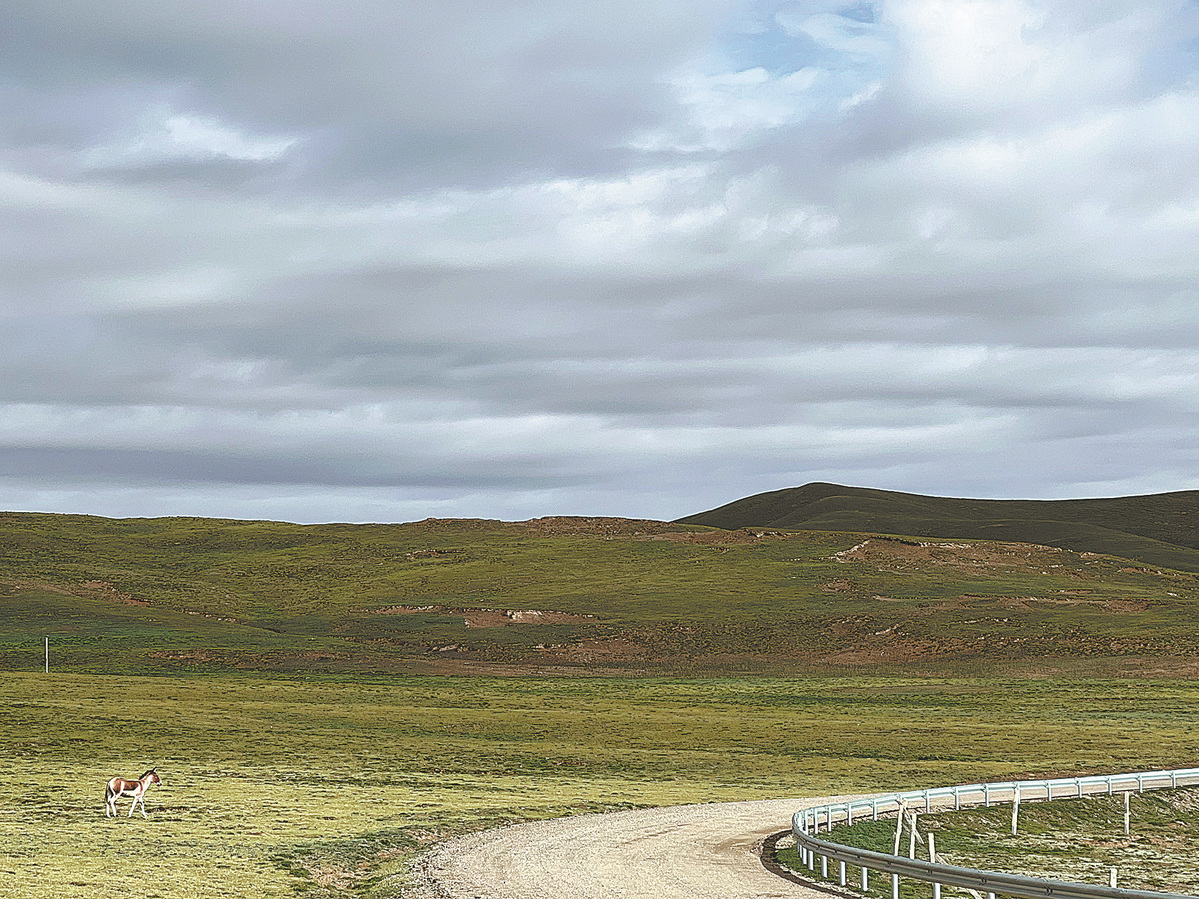
Analysis of millions of infrared photos and tens of thousands of videos shows that the Sanjiangyuan area in the heart of the Qinghai-Tibet Plateau has one of the most complete food chains in the world.
The analysis was carried out by the Shan Shui Conservation Centre over more than a decade.
Lyu Zhi, 57, a professor of conservation biology at Peking University, who founded the center in 2007 and has worked on the preservation of Sanjiangyuan for 17 years, said: "Conservation of nature is not about shouting slogans related to keeping rare animals alive. It is not something you can learn from textbooks.
"Reality always tells us what the problem is, and apart from protecting animals and the environment, we need to pay attention to the people who share the natural environment with wildlife."
As deputy director of the Peking University Center for Nature and Society and advisory board member of the UN Decade on Ecosystem Restoration program, Lyu is a leading biodiversity conservation figure in China. Since her 20s, Lyu has been dedicated to protecting and researching endangered wildlife such as pandas and snow leopards — promoting the establishment of protected areas and related legislation and policies.
She has also guided the sustainable development of rural areas with ecological diversity in Southwest China and supported nongovernmental environmental protection organizations in solving climate change and ecological crises.
The conservation center has trained more than 3,000 custodians for Sanjiangyuan National Park, worked with the park's management committee to develop supervisory systems, and provided product design solutions for nature experience programs.
Early in 2019, a total of 22 local families hosting visitors, who came to Duoyong village in Madoi county, Golog Tibetan autonomous prefecture, Qinghai province, to explore nature, earned a combined income of more than 1 million yuan ($142,500), according to the conservation center. Forty-five percent of this income was paid to local hosts for their work, while 45 percent went to the village community for its efforts to protect the environment and show visitors the best of nature. The village set up a conservation fund with the remaining 10 percent to subsidize herders whose poultry is eaten by wild animals.
Lyu considers this operating model to be reasonable and comforting.
Local people's lives are affected in ways that urban residents, who travel thousands of kilometers hoping to see traces of snow leopards, never imagine. The locals' wild yaks and sheep could be eaten by animals such as brown bears and snow leopards, while their shotguns lie idle, as hunting wild animals is strictly prohibited.
Lyu said: "By meeting the locals' survival needs, we are also meeting our need to keep the Earth a beautiful place to explore — it is an exchange. Such a system allows herdsmen to gain tangible benefits from wildlife conservation, making the relationship between humans and nature more positive."
Lyu was touched by the herdsmen's spontaneous kindness. She said that when she first started working on conservation of the Przewalski's gazelle, which is only found in the wild in China, she discovered that the species was experiencing hunger. One elderly herdsman was even buying fodder for his sheep, which cost him 10,000 yuan each year, while allowing the gazelles to eat on his grassland.
Lyu said people in Tibetan areas believe in the connection between all beings in the world, regardless of species. They think that a bug on the ground could be the reincarnation of a friend or relative.
"Local residents are surprisingly environmentally conscious, as they believe in the equality of all beings and the reincarnation of life. They cured me of my lack of faith in humanity," she said.
Lyu sees animal conservation as vitally important for the balance between nature and humans.
"Such conservation is not really about animals, it's about humans," she added. "Animals are always trying very hard to live their lives. It is a question of whether people will let them live, allow them to live in the forests, or make them into a dish for the dinner table."


- Mainland vows safety for Taiwan compatriots amid Middle East tensions, criticizes DPP’s political manipulation
- Zhengding Folk Art Performance draws 30 troupes for Lantern Festival
- China advances in quantum technology, sets global records with new innovations: national political adviser
- Adrian Cheng: HK needs to build platforms for international and local talent exchange
- Mainland offers to resume cross-Strait dialogue if DPP acknowledges 1992 Consensus
- China's top political advisory body starts annual session





