



Govt's role in financial inclusion seen as key









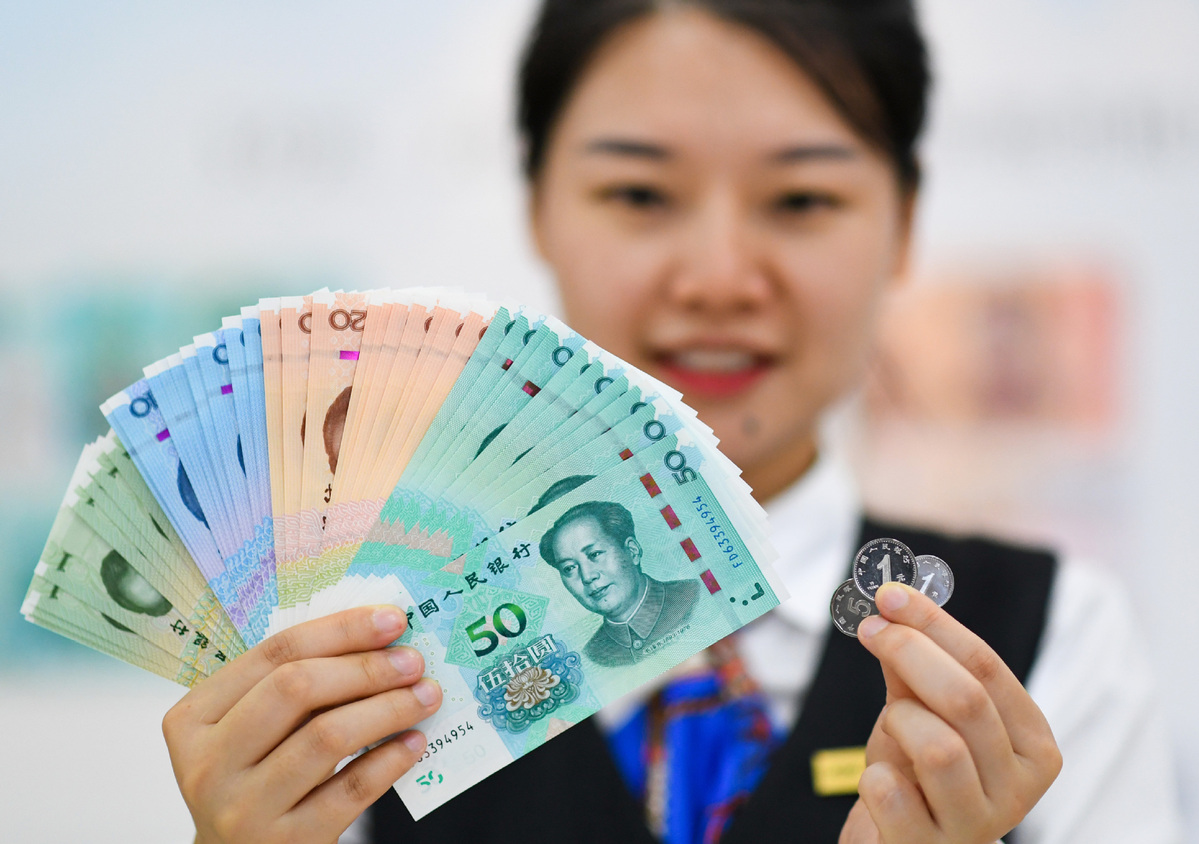
Experts call for 'down-to-earth' efforts to improve domestic system
China should support all market players striving to improve financial inclusion to explore more cooperation models, which follow laws and regulatory compliance, put risks under control and promote commercial sustainability, in the fields of business, technology, data and infrastructure through methods like regulatory sandboxes and the implementation of pilot programs in local areas, experts said.
Financial inclusion means that individuals and businesses have access to useful and affordable financial products and services that meet their needs and are delivered responsibly and sustainably, according to the World Bank.
After years of development, China's financial inclusion system has shown features like diversified market entities, high correlation and deep integration. Market participants have expanded from small loan companies to a diversified organizational system in which traditional financial institutions and emerging market entities engage in healthy competition and cooperation, said Shan Qiang, Party secretary of the National Internet Finance Association of China.
In the next step, the country should give scope to the initiative and creativity of all market participants in this field and support them in building a more sound and balanced financial inclusion ecosystem, Shan said at the International Forum for China Financial Inclusion 2022 in Beijing recently.
It is also necessary for the country to strengthen the conduct regulation of market participants, improve financial inclusion market transparency and enhance consumer protection through measures like information disclosures, risk alerts and ethical reviews, he said.
Wu Xiaoqiu, co-chairman of the council board of the Chinese Academy of Financial Inclusion at the Renmin University of China and former vice-president of the university, said financial inclusion is among a number of indicators for China's financial modernization, which is a basic element of Chinese modernization.
A financial system ignoring the needs of micro and small enterprises as well as low and middle-income earners' demand for wealth management services can hardly be regarded as modernized finance, Wu said.
China must go ahead in a down-to-earth manner with effective quality improvement and a reasonable increase in quantity in terms of financial inclusion, according to the overall requirements in the country's pursuit of high-quality development, said Liu Feng, secretary-general of the China Banking Association.
With the acceleration of the country's industrialization, urbanization and agricultural modernization in recent years, hundreds of millions of people have moved from rural areas to towns and cities. They have become new urban residents — people who live in a city permanently but have not yet obtained a local hukou, an official document certifying that the holder is a legal resident of a particular area, or those who obtained a local hukou within the past three years.
Currently, there are around 300 million new urban residents on the Chinese mainland, accounting for more than 20 percent of the mainland's population.
Strengthening financial services for new urban residents has practical significance regarding maintaining stable economic performance and promoting growth. It has become a focus of the banking sector to consolidate and further improve the effects of financial inclusion. During the process of integrating into city life, new urban residents will have robust and diversified demand for financial services, which will provide tremendous opportunities for banking institutions to develop new business, Liu said.
Experts and officials also stressed the importance of promoting the high-quality development of financial inclusion to help small businesses build up resilience to weather hard times.
Lin Jingping, deputy director of the financial work office of the Taizhou municipal government, said in order to reduce the level of information asymmetry between banks and small businesses, a credit information-sharing platform was established in Taizhou, Zhejiang province, gathering 433 million pieces of credit information of more than 790,000 market entities from over 30 government departments and providing the information to banks for free.
The platform has enabled banks to offer loans to small businesses in a more targeted way, Lin said.
As of the end of the third quarter, the balance of loans to micro and small enterprises that have a total credit line of up to 10 million yuan ($1.42 million) per borrower reached 23.16 trillion yuan in China, up 24.6 percent year-on-year, according to the People's Bank of China, the central bank.


















