Strong fragrance
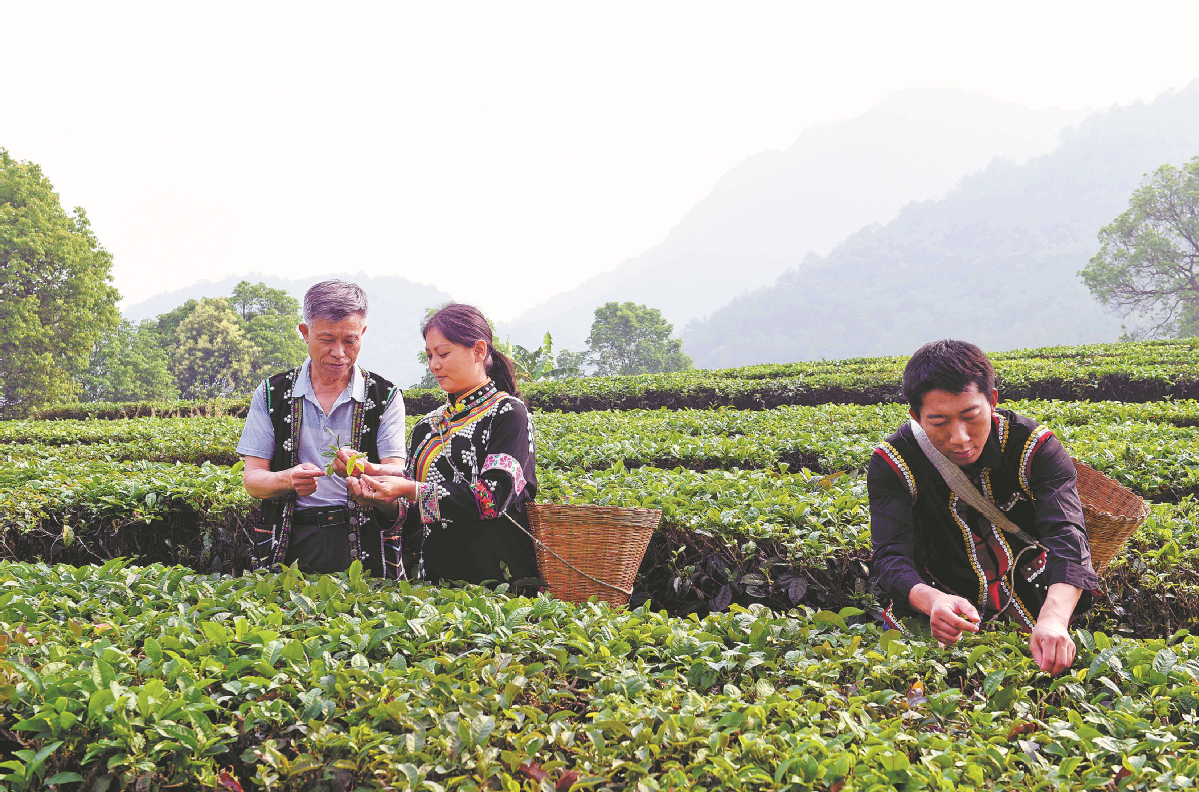
In Anxi county, Fujian province, He Huanzhu, 39, said most people in her hometown trade in Tieguanyin, a type of oolong tea originating in the county and known for its strong and lingering orchid fragrance.
In 2008, when she started helping locals sell the tea they made, she visited many tea-producing areas of China to learn more about the beverage.
In 2014, when He organized an international meeting on tea, she was surprised to find many women had worked in the industry, but their efforts had not been fully appreciated. With support from the local government, the Anxi Tieguanyin Female Tea Masters Intangible Cultural Heritage Institute was established in 2019 to highlight women's contributions and cultivate more female exponents in the craft.
The institute teaches students based on their level of ability. It helps locals with experience of tending to tea gardens and making tea to produce the drink in a standardized manner and improve their awareness of ecological protection.
For university students who lack knowledge about tea, He shows them attractive tea packages and gets them to taste the drink so they can broaden their knowledge.
Zheng Xiaofeng, 59, a local woman who has worked in tea production and sales for more than two decades in Anxi, and who teaches at the institute, said the students are keen to learn more about tea.
She highlighted the importance of the institute. "It's good for people to communicate and learn from one another, and the institute also plays an important role in spreading word on the art of making Tieguanyin tea," Zheng said.
He said the institute has taught more than 5,000 people offline, and even more students through online channels.
She said she will continue to promote women's participation in the profession. "I will encourage and spread the culture of Tieguanyin tea in Anxi to give women working in this field more confidence and to make a greater contribution to rural vitalization," He said.
Past and present
Liang Guilin, a researcher studying the history of tea at Shaanxi History Museum in Xi'an, the provincial capital, said, "China first discovered tea and gave it cultural connotations."
Chinese started to drink tea during the Western Han Dynasty (206 BC-AD 24) — evidenced by remains of the drink unearthed from Yangling, the tomb of Emperor Liu Qi (188-141 BC).
"Before that, tea was used to make different dishes or medicine, but the Yangling discovery shows it had been drunk on its own, and people at that time had mastered tea-processing skills," Liang said.
When it came to the Tang Dynasty (618-907), The Classic of Tea was produced in the eighth century by the writer Lu Yu, who was known as the Sage of Tea. In this book, Lu illustrated the history of tea, categories of tea, the process of making the beverage, and different drinking customs.
Liang said the work marks the second major discovery regarding tea.
"If we say that about 4,000 years ago, when people found tea growing wild, marks the first discovery of the beverage, then this book reflects the birth of the tea ceremony. People found that to get a good cup of tea, they had to plant the tree, pick the leaves, process and brew the drink," Liang said.
"Moreover, people realized the spiritual functions of tea. They combined drinking it with playing the guqin (a seven-stringed instrument), chess, writing calligraphy and painting, which together comprise the culture of the tea ceremony," he added.
Tea sets produced in many areas of China were found in the wreck of the Arabian dhow the Belitung, which sailed from Arabia to China around 830 AD, but sank on the return journey near Belitung island in modern-day Indonesia.
Sun Dongning, executive director of the National Intangible Cultural Heritage Exhibition and Research Center, said the application of traditional tea processing techniques and associated social practices in China for world intangible cultural heritage began at the end of 2020.
"This is about traditional culture's close connections with modern life. It perfectly complies with the description of culture in the Universal Declaration on Cultural Diversity adopted by the General Conference of UNESCO at its 31st session in 2001. The declaration states that culture is at the heart of contemporary debates about identity, social cohesion and the development of a knowledge-based economy," Sun said.
"Intangible cultural heritage came from ancient people's daily lives, and is part of modern life as well."
Wang Kaihao contributed to this story.