Making HK's supply, value chains worth their salt









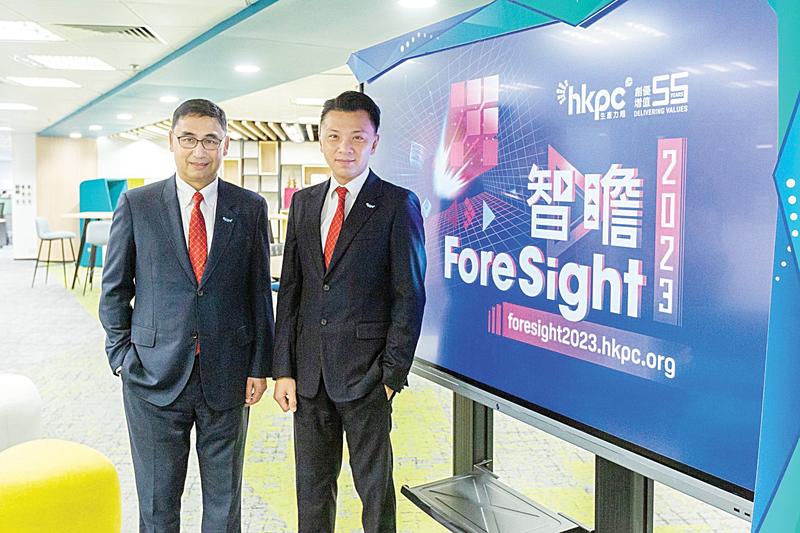
Business experts in Hong Kong are calling for the city to upgrade its technology to make its global roles more prominent. Oswald Chan reports from Hong Kong.
Amid rapid changes in the global economic environment, the rise of the middle class on the Chinese mainland, and trade friction between the world's two largest economies, the nation's industrial layout will be affected, making Hong Kong's roles in the global supply and value chains more demanding.
The Hong Kong Productivity Council - tasked with helping local enterprises to excel with upgraded technologies - will carry out its pledge to help them cope with the new environment, says chairman Sunny Tan.
Different industrial sectors have specific business strategies to respond to the market situation, he said in a group interview with China Daily. "In response to the tariffs levied by the United States on goods produced in China, manufacturers may retain their production lines in China while others may set up new manufacturing plants in other countries."
"But, with the rise of China's middle-class segment, some manufacturers may be happy to maintain production bases in the country to meet the needs of domestic consumers," Tan said.
HKPC Executive Director Mohamed Butt notes that many Hong Kong manufacturers have relocated their production bases to Indonesia and Vietnam as the huge populations of these two countries provide robust domestic consumption markets.
"The HKPC will provide consultancy services for manufacturers, either in assembling production lines or replicating the mainland production plant model in ASEAN (the Association of Southeast Asian Nations)," he says, adding that China's supply-chain capabilities remain strong and comprehensive.
Besides elevating technology, the SAR government is luring strategic industries to relocate either their regional headquarters, research and development centers, or manufacturing facilities to the city.
"Attracting strategic industries to Hong Kong not only offers economic benefits to multinational companies, a business ecosystem will also be in place to help small and medium-sized enterprises," says Tan, who also represents the textiles and garment industry in the Legislative Council.
Tan, who took the helm at the HKPC in June, is adamant Hong Kong has niche advantages in developing light industries, such as manufacturing sneakers and clocks, innovative technologies like robotics, as well as high-technology segments, including life sciences, pharmaceuticals, biochemical and food technologies.
"Magnate industry players worldwide are clients of Hong Kong-based manufacturers. If these enterprises relocate some of their operations to Hong Kong, it would mean more business opportunities for our manufacturers as they would be able to get in touch with their customers directly here. This would benefit local SMEs," stresses Tan.
However, he emphasizes that progress in attracting strategic industries to the SAR is still in its preliminary stage as multinational companies plan their operations from a global perspective.
"The HKSAR government needs to formulate policies with satisfactory incentives for major enterprises if they relocate some of their businesses here. They would want the government to help them tap the consumer market of the Guangdong-Hong Kong-Macao Greater Bay Area," says Tan.
Hong Kong's expertise in providing financing and legal support, as well as talent, would complement the Greater Bay Area and the ASEAN countries as a huge consumer market, and create an ecosystem with products, market, talent and capital.
Chief Executive John Lee Ka-chiu pledged in his maiden Policy Address in October to establish an Office for Attracting Strategic Enterprises, to be led by the financial secretary, to attract global businesses by offering them special one-stop services.
Hong Kong aims to attract at least 100 high-potential or representative information and technology enterprises to set up in the city in the next five years, bringing more than HK$10 billion ($1.28 billion) in investments and creating thousands of jobs.
"In getting strategic industry players to Hong Kong, the government should ensure that these enterprises, in relocating parts of their operations to the SAR, should have sustainable business plans to make themselves more competitive," says Butt.
The Fraunhofer Institute - a German scientific research organization - is teaming up with the HKPC in advancing the development and transfer of knowledge and know-how in smart technologies for Hong Kong and German companies. It will try to convince major German businesses to choose the SAR as the place to invest, according to Butt.
He urges Hong Kong business leaders to leverage their business networks to get the world's strategic industry players to consider expanding in Hong Kong.
Besides establishing OASES, the SAR government is pushing ahead with its reindustrialization drive. It will subsidize the setting up of more smart production lines in the city under the Reindustrialization Funding Scheme, with the goal of increasing the cumulative number of smart production lines by fourfold - from about 30 at present to more than 130 in five years. The administration will strengthen collaboration with the HKPC to support enterprises in upgrading to smart production.
"Among 30 smart production lines now in operation, 40 percent of them are in the food catering industry, 30 percent in healthcare technologies, and 30 percent in green and construction technologies," says Butt. "For the 130 smart production lines planned for the future, the HKPC will provide technology consultations, while enterprises will have the business acumen to decide what their smart production lines would focus on."
Butt agrees that the Northern Metropolis area should have space to accommodate production facilities to hasten Hong Kong's reindustrialization. "Being so close to the Greater Bay Area, setting up smart production facilities in the Northern Metropolis area is feasible. These facilities should cater to industries that require less land input, have a strong technological component, and can generate high value-added returns," he says. Hong Kong should strive to develop the high value-added segment in pursuing advanced manufacturing.


- Xizang's remote villages gain access to express delivery services
- Egyptian man explores 460-year-old fair in Tianjin
- 10,000-ton electric container ship tests off Jiangxi province
- China's construction sector sees drop in energy use, emissions during build phase, rise in operations
- Guangdong sees surge in holiday arrivals as travel pattern shifts
- International commercial court established in Guangzhou