


Back to the future









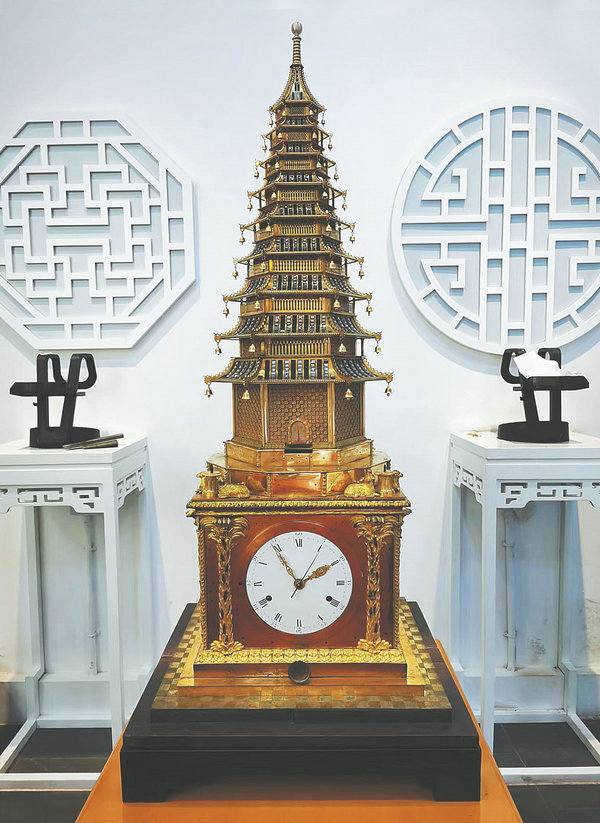
After a year of complex restoration, specialists from the Palace Museum in Beijing have given a pair of antique pagoda clock automata a new lease on life.

In the form of a nine-tiered pagoda, the clocks, housed in the Summer Palace in Beijing, not only tell the time, but also put on an automated spectacle every three hours and play four different tunes, including Chinese folk song Jasmine Flower, which was composed during the Qing Dynasty (1644-1911).
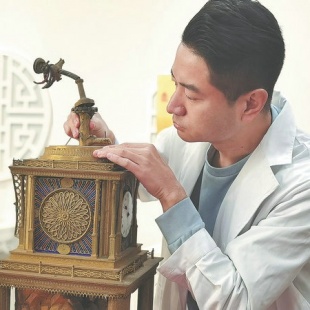
"At the 3 and 9 o'clock positions, the pagoda will raise with the melody from about 1.28 meters to 1.58 meters, and at 6 and 12, it will lower," watchmaker Qi Haonan explains.
"One clock of the pair has been restored to full working order and is on display at A Story of Garden exhibition in the Summer Palace Museum, while the other will meet the audience early next year," the 41-year-old conservator says. He is one of the fourth generation of specialists in repairing and restoring antique clocks, who have worked at the Palace Museum since the founding of the People's Republic of China in 1949.
In 2019, the Palace Museum and the Summer Palace established a joint conservation studio for ancient clock restoration to help restore badly damaged clocks.
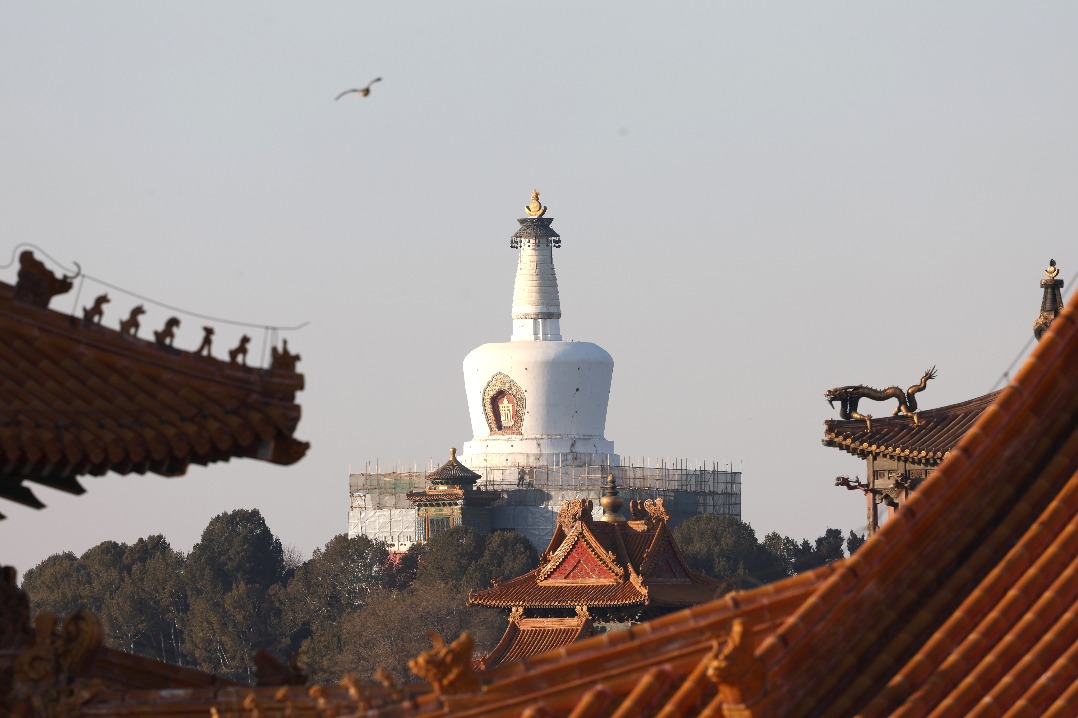
Listed as a UNESCO World Heritage Site in 1998, the Summer Palace is an imperial garden, which was first built in 1750, largely destroyed in the war of 1860 and restored, on its original foundations, in 1886. As an important political and diplomatic center for Qing rulers, the garden witnessed many historic events, serving as a bridge between the East and the West. According to Qijuzhu, imperial diaries in which officials chronicled the daily activities of the royals, from 1902 to 1908, the Empress Dowager Cixi (1835-1908) received foreign dignitaries and envoys in the Summer Palace.
The Palace Museum, also known as the Forbidden City, was China's imperial palace from 1420 to 1911.
Since the reign of Emperor Qianlong from 1735 to 1795, many made-in-Europe clocks were gifted as tribute or ordered by China's royal family, whose interest in these exotic machines lasted until the final days of the Qing Dynasty.
Besides being a masterpiece of Chinese landscape garden design, the Summer Palace houses many foreign treasures, including 111 antique clocks. In 2015, the palace and the Haidian Museum launched Imperial Treasures — Exhibition of the Qing Classics Collected by the Summer Palace, showcasing 39 antique clocks.

"The Summer Palace has its own timepiece maintenance team, who kept most of its clocks in good condition. After the pair of pagoda clocks, we selected another pair of clocks with automaton glass rods simulating waterfalls for restoration," Qi says.
The clock repairing techniques at the Palace Museum were listed as a national intangible cultural heritage in 2014.More than 1,500 antique timepieces from former royal collection are in its inventory.
Besides the Summer Palace, the Palace Museum has set up joint clock restoration workshops with five other museums, including the Chengde Mountain Resort in Hebei province and the Shenyang Palace Museum in Liaoning province.
According to Qin Lei, head of the Summer Palace Museum, the palace is home to the second-largest collection of antique clocks among these museums, after the Palace Museum.

Qi and his colleagues have helped restore 28 timepieces in the Chengde resort, which has a clock collection of over 50. Earlier this year, Sounds of a Prosperous Age: Timepieces in the Collections of the Forbidden City and the Mountain Resort, was opened at the Palace Museum, showcasing 40 antique timepieces from the Palace Museum and 20 from Chengde. Later, the exhibition will move to Chengde.
"It is a pity that viewers can only find these restored clocks on silent display," Qi says, adding that if wound up, they would come "alive" with beautiful melodies.
"During the restoration of the clocks, we can find clues to the cultural communication between the East and the West," he says.
According to Qi, the United Kingdom, Switzerland and France were three major sources of imported clocks.
"I hope there will be more collaboration and communication with master watchmakers in these countries to revive the spirit and historical memory of antique timepieces," Qi says.