Going concern










The middle rail corridor between Asia and Europe has significant growth potential
The ancient Silk Road was never a static route, and it looks like the New Silk Road will not be either. The Western sanctions against Russia threaten the development and even existence of the Eurasian railway route connecting Asia and Europe via its Northern Corridor, which passes through Russian territory. Since the start of Russia's special military operation in Ukraine, the transportation of goods between China and Europe along the Northern Corridor has decreased by 40 percent.
The Trans-Caspian International Transport Route, named as the "Middle Corridor "through Central Asia, South Caucasus and Turkiye, looks like a promising alternative. This corridor, comprising 4,256 kilometers of railway and 508 km of sea route, stretches from the China-Kazakhstan border through the Caspian Sea to Southern Europe.
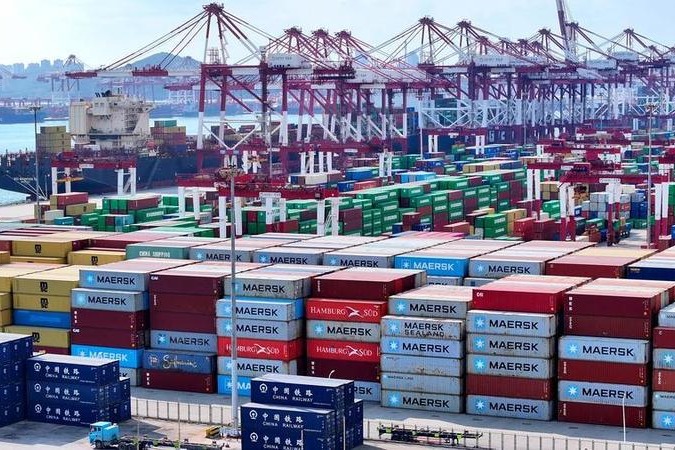
Traffic on the Middle Corridor has grown steadily since its launch in 2017. In 2021, 29,000 twenty-foot equivalent units of cargo were transported along that route, which is 52 percent more than a year earlier. In his speech in Istanbul in late November, Natig Jafarov, director of ADY Container LLC, said that from January to October 2022, the transportation of goods in containers along the Middle Corridor increased by another 45 percent compared to the same period the year before.
According to a statement from the TITR association, a freight-forwarding consortium made up of Kazakh, Azerbaijani and Georgian companies, the volume of goods transported through the Middle Corridor route would reach 50,000 TEU or 3.2 million tons in 2022. One should mention that this route cannot replace all traffic along the Northern Corridor. In 2021, only 8 percent of the cargo transported along the Northern route was transported along the Middle Corridor.
When transporting goods along the Middle Corridor, transporting goods through the Caspian Sea is the most difficult part, but progress is also being made in this direction. TITR Secretary General Gaidar Abdikerimov said that from September 2022, the number of ships plying between the ports of Aktau in Kazakhstan and Baku in Azerbaijan would increase to six, meaning a doubling of the capacity.
The decision taken at the Shanghai Cooperation Organization summit in Samarkand in September to build a new section of the railway through Kyrgyzstan and Uzbekistan could reduce the distance between China and Europe by an additional 900 km compared to the current shortest route and save up to eight days of travel time. Goods from China to Europe would be transported by rail in just 12 days.
For the successful functioning of the project, the position of the countries of the European Union is critical. In this regard, the bloc's solid political support has become noticeable. On July 18, the EU and Azerbaijan signed a new energy agreement and are currently negotiating a new deal to expand cooperation in many areas. In their joint declaration, the EU and Kazakhstan also stated that "the current geopolitical context has highlighted the need for new alternative routes connecting Asia and Europe. On July 25, the European Bank for Reconstruction and Development announced plans to invest more than $100 million in Kazakhstani railways.
Over the past two months, EU political support for the Middle Corridor project has further increased. The head of the European Council, Charles Michel, visited Central Asia at the end of October to hold a summit with the leaders of countries in the region, which he called "much more than just a political dialogue between the two regions". At the end of November, EU chief diplomat Joseph Borrell visited the region, highlighting the bloc's interest in developing relations with Central Asia in transport connectivity.
So far, the Middle Corridor has mainly been used by Chinese logistics companies, but European companies have begun to show much more interest in the route. Danish logistics giant Maersk launched a rail service on the Middle Corridor in April, while Finnish company Nurminen Logistics began operating regular container services from Chongqing, China, to Central Europe in May. On Nov 25, the Port of Baku, the Austrian OBB Rail Cargo Group and Cabooter Group signed an agreement to expand freight traffic from Europe to Central Asia and China along the corridor.
Critics of this railway bridge have pointed to the need to cross multiple borders as a major drawback. But this "flaw "can be reformatted into a virtue, building an atmosphere of trust and multifaceted cooperation between the countries involved in the project. China and Europe will become closer to each other, and all countries involved in such a belt of friendship. The emergence of a New Great Silk Road is entirely possible. The Middle Corridor may not be the cheapest transport route between Asia and Europe, but new "undiscovered" markets of a few landlocked countries are on their way. Besides, in a rapidly changing world, diversification of supply chains will always be essential to reduce political and economic risks.
And what is especially noteworthy is that all countries and companies are actively cooperating to optimize their hard and soft infrastructure, including in multilateral formats. These efforts are aimed not so much at diverting cargo from the Northern Corridor as at developing regional trade and promoting deeper economic cooperation between China, Central Asia, the South Caucasus and Europe. Given the great interest in developing this route for transportation between the two centers of world economic power represented by China and Europe, the Middle Corridor undoubtedly has a great future.
The author is a former prime minister of Kyrgyzstan. He is the author of the book "Central Asia's Economic Rebirth in the Shadow of the New Great Game. The author contributed this article to China Watch, a think tank powered by China Daily.
Contact the editor at editor@chinawatch.cn