


How did 'People Far Away' become co-creators of Chinese culture?










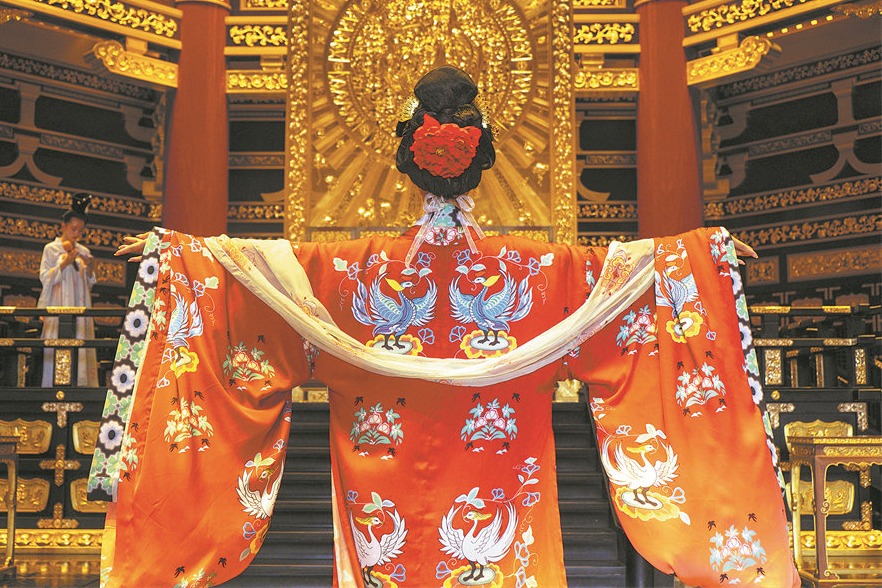
In 307 BC, King Wuling of Zhao (340-295 B.C.) made an important decision to wear the costumes of the Tartar nomadic group. But soon he was sharply reproached for the decision: "Your Majesty, if you replace our costumes with those of a faraway group, you change our beliefs, transform ourWay and violate our spirits."
This accusation stemmed from the logic of Chinese being nobler than others, and it was at the ideological and cultural heights of beliefs and Way. But the king responded from a realistic standpoint, believing that the reform of Tartar-style costumes, horse-riding and archery would benefit the people and strengthen the state. King Wuling defended himself with the interests of the people for the strategic future of the state of Zhao at an unquestionable political height.
After that, King Wuling carried out a series of major reforms, wearing short clothes, belts, hooks and leather boots as he established the first cavalry-based army in the history of the Central Plains. He ended the ideological and cultural debate more than 2,300 years ago with a powerful military and a glorious state. Since then, there have been no doubts about the reform, suggesting a value consensus of historical realism. Over the last millennium, the story has been retold repeatedly. It is a story that must be told in retrospect of China’s history– a chapter that must be written into Chinese civilization.
Then what is the internal logic of Chinese civilization in the story?
In the historical context of the Spring and Autumn Period (770-476 BC) and the Warring States Period (476-221 BC), the story opened the door of Chinese culture to barbarians, bringing the periphery into the center. In the context of historical realism, it inspired mutual learning, borrowing and transformation between Chinese and foreigners, as well as triggering the double variation of Sinicization and foreignization.
From the vision of the China’s entire history, the story shaped an inclusive culture and politics. It also established a solid, lasting tradition in ideology and culture: inclusiveness and interaction.