



Health insurance reform to better meet needs of patients: NHSA









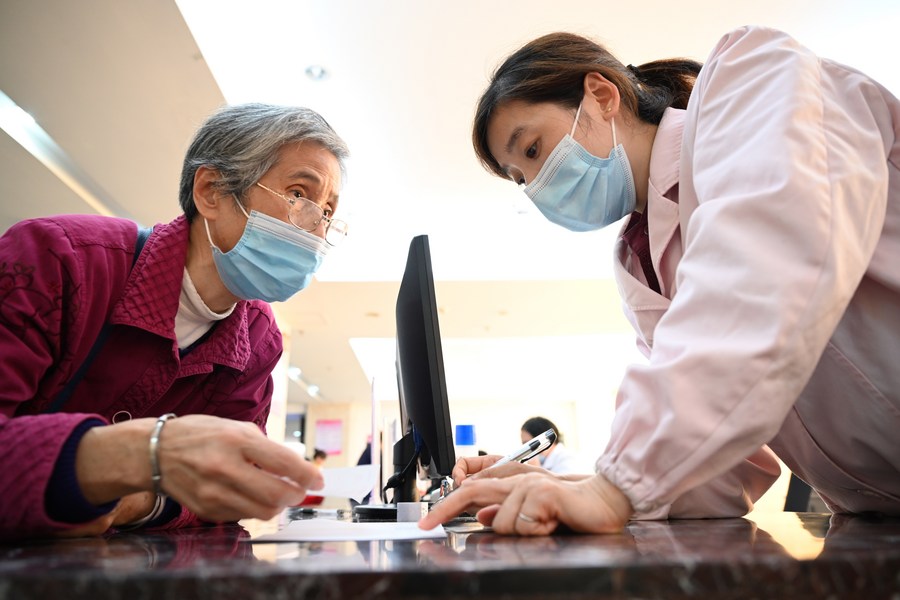
BEIJING -- The ongoing health insurance reform process is being conducted in response to the people's growing demand for reimbursing outpatient medical bills, said healthcare authorities.
It will benefit more outpatients with no need for extra input from employers and employees, said the National Healthcare Security Administration (NHSA).
EMERGING MEDICAL NEEDS
Established in 1998, the basic health insurance system for urban employees and retirees consists of two parts: mandatory personal accounts which previously received contributions from both employees and their employers and which mainly paid for general outpatient services and medicine expenses; and a pooled fund contributed by employers that was mainly used to reimburse hospitalization bills.
Given the great changes in China's society and economy over the past two decades, it has become increasingly difficult for the mechanism to meet the needs of the public in terms of receiving outpatient services, said the NHSA.
First of all, chronic diseases have become the main type of illness affecting the health and well-being of Chinese people, said the NHSA, noting that they are responsible for over 85 percent of deaths in China and the medical expenses they incur account for more than 70 percent of the overall financial burden of medical care.
The most effective means to treat chronic diseases is to pay visits to outpatient departments for early detection and treatment of these illnesses. However, the existing system which requires employees and retirees to cover these expenses with personal accounts is not enough to address such needs.
Second, with rapid development in medical technologies, many medical examinations and operations, once only available in inpatient services, can now be provided through outpatient services, which led to an increasing number of visits to outpatient departments.
Between 2001 and 2021, the number of visits to general outpatient and emergency departments nationwide increased by 312 percent from 1.95 billion to 8.04 billion, according to the NHSA. The limited amount of funds in personal accounts cannot cover the expenses generated.
Third, China has become an aging society. The number of seniors aged 65 and above grew from 90.62 million to 205 million in the decade through 2021, making up 14.2 percent of China's total population.
Compared to younger people, elderly people are more likely to fall ill, and are usually patients suffering from multiple chronic diseases. They tend to pay more visits to outpatient departments and generate heftier medical bills.
Due to the insufficient reimbursement of outpatient medical bills under the old system, some elderly residents chose to save money by not visiting outpatient departments, which eventually caused their illnesses to worsen, said the NHSA.
After the reform, contributions from employers are fed into unified accounts, instead of individual saving accounts, to support the reimbursement of general outpatient bills.
TANGIBLE BENEFITS
The ongoing reform will benefit the public in three aspects, according to the NHSA.
Following the reform, the basic health insurance system for urban employees will be able to reimburse outpatient medical bills in more regions of the country. Furthermore, individuals already receiving reimbursement for outpatient medical bills will enjoy higher reimbursement rates.
While some people who rarely go to the doctor have dormant funds in their personal accounts, some others find themselves running out of personal account deposits due to frequent hospital visits. Through the reform, the health insurance funds will provide much needed financial support for the latter.
In the meantime, with general outpatient services becoming reimbursable, the pressure on inpatient departments at medical institutions can be alleviated. Particularly, the shortage of hospital beds in major medical institutions will be addressed. This will facilitate the reasonable distribution of medical resources and ensure it goes to the patients in need.
The reform provides better protection of retired people, who will, compared with working people, have lower threshold and higher percentage of reimbursement.
In addition, following the reform, the insured are allowed to use the money in their personal accounts to help their family members, including their elderly parents.
Launched in 2021, the reform saw the pooled fund help employees save 108.6 billion yuan (about $15.75 billion) when receiving general outpatient services in 2022, according to the NHSA.
More efforts will be made to help localities optimize reform measures, said the NHSA, noting that more pharmacies will be added to the system, supporting efforts to cover outpatient expenses through unified accounts.





