Common grounds
China, Brazil advocate multilateralism, the democratization of international relations and a multipolar world









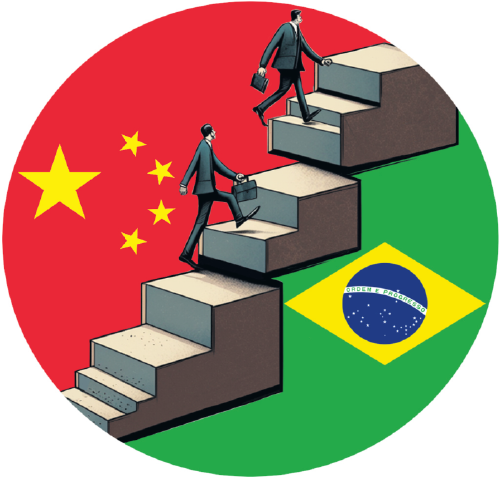
China and Brazil are major representatives of the emerging powers that are undergoing a crucial period of modernization and transformation from peripheral countries to the core of the world system thanks to their increasing international influence.
Since the beginning of this century, China-Brazil relations have achieved breakthroughs driven by strong economic and trade relations and South-South cooperation. Pushing the reform of the global governance system has become a major part of their strategic dialogue, which is drawing greater international attention to the development of their relations.
Both China and Brazil are demanding reform of the current global governance system, and hold similar positions on major international issues such as international financial system reform, food security, energy security, climate change, the United Nations Millennium Development Goals and global security governance.
Both advocate multilateralism, the democratization of international relations and a multipolar world. They emphasize the concept of a new international political and economic order and defend developing countries' rights to development and security. These common demands and similar positions provide an important basis for the two countries to expand their cooperation on major global affairs.
In the new millennium, China and Brazil have cooperated closely in international mechanisms such as the United Nations, the International Monetary Fund, the World Trade Organization, the World Bank and the G20. And through the mechanism of BRICS, China, Brazil and other major developing countries have achieved broader cooperation, enhanced the overall voice of developing countries in global governance and promoted the gradual establishment of a new political and economic order and a multipolar international system.
South-South cooperation, including China-Brazil cooperation, has resulted in the redistribution of global power. Although the group of developing countries is yet to gain international status matching their overall strength, the views of developing countries on global governance have received more attention, reflecting the effectiveness of multilateral cooperation as a way for developing countries to enhance their participation in global governance.
Currently, the two major themes of our time, peace and development, face unprecedented challenges, and global governance suffers from a significant "efficiency deficit".
Political polarization, ultranationalism, protectionism and populism are on the rise in the United States and the developed countries of Europe, where the political emphasis is on maximizing one's own interest in the globalization process, reducing the willingness and ability of those countries to participate in global governance and provide public goods.
Moreover, the existing "democracy deficit", "responsibility deficit "and "trust deficit" in global governance have become more pronounced, underlining the necessity and urgency of reforming the global governance system.
Expectedly, in the pursuit of a new international system, the vast majority of emerging markets and developing countries have put forward reasonable demands for participation in global governance, changes to the rules guided by the interests of the developed countries of the West and attention to the interests of developing countries and the interest of all humanity.
However, as the global power balance shifts and its relative power weakens, the US hopes to continue to maintain its global governance leadership at a lower cost, increasing the difficulty of aligning global effective governance, global governance reform, and international system transformation, thereby causing a mismatch between the global governance mechanism and the global power structure.
However, even though multilaterism is facing a crisis, it is still the preferred path for developing countries to carry out international cooperation because, first, multilateralism can effectively reduce the cost of participation in global governance for emerging powers. Second, multilateralism can help balance the asymmetrical influence between emerging powers and established powers in global decision-making.
There is a solid foundation for cooperation between China and Brazil, as the two countries have similar views on the world, security and development, and they have similar positions on the reform of the global governance system, providing an environment of mutual trust that is favorable for deepening cooperation. In the next stage, the development of China-Brazil relations should focus on two aspects:
First, maintaining the efficiency and sustainability of their bilateral cooperation. Relations between countries should develop along with the process of integrating mutual interests, and the degree of consistency in interests is a key factor determining the efficiency of bilateral relations.
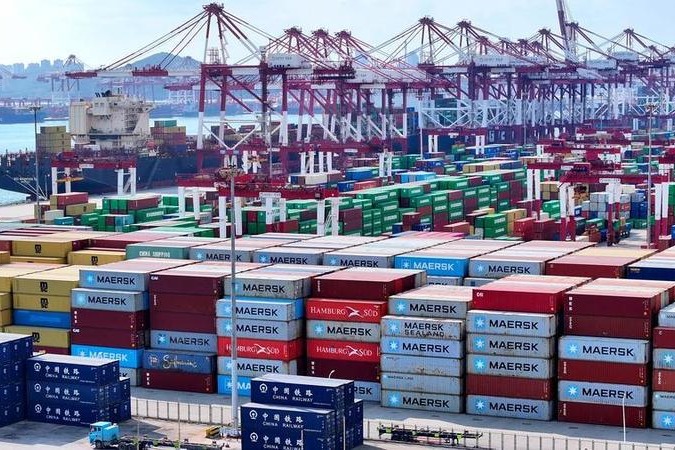
The trade structure between China and Brazil is highly complementary. For China, Brazil is an important partner to ensure energy, resource, and food security, as well as a big supplier of soybeans, corn, iron ore, and oil. Currently, there is still ample room for the two countries to "make the cake bigger" in their trade, especially the trade in agricultural products.
In terms of investment, attention should be paid to Brazil's energy, infrastructure, mining and agriculture, especially to energy and infrastructure where Brazil has a large investment gap. Considering Brazil's need for reindustrialization, achieving higher-quality integration of their industry chains will be the direction of future bilateral investment.
Second, as the largest developing countries in the Eastern and Western Hemispheres, respectively, China and Brazil bear the mission of safeguarding the legitimate rights and interests of developing countries, and should also be the core force in promoting global governance system reform.
At a time when globalization faces setbacks, multilateralism is experiencing difficulties, and the efficiency of global governance is declining, China and Brazil should strive to form a unified voice by strengthening their coordination on major issues, making good use of multilateral mechanisms such as the G20, BRICS and BASIC.
In addition, the two countries should strengthen their interaction and cooperation with developing countries, so as to stimulate new vitality for South-South cooperation. Only when developing countries unite as one strong force, can we see fundamental breakthroughs in global governance.

The author is a senior research fellow of the Institute of Latin American Studies at the Chinese Academy of Social Sciences and a researcher of the National Institute for Global Strategy at the CASS. The author contributed this article to China Watch, a think tank powered by China Daily.
Contact the editor at editor@chinawatch.cn.