



Philippines urged to facilitate RCEP impetus on services business









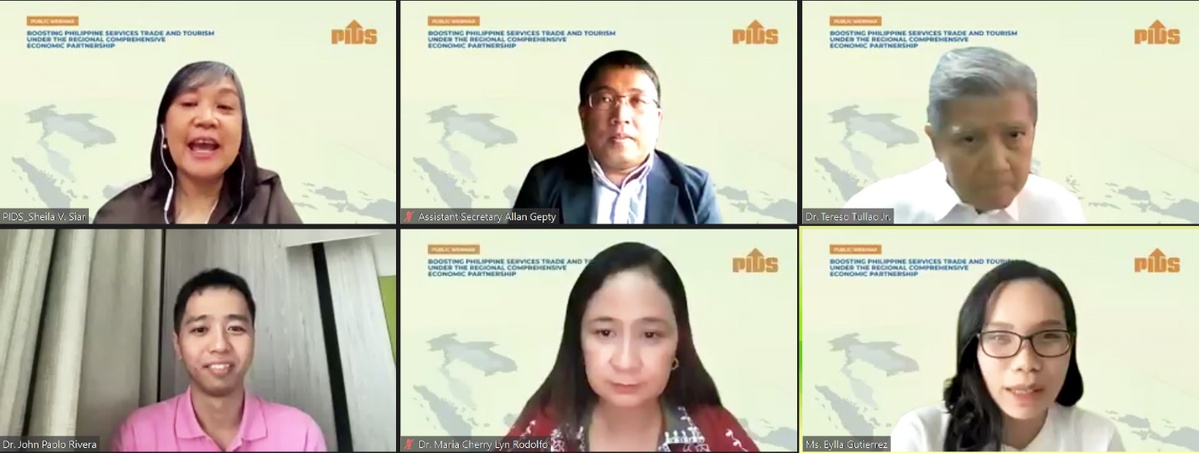
The Regional Comprehensive Economic Partnership (RCEP) has opened up more opportunities to the Philippine tourism industry, as the language skills and cultural adaptability of its labor force can be a major draw for tourists from member countries, a forum heard on April 27.
But experts note that such opportunities will only be realized if the Philippines will invest more on infrastructure and human resources development.
The Philippines has the potential to draw in more business travelers, which will boost the tourism industry and encourage more people-to-people exchanges, according to experts who participated in an online forum organized by the Philippine Institute for Development Studies (PIDS), a Manila-based think tank.
The RCEP, which took effect recently in the Philippines after ratification in February, is the world's biggest free trade pact. The signatories are the 10 members of the Association of Southeast Asian Nations -- Brunei, Cambodia, Indonesia, Laos, Malaysia, Myanmar, the Philippines, Singapore, Thailand and Vietnam -- together with Australia, China, Japan, South Korea and New Zealand. RCEP members account for about one-third of the global population and 30 percent of the world's GDP.
According to Allan Gepty, assistant secretary at the Department of Trade and Industry, the RCEP offers "infinite" opportunities to the Philippines at a time that the knowledge and creative economy is growing. Gepty noted how the services sector -- which includes the travel and tourism industry -- accounts for about 60 percent of the Philippine GDP.
"It's a given that the one big asset for the Philippines is our people, not only because they are young and dynamic, but they are versatile, professional, (and culturally) adaptive," he said. Gepty said the Philippine government needs to formulate and implement policies that will improve the capabilities of its citizens.
He said travel and tourism industry is "very important" as it promotes trade. "Tourism begets trade. If you want to promote your goods and services, (then) tourism is a good platform," Gepty said.
Maria Cherry Lyn Rodolfo, lead convenor of the Safe Travel Alliance, said the Philippines has not captured a significant amount of intra-regional ASEAN travel. Among RCEP countries, Rodolfo said most only tourists from Australia, China, Japan and South Korea go to the Philippines.
"We have not really sustained beyond the 10 percent share for ASEAN visitor arrivals to the Philippines and there is significant room to actually expand," Rodolfo said and has urged for the promotion of the business plus leisure travel, or "bleisure".
She said RCEP provides a broad platform for exchanges and opportunities to form institutional setups like technical working groups, where tourism can be part of the priority agenda.
Rodolfo noted that more investment promotions and travel trade development activities can be held in the Philippines. She said that this can drive more investors and business groups to more areas and destinations in the Philippines.
John Paolo Rivera, associate director of the Dr. Andrew L. Tan Center for Tourism at the Asian Institute of Management, said the liberalization of services, as mandated by the ratification of RCEP, should not threaten the domestic tourism enterprises.
Rivera said even before RCEP was put into place, there's already a need for the Philippines to upgrade the skills of its workers in the tourism industry.
"Training will take time," he said. Rivera said both the public and private sector has to conduct a more intensive training so tourism enterprises can compete directly with their foreign counterparts.
Tereso Tullao Jr., professor of economics at De La Salle University, said that in terms of strength in professional services, Filipinos' ability to professionals "are comparable with the professionals in the ASEAN member states". Tullao cited the Philippines' mutual recognition arrangements with ASEAN member countries in terms of education and training, assessment, examination, accreditation, certification and licensing.










