



Beyond developed world lie opportunities in emerging sectors









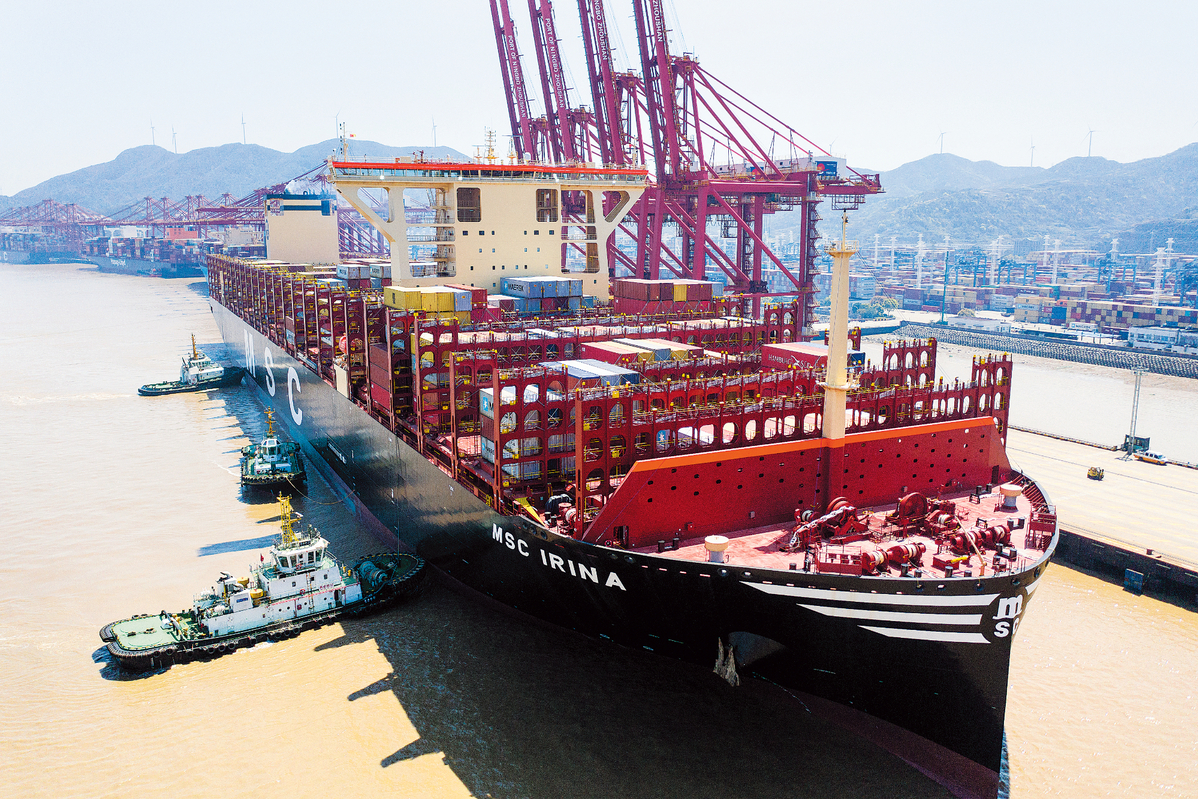
Despite various internal and external pressures, China's foreign trade has achieved a stable start in the first four months of this year. An analysis of the trend should include a reference to the comparison base effect. The concentrated release of demand due to factors like the disruption caused by the COVID-19 pandemic and the soaring replenishment demand of overseas retailers, has pushed up China's exports and imports during this period.
However, many pressures still persist and market watchers have called on the government to pay more attention to the sustainability of foreign trade growth.
The National Bureau of Statistics revealed that the official purchasing managers index for China's manufacturing sector stood at 49.2 in April, down from 51.9 in March, indicating that international market demand is not strong enough and the pressure on foreign trade has not been completely relieved.
To sustain their export growth, many exporters have made efforts to shorten the cycle from industrial development to foreign trade growth by increasing investment in research and development on the one hand, and expanding the pace of opening-up and going global on the other, so that their products could have a better chance of gaining greater recognition and access in the global market.
Foreign trade is a slow variable and has a time lag. From signing new export orders to issuing production tasks and actual delivery, as well as cross-border transportation logistics, it usually takes three to six months. The growth of foreign trade value in the first four months of this year is likely to have come from orders completed between July and December last year.
Even though some foreign institutions predict a bleak outlook for China's foreign trade this year, Chinese exporters, backed by resilient industrial and supply chains, are able to strive for survival and development opportunities in difficult times, achieving results beyond pessimistic expectations.
In order to remain competitive, Chinese companies should not solely focus on the United States and Europe, where market demand is weakening and risks in financial services are rising. Instead, they should further expand their market presence in member countries of the Association of Southeast Asian Nations and many economies participating in the Belt and Road Initiative, especially those in the Middle East, Africa and Latin America. This will help compensate for the loss of weakened demand from many developed countries.
The rising trade value between China and other RCEP countries in the first quarter is a solid example supporting this view. It grew 7.3 percent year-on-year to 3.08 trillion yuan ($443.34 billion), accounting for 31.2 percent of China's total foreign trade, data from the General Administration of Customs showed.
In addition to relying on digital, green and technology empowerment to ensure their market share in developed markets and deal with disruptions caused by geopolitics and protectionism, Chinese companies' global strategies and increasing investment in overseas markets are practical and effective for optimizing their country's foreign trade structure and stabilizing its huge scale.
According to the Ministry of Commerce, China's nonfinancial outbound direct investment rose 26.3 percent year-on-year to 215.97 billion yuan in the first quarter of 2023.
China's foreign trade has undergone several transformations over the past few decades. Initially, it relied on processing trade and labor-intensive production. After years of capital and technology accumulation, it shifted toward exporting high value-added products and signing more free trade agreements.
With many parts of the world entering a new era of green and innovation-led growth, the country has also started relying on green-themed products, digital trade and cross-border e-commerce to remain competitive.
Digital trade refers to trade in goods and services that are digitally ordered and delivered, such as cross-border e-commerce and digitally enabled transactions of trade in services. According to information released by the Geneva-based United Nations Conference on Trade and Development, digital trade accounts for a growing share of international trade.




















