



Dedollarization and the collapse of the West









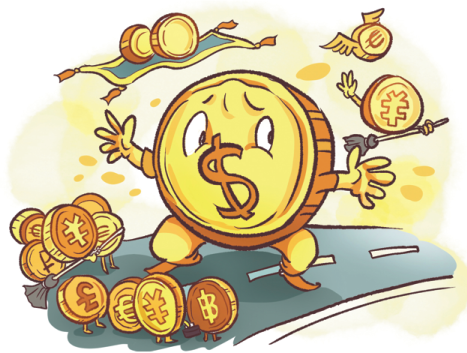
With foreign countries dumping dollars and foregoing future purchases of US Treasury bonds, a "domino effect" has been triggered that is now causing hyperinflation in the US and may one day result in the collapse of the West.
As more nations join Brazil, Russia, India, China, and South Africa using their own currencies or the currencies of BRICS nations to conduct foreign trade—instead of the US dollar—this process of "dedollarization" is depriving the US of its future ability to "export" inflation abroad. This is how the US has exported inflation in the past:
For three decades, foreign nations have been loaning money to the US by
buying 10 or 20 year US Treasury bonds. This enables the US to take that infusion
of capital and use it to power its economy and military machinery.
But with the US paying foreign nations back in dollars that will have lost much of
their value during the ensuing 10 or 20 year period of the loan—due to inflation—the
original lenders are getting back only a fraction of the amount they loaned initially
to the US In this way, the US has been "exporting" its inflation abroad.
But with dedollarization—or "disintermediation" as economists might describe it—the inflation the US once exported abroad now has nowhere to go. This means that inflation stays at home in the US where it harms US consumers. In effect, US consumers must now use dollars that are declining in value due to inflation to buy foreign goods and services that are costing more and more.
The economic and emotional pain of this on the American public is unimaginable and will cause a panic not seen since 1929 and the Great Depression.
Following the recent insolvencies of Silicon Valley Bank, Republic Bank, and Signature Bank, 16 other intermediate size US banks have asked the Federal Reserve Bank and Federal Deposit Insurance Corporation for a lifeline of support in the amount of $32.6 billion. When news of this reaches the public, depositors may begin withdrawing funds from banks considered "too big to fail"—like JP Morgan Chase, Citigroup, Bank of America, and Wells Fargo.
The accelerating pattern of bank deposit withdrawals is now spreading to banks in Europe and elsewhere.
In fact, the combined depth of financial difficulty faced by the US and Europe raises the question of whether this development may ultimately signal a decline of the West itself. Social scientists will want to watch carefully to see if the economic breakdown spreads to the political and social arenas. If that occurs, it could well mark the end of a 500-year period of Western colonialism launched when Christopher Columbus "sailed the ocean blue" in 1492.
And with global economies far larger than in 1929, the overall effect of a burgeoning economic breakdown could be far greater in scale than experienced during the Great Depression.
In addition, $2.5 quadrillion in razzle-dazzle instruments called "derivatives" will magnify this problem of scale. Should derivative holders panic and collect on their holdings, this will cause a liquidity shock to large US and European banks who are holders of "counterparty risk" for these derivatives.
The great question the world is now facing is, therefore, whether or not to simply let the global financial system collapse of its own accord. This is what Iceland did following the financial crisis of 2008. After letting their banks fail, Iceland rechartered them a few months later—and voila, the economy was quickly back to operating on all fours.
The problem with the Iceland model is that it brings with it a corresponding "debt jubilee"—where outstanding consumer loans like mortgages, credit card debt and student loans are all forgiven and erased from the books.
Faced with the specter of a debt jubilee, global elites will likely go to Congress to ask for another bailout. They will learn, however, that this time the American voters will refuse to allow a second bailout that will only lead to higher taxes they must one day pay.
Gregory K. Tanaka, formerly a law school dean and bank president, is the author of Systemic Collapse and Renewal: How Race and Capital Came to Destroy Meaning and Civility in America and Foreshadow the Coming Economic Depression (Peter Lang Publishing).
Edward Miamee Salce, who holds a doctorate in education, is a First Nation researcher of Apache and Pueblo blood and is actively seeking to promote integrity in US decision-making.
The views don't necessarily reflect those of China Daily.
If you have a specific expertise, or would like to share your thought about our stories, then send us your writings at opinion@chinadaily.com.cn, and comment@chinadaily.com.cn.





