Decoupling move harmful for both









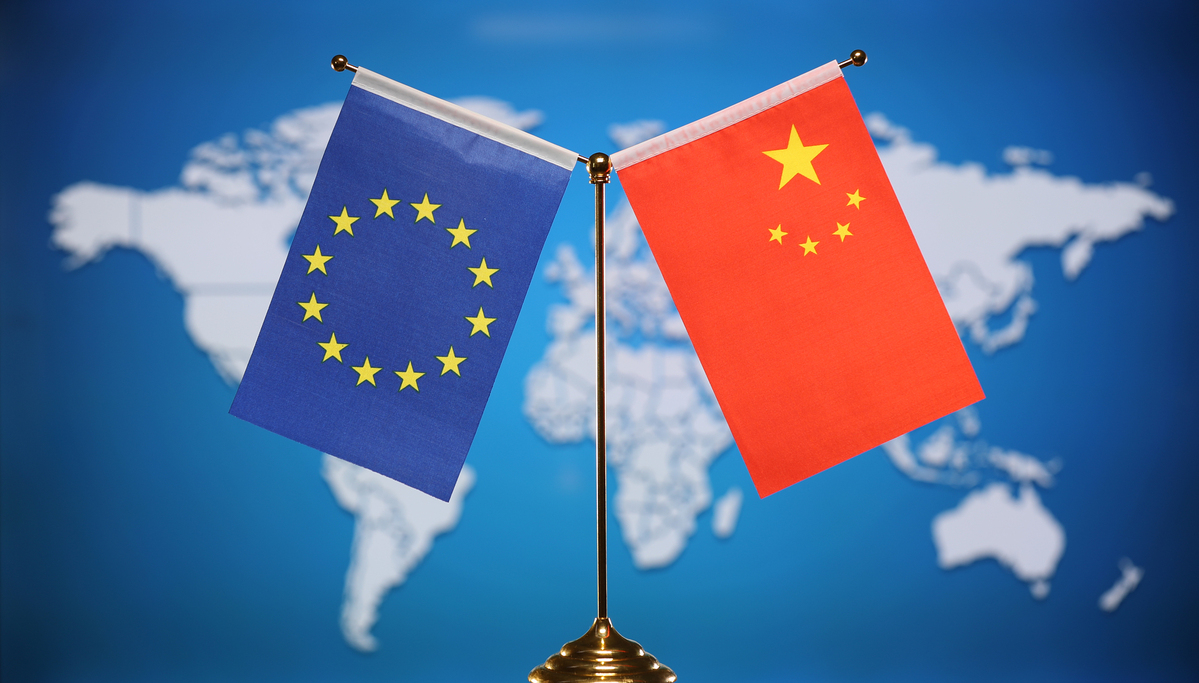
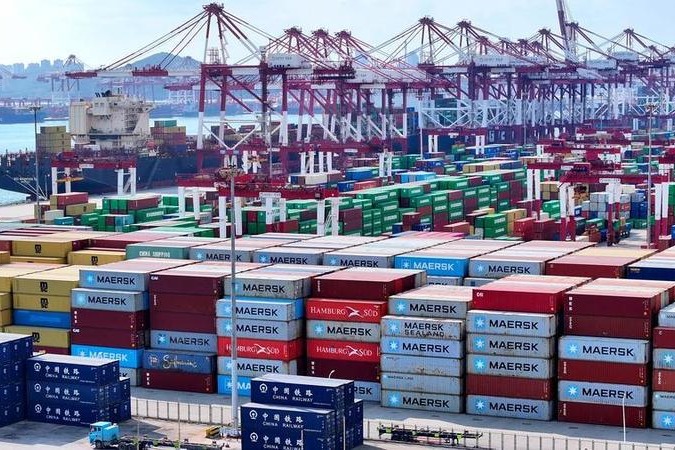
With China becoming a major global economic and political player, its economic ties with Europe have strengthened. The EU is now the second-largest trading partner of China, and China is the largest trade partner of the EU, with 9 percent of the EU's goods exports destined for China and more than 20 percent of its goods imports coming from China.
This is the result of deepening mutual economic dependency as a strategic objective to not only promote peace, and mutual progress and prosperity but also to secure these goals in the long run. But in view of the Russia-Ukraine conflict, the long-term securing of these goals through economic integration no longer seems assured. Many voices are therefore calling for a diversification of EU-China ties, if not a total disentanglement of mutual dependency.
The EU and its major member states such as Germany are now reflecting on how to adjust and develop their China policy. But this is not completely new. These countries have reflected on such issues in the past too, for instance, when China launched the Belt and Road Initiative, a massive, ambitious infrastructure improvement project, in 2013. Plus, the EU has already referred to China as a "systemic rival" in 2019.
The drastic shift in China-US relations from "Chimerica", a kind of symbiotic embrace as suggested by observers, to a situation of strong mutual rejection, is not helpful to EU-China ties either. And given that the EU and the United States are and will remain close partners, European strategic independence has its limits.
However, the EU's economic decoupling with China could threaten the stability and friendly trade environment needed for long-term cooperation and collaboration on more general issues of global welfare. In a world of rising tensions and growing mistrust, exchanges among political, business and academic leaders have become even more important for promoting mutual understanding, leading to effective dialogue and cooperation. Because mutually respectful dialogue can help narrow the communication gaps and misperceptions, and build mutual trust.
As June 5 marked the 300th birth anniversary of Scottish economist and philosopher Adam Smith, the world should reflect on his contributions to the concept of the division of labor. In his The Wealth of Nations, he argues that division of labor is a driver of economic growth. This is crucial for international relations, too, as the international division of labor allows countries to specialize in certain sectors and still enjoy a wide range of goods and services.
China is important for the EU also because of its crucial role in addressing global and regional challenges, including but not limited to climate change, energy transformation, human migration, population aging, food security, pandemics, and weapons and nuclear proliferation. Solutions to the big upcoming crises are public goods, which can be enjoyed everywhere.
EU-China relations could still benefit from a deepening of partnerships among EU and Chinese companies, and increased interactions between academics and civil society organizations from the two sides.
Yet many EU countries are still concerned about the lack of market access in China and consequently large trade imbalances, possible "intellectual property theft" and "illegal technology transfers", cybersecurity and "non-transparent" regulatory and legal systems.
Germany, the economic heavyweight in the EU, could play a leading role in this regard, by helping stabilize China-EU ties. It is in the country's own interest to do so, given its significant trade orientation.
But it can do this only on the basis of a balanced strategy that combines intensified cooperation with China with a policy aimed at "de-risking" some aspects of bilateral economic and political ties. There is a need for all to understand this mutually beneficial approach, because it includes efforts to secure the critical infrastructure and important raw materials of a country.
Since diplomacy and dialogue remain the most important elements to stabilize and develop China-EU ties, the two sides should arrange for frequent visits and exchanges by political leaders, in order to set the direction for the development of Sino-EU ties. There is also a need to organize debates and support for such an endeavor in the European media.
The author, a professor at the Free University of Berlin, is the president of the Global Labor Organization, a Germany-based worldwide network of researchers investigating the path of globalization. The views don't necessarily reflect those of China Daily.