



Building community with a shared future with GDI









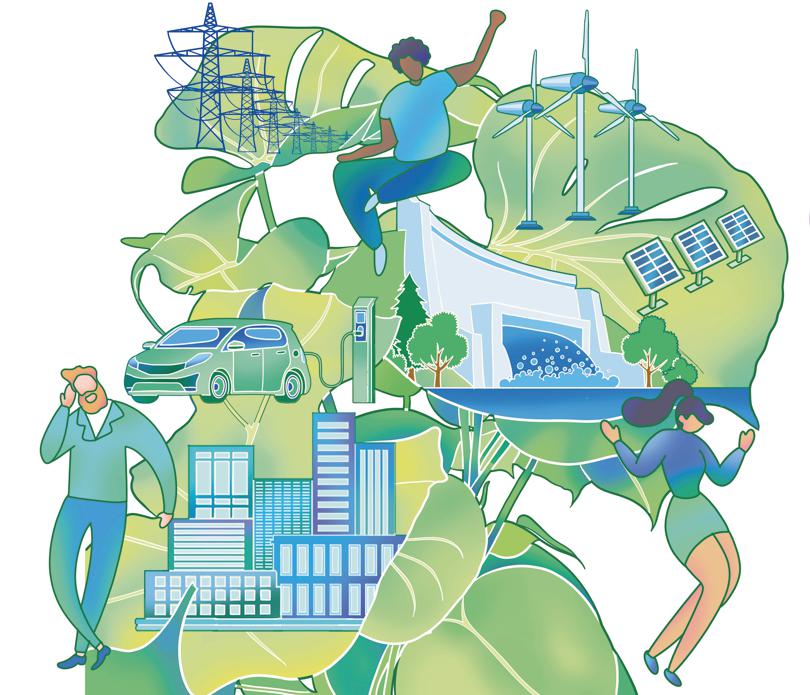
The world today faces two main problems: intertwined deficits and insufficient public goods. While changes in the international situation are unfolding in ways like never before, the growing global deficits of peace, development, governance, security and trust are creating new, daunting challenges for the world. On the other hand, the willingness and ability of developing countries to address these challenges are declining.
It is in this context that China proposed the Global Development Initiative as a global public good. The aim of the initiative is to help the world better tackle development problems.
However, China needs to find suitable ways to implement a "budget-friendly" GDI, which is in its early stages of development, and adapt to the changing global developments and improve the well-being of humankind as a whole.
The impacts of COVID-19 and the Russia-Ukraine conflict have increased the need for global public goods, in order to meet the demands of development and solve the structural problems.
Both the developed and developing countries are facing difficulties in pursuing sustainable development because of their unbalanced development structures. Almost all countries are under pressure to deepen reforms, and cannot find ways to take their development agenda forward, for instance, even by integrating new energy with digital technology.
Besides, the industrialized countries' development models no longer appear feasible to developing countries, especially after the COVID-19 pandemic, so they cannot and do not want to follow those models to boost their own development. More important, developing countries such as China are exploring their own paths to modernization despite difficulties.
Many countries, regional and international organizations believe the situation in the third decade of the 21st century may be worse than the earlier decades. Obviously, it is a huge challenge to provide the world with new public goods in such a situation. But at the same time, providing public goods would be a great contribution to global development.
China has been exploring ways to provide new global public goods since the 18th National Congress of the Communist Party of China in 2012, and the GDI proves it has the capability of offering new, more global public goods.
First, the GDI provides new ways for addressing global development problems, because it aims to promote common development and establish harmony between nature and humans by adopting a people-centered approach.
Second, the GDI has the potential to boost global development. Reform and opening-up have helped China develop a "can-do" attitude, which keeps instilling in it material and spiritual energy to promote common prosperity not only within the country but also across the world.
For example, China has never been short of confidence even in the face of the biggest challenge or crisis, be it the 2008 global financial crisis, the China-US strategic rivalry, the three-year COVID-19 pandemic or the Russia-Ukraine conflict. More important, helping the world overcome challenges has always been a part of China's development agenda.
As such, China is a "problem solver", rather than a "troublemaker" which some Western countries accuse it to be. In fact, China has helped address big global issues, which even the most advanced countries could not resolve, and boost global confidence.
And third, China provides two kinds of public goods for global development. The first are material goods, which include helping build infrastructure, and the other are knowledge goods including improving global connectivity that accelerated after the Belt and Road Initiative's implementation.
The GDI therefore should be seen as a means to not only boost global development but also help build a community with a shared future for mankind. However, China needs to cautiously decide the direction of the GDI, so as to optimize its development.
This means China needs to reduce the costs of providing global development public goods and prioritize "small but beautiful" global projects and foreign aid projects. It also needs to learn lessons from its experiences to plan a better future for related industries, while encouraging more and more civil society organizations, NGOS and private enterprises to provide public goods, and deepening cooperation with developed as well as developing countries to provide assistance to least-developed countries and vulnerable groups across the world.
The author is a professor at the School of International Studies and deputy director of the Institute of Area Studies at Peking University.
The views don't necessarily reflect those of China Daily.





