



Region's deeper engagement with Asia shows advancement of multipolar world









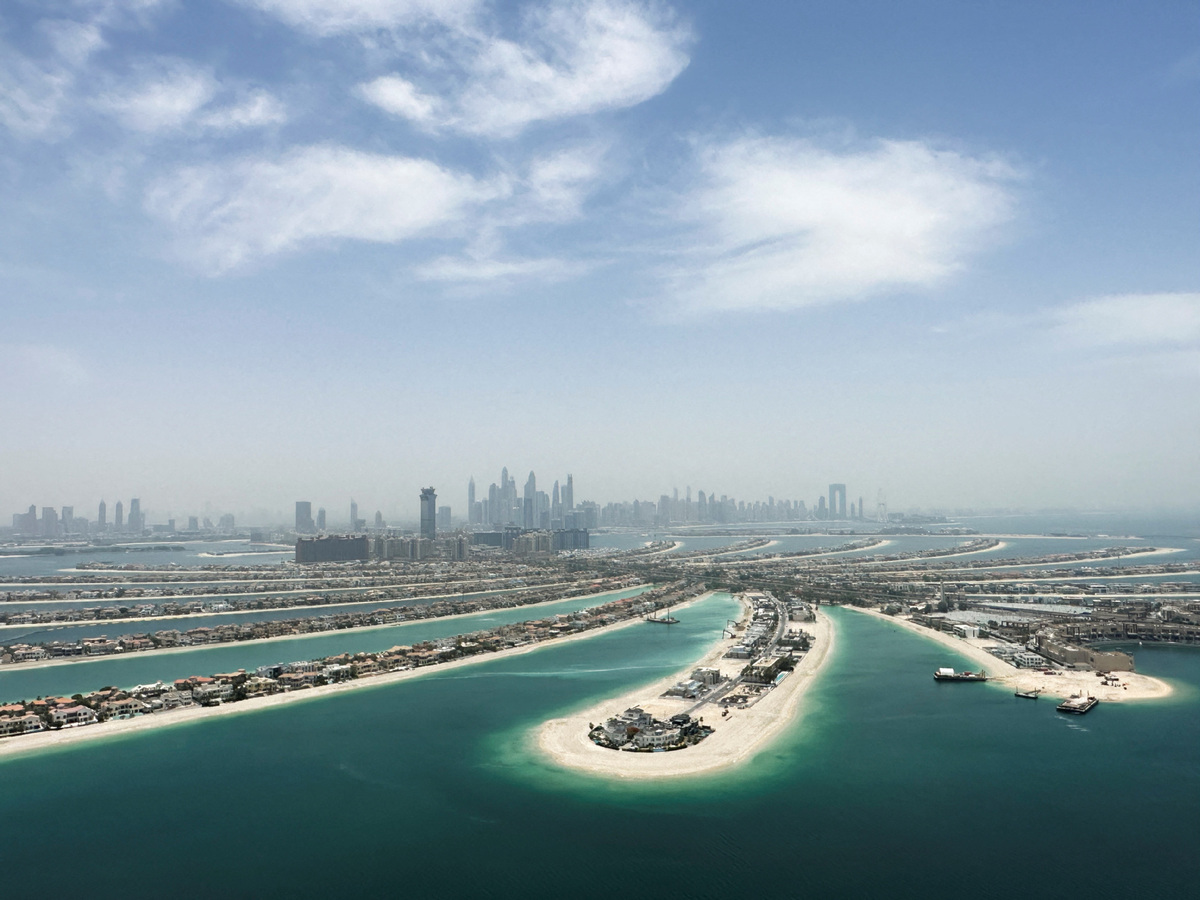
Arab nations' deeper engagement with eastern Asia, amid an economic diversification push, shows that the Gulf region is moving with the times and advancing a multipolar world, analysts say.
They noted that Western countries have not been forthcoming with their investments in the region, prompting the Gulf Cooperation Council, or GCC, countries — United Arab Emirates, Saudi Arabia, Oman, Bahrain, Qatar, and Kuwait — to look more toward Asia, and in particular China.
Umer Karim, associate fellow at the King Faisal Center for Research and Islamic Studies in Riyadh, Saudi Arabia, said the GCC countries understand the shift of global economic and industrial hubs to the East, and that global political order is also shifting toward East.
"The Gulf's economic life is directly linked to the Eastern economies and no longer connected critically with Western nations that have been not so forthcoming in investing heavily within Gulf states," said Karim.
"This has pushed the GCC, as a whole, to look East and also to utilize its geographical location as crossroads of Africa, Europe and Asia to become a conduit between East and West, and also (between the) East and Africa," he added.
"The GCC just wants to move with the times. In the last decade, the situation has changed. The traditional order of the past is moving toward multipolarity, and countries must learn the requirements of the new game," said Mohammad Salami, an associate researcher at the International Institute for Global Strategic Analysis in Islamabad, Pakistan.
He cited recent examples such as the UAE entering into an agreement with India to use national currencies instead of dollars for trade, and Bahrain submitting an initial application to join the Shanghai Cooperation Organization.
"Relative independence, the trend of regionalism, de-dollarization, looking to the East, and the prominence of the Global South are the characteristics of this new order, which, of course, needs its own time to be established," Salami told China Daily.
In July and June alone, there have been multiple engagements between the GCC and Asia.
Last week, the GCC held its first-ever summit with five Central Asian countries — Uzbekistan, Turkmenistan, Tajikistan, Kyrgyzstan, and Kazakhstan — in Jeddah, Saudi Arabia, where they discussed the importance of concerted efforts to achieve peace, security, stability, and prosperity worldwide, as well as cooperation to tackle issues such as food insecurity and climate change.
On July 16, the GCC and Japan signed an agreement to resume negotiations on a free trade deal. On July 12, Saudi Arabia became the 51st country to join the growing Treaty of Amity and Cooperation in Southeast Asia, during an ASEAN Ministerial Meeting in Jakarta.
Gas agreement
In June, QatarEnergy signed a long-term liquefied natural gas sales agreement with China National Petroleum Corporation, the second such deal inked with a Chinese entity in less than a year.
As for the UAE, it has been proactively pushing for comprehensive economic partnership agreements, or CEPAs, with Asian countries. In June, Cambodia became the latest Asian nation to sign a CEPA with the UAE, following India in February 2022 and Indonesia in July of that year.
"Closer trade arrangements between Middle Eastern countries, the Association of Southeast Asian Nations, and China are crucial for developing a multipolar world. The partnerships will promote geopolitical balance, regional stability and energy security," Sujoko Efferin, a professor at the Faculty of Business and Economics at Universitas Surabaya in Indonesia, told China Daily.
"The ASEAN countries, China and Middle Eastern countries are aware of their centrality in the new multipolar world," he said.
Joeffrey Maddatu Calimag, a professor at the School of Global Studies at Kyungsung University in Busan, South Korea, said ASEAN's neutral stance on many issues, especially when dealing with opposing outside parties, has become one of the bloc's strong characteristics.
Calimag said the ASEAN region needs more energy and other resources to propel its economic growth.
The GCC members, put together, hold a large portion of the world's oil reserves, and can prove to be valuable partners, he said.
"Overall, it is a positive-sum situation for both regions as their cooperation opens more opportunities," Calimag said.










