Diversifying currency use is good news for world









Notably, recent years have witnessed the economic trends of increasing global inflation, a strong dollar policy, and interest rate hikes by central banks worldwide.
A prominent global trend is the process of de-dollarization aimed at reducing reliance on the US dollar as a reserve currency in international transactions. De-dollarization has spread globally, spanning from Asia to Latin America, and the Middle East to Africa, signifying its importance and far-reaching impact.
Over the past few decades, numerous countries and international organizations have diligently endeavored to forge alternative instruments that would supplant the primacy of the US dollar within the global economic system established after World War II.
The trajectory of events took an intriguing turn for the United States, as the early 2000s witnessed a substantial proportion of global reserves held in US dollars, hovering slightly above 70 percent.
However, by 2023, this percentage dwindled notably, standing at 55 percent. Such a significant decline commands profound attention, particularly in the light of the active involvement of over 85 countries worldwide in de-dollarization endeavors.
Concurrently, the US' share of global GDP has also experienced a pronounced drop, diminishing from approximately 56 percent in the immediate postwar era of 1945 to roughly 24 percent in the 2020s, signifying a momentous shift.
Remarkably, the participation of more than a third of the international political system, represented by the 85 countries engaged in de-dollarization, implies the potential for further proliferation of this trend.
The process is bolstered further by the dynamic engagement of prominent international and regional bodies such as BRICS (Brazil, Russia, India, China and South Africa), the Association of Southeast Asian Nations, and the Gulf Cooperation Council, elevating de-dollarization from a mere international trend to a transcendent and transnational phenomenon.
In light of these unfolding developments, the ramifications of de-dollarization reverberate far beyond the boundaries of a single nation, carrying the promise of a transformative paradigm shift with implications spanning the global economic order.
The active embrace of this pivotal trend underscores an era of economic recalibration, where the pursuit of "money sovereignty" and the quest for financial independence converge on a global scale.
Why is de-dollarization considered necessary?
Apart from shifting economic trends amid a comparative US decline, de-dollarization processes are mainly supported due to geopolitical risks and economic dynamics.
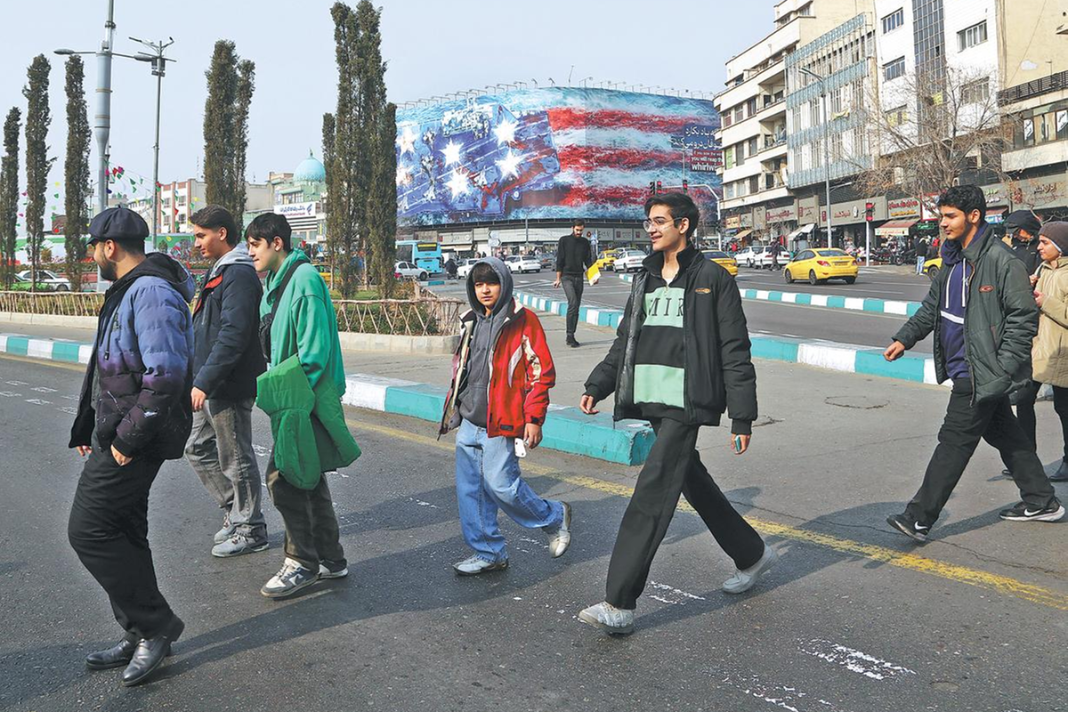
First and foremost, the political weaponization of the US dollar contradicts the principle of international economic cooperation, which suggests that collaboration benefits everyone and is a significant factor in the path to peace through trade. Sanctions imposed on Russia and Iran to prevent their participation in the global SWIFT payments system illustrated the weaponization of the US dollar.
Additionally, a crucial reason for considering de-dollarization necessary is that the distribution of power in the international system when the US dollar became the reserve currency in 1945 no longer represents the political and economic dynamics of the current world order.
Hence, the transition to a politically multipolar and multilaterally organized system, which has already occurred, also necessitates "monetary multilateralism" or "monetary multipolarity" in the international system, which would reflect a fairer world order.
The pursuit of de-dollarization finds proponents including China, Russia, Iran, India, Brazil, Indonesia, South Africa, Saudi Arabia, Venezuela, Argentina, the United Arab Emirates, Kazakhstan, Mauritius, Sri Lanka, Malaysia, and an array of others.
Within this context, Russia emerges as a prominent trailblazer, having significantly intensified its de-dollarization strategy since the onset of the 2010s. This strategic endeavor encompasses a multifaceted approach, featuring heightened gold acquisitions facilitated by the Central Bank of the Russian Federation, alongside a concerted effort to diversify its currency reserves.
Supplementing its drive for diversification, Russia actively fosters the utilization of local currencies in trade transactions with its BRICS partners and other significant trade allies. The resolute implementation of Russia's de-dollarization strategy, in turn, catalyzes the pace of de-dollarization within its immediate sphere of influence, shaping a regional dynamic.
However, the sustainability of de-dollarization policies rests on the seemingly unwavering political will of the nations engrossed in this momentous pursuit, while adeptly navigating the potential economic and political frictions that may emerge.
An additional impediment looms in the form of potential hesitancy and a lack of harmonized coordination among disparate countries and organizations. Such reluctance and disjointedness could impede or decelerate the progress of these transformative processes, underscoring the imperative for international cooperation and concerted action.
As de-dollarization continues, nations find themselves at a juncture where proactive determination and collective collaboration are indispensable in surmounting the challenges ahead.
The unfolding narrative of de-dollarization heralds a momentous chapter in the annals of international finance, with a future characterized by heightened monetary independence and an increasingly interwoven and fairer global economy.
The author is Gulf studies coordinator with the Center for Middle Eastern Studies, a nonpartisan and nonprofit research center based in Ankara.