HK, Macao step up checks on safety of Japanese food









The Hong Kong and Macao special administrative regions are poised to conduct vigorous checks on imported Japanese food as their ban on aquatic products from 10 Japanese prefectures takes effect on Thursday, the same day that Japan is set to start releasing radioactive water into the Pacific Ocean as part of its plan to decommission the crippled Fukushima Daiichi Nuclear Power Plant.
At a news conference on Wednesday, the Hong Kong SAR government said it will subject local waters to increased radiation checks on a monthly basis, and release data on radiation levels of "local catch" and imported Japanese food on a daily basis.
Lai Chuen-chi, assistant director of fisheries and marine conservation at the Hong Kong SAR government's Agriculture, Fisheries and Conservation Department, said that starting on Thursday, the department will strengthen radiation tests on local aquatic products.
The Hong Kong Observatory said it has increased the frequency of seawater radiation level checks in the city from quarterly to monthly, and will increase the frequency further if necessary.
The Macao Customs Service said on Wednesday that it will strengthen checks on both imported goods and inbound passengers, particularly the belongings of those who boarded flights from Japan, to prevent banned food from entering the region.
At a Cabinet meeting on Tuesday, Japanese Prime Minister Fumio Kishida gave the final go-ahead to a plan to gradually release more than 1 million metric tons of "treated and diluted" radioactive water into the ocean.
In response, the Hong Kong and Macao SAR governments banned the imports of aquatic products, including all fresh, frozen, refrigerated, dried or otherwise preserved seafood and sea salt, as well as raw or processed seaweed, from 10 Japanese prefectures including Tokyo, Fukushima, Chiba and Gunma.
About 6.75 percent of Hong Kong's imported aquatic products come from the 10 Japanese prefectures. The SAR government also issued a food safety order on Wednesday as it issued the ban.
Although the ban will not cover items that people bring back to Hong Kong from the prohibited areas in Japan for their own consumption or as souvenirs, Irene Young Bick-kwan, director of Hong Kong's Food and Environmental Hygiene Department, advised residents not to do so in view of the safety risks.
At a regular news briefing in Beijing on Wednesday, Foreign Ministry spokesman Wang Wenbin said: "What is done can't be undone. We hope that Aug 24, 2023, won't go down in history as a disastrous day for the ocean. If Japan keeps going on its own way, it should be held historically accountable for this."
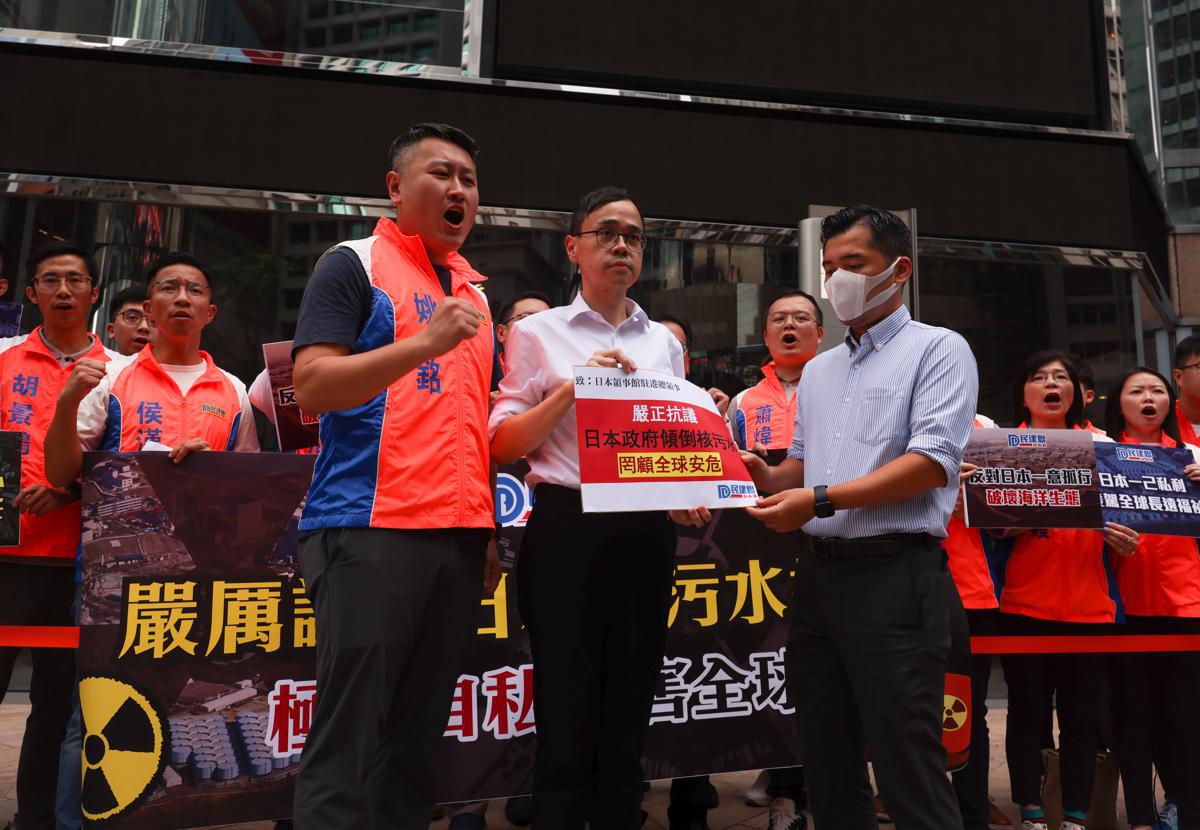
In Hong Kong, fishermen and other social groups gathered on Wednesday outside the Consulate General of Japan to express their anger.
Kowk Sap-chai, head of the Aberdeen Coast Ling Fisheries Association, who participated in the protest, said Japan's "irresponsible" plan is set to affect people's livelihoods and pollute the ocean. Once the contaminated water is discharged into the ocean, there is no turning back, he added.
A fisherman surnamed Leung, from the Hong Kong Trawler Association, said he was deeply concerned over the anticipated effects on seafood sales. Leung said he was worried that he wouldn't be able to afford the operation costs of his trawler or make ends meet.
Flagging the health risks, Charles Ng Chak-chuen, a private doctor in Hong Kong, said that radioactive nucleotides, which are carcinogenic according to the World Health Organization, will enter the food chain and affect millions of people once the discharge of contaminated water starts.
Eating such contaminated marine food over an extended period of time will result in cumulatively hazardous doses, with devastating effects in particular on pregnant women, children and the elderly, he said.
Contact the writers at
stushadow@chinadailyhk.com