Biden's speech at UN theatrical but hollow










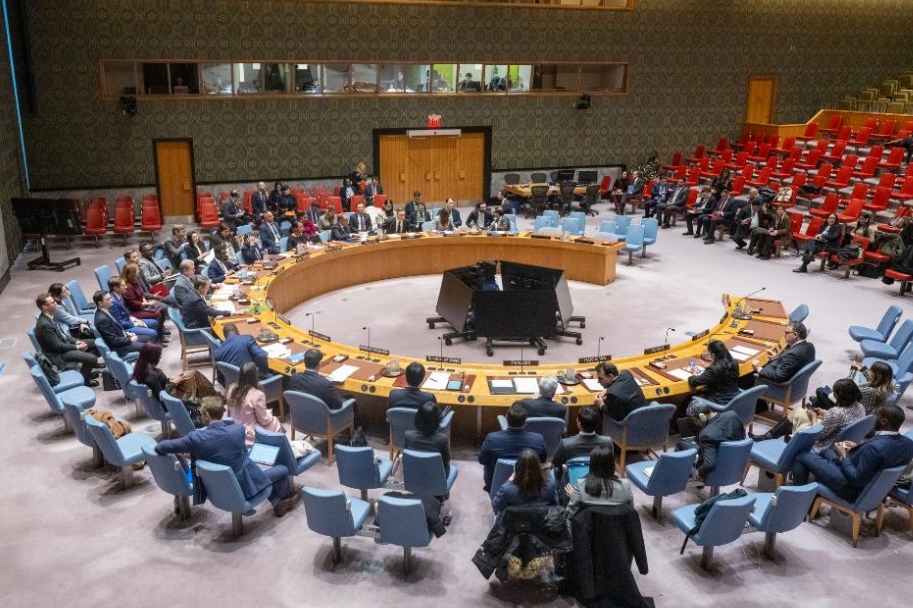
Amid the grand theater of this year's United Nations General Assembly, United States President Joe Biden gave a disappointing speech that bore the stamp of hollow verbosity.
He tried to use the General Assembly as an opportunity to emphasize US "global leadership." Just like last year, his chosen spotlight narrowly focused on the Ukraine conflict, serving as the linchpin for reinforcing alliances with select partners.
Biden's disproportionate emphasis on the Ukraine conflict in his speech on Sept 19 was largely driven by his domestic political situation. The Democrat is grappling with significant challenges related to passing spending bills and contending with low approval ratings, while former president Donald Trump is emerging as the Republican front-runner, in major opinion polls, for the 2024 presidential race.
This focus on the Ukraine conflict is being used as a strategic distraction or an attempt to bolster his leadership image amid these pressing domestic issues and a resurgent political rival.
Biden chose to put the spotlight on the Russia-Ukraine crisis at the General Assembly, while deliberately ignoring the main theme of "rebuilding trust and rekindling global solidarity."
By prioritizing the Ukraine crisis, he appeared to be reinforcing the bonds of select allies while exploiting the issue to tarnish and exert pressure on other countries, indirectly commandeering the General Assembly as a tool to advance his own geopolitical agenda.
While he briefly addressed other topics such as climate change, the restructuring of the UN Security Council, Iran's nuclear program and the Palestinian-Israeli conflict, his primary focus remained squarely on the Ukraine conflict.
Biden also allocated some time to discussing issues related to the developing Global South and Sino-US relations. However, beneath the glare of the spotlight, Biden's agenda to address the development needs of the Global South during this year's General Assembly remained disappointingly predictable and uninspiring.
His proposals, shrouded in cliches and lacking substance, barely scratched the surface of the urgent challenges faced by developing nations. Through this calculated diversion, Biden inadvertently communicated a message to the Global South: Washington's genuine interest in assisting these nations remains questionable, perpetuating a perception of indifference when it comes to supporting the world's most vulnerable populations.
Yet, amid these theatrics, Biden's grandiose gestures managed to conceal his rather hollow proposals for addressing the development needs of the Global South — the central theme of this year's General Assembly. By diverting the attention of the assembly, Biden sent a clear message to the Global South that Washington's commitment to assisting developing nations remains conspicuously lacking.
Biden's failure to recognize that the Ukraine crisis, despite being an urgent issue, is not the primary concern of most developing nations at the General Assembly reflected a misguided approach. These countries are turning to the UN to address their pressing development issues, not to witness the US exploit the platform to breed discord and to fracture unity, potentially inciting resentment among countries of the Global South. Despite his boasts about US global leadership, Biden's lack of substantive proposals to advance the development agenda for the Global South was glaring. His vague call for everyone to "do more" to accelerate progress on the UN's Sustainable Development Goals fell short of the concrete action required. This raises questions about the sincerity of his administration's commitment to global development and solidarity, leaving many skeptical of his leadership on the world stage.
Similarly, on the question of Sino-US relations, Biden appeared to be quite ambiguous. Ever since assuming office in early 2021, he has seemingly adhered to the playbook of his predecessor, Trump, by placing a pronounced emphasis on prioritizing competition with China within the realm of US foreign policy.
Yet, on the recent occasion of his address, he suggested that Washington aims to steer clear of direct confrontation with Beijing. "The United States will conduct itself as a reasonable leader. We do not seek conflict. We do not seek a Cold War. We do not ask any nation to choose between the United States or any other partner," he said.
However, recent actions by the Biden administration tell a contrasting tale. This stark contrast between words and actions raises significant doubts about the genuine nature of US foreign policy objectives and Washington's reliability in managing relations with China. It fosters an atmosphere of skepticism about the direction in which the bilateral ties are headed.
Biden talked about the need for cooperation between Beijing and Washington on climate issues, drawing attention to recent natural disasters like crippling heat waves, continuous droughts and catastrophic floods worldwide. He presented these events as a "snapshot "illustrating the reasons for more cooperation between Beijing and Washington to safeguard the planet from the ravages of climate change.
However, from a factual standpoint, when considering the US' recent self-interested stance, this emphasis on cooperation suggests a deeper apprehension about US dependence on China. It alludes to a narrative in which US leadership appears to recede, relinquishing the US role in confronting global challenges. Sustaining dialogue and collaboration between China and the US on climate change holds immense importance for both nations and the global community.
China has repeatedly expressed its readiness to enhance communication, foster deeper cooperation with the US, and collectively advance climate governance, thereby playing a more substantial role in human development. However, the sticking point is the fact that the Biden administration appears to be lacking the political resolve necessary to place trust in Beijing and forge ahead on these vital global challenges. This perceived hesitance raises concerns about the prospects for meaningful cooperation in addressing pressing issues on the world stage.
The author is an international affairs commentator and freelancer based in Karachi, Pakistan.