Holiday crowds prompt 'Golden Week' plan review










The eight-day Mid-Autumn Festival and National Day holiday that ended on Friday saw millions of people visiting scenic spots and billions of yuan being generated in revenue. According to government data, about 826 million passenger trips were made in China during the holiday, an increase of more than 71 percent over the same period of last year, and about 753.43 billion yuan ($103.19 billion) was generated in revenue, up 129.5 percent year-on-year.
In particular, the revenue figure caught my attention because a foreign media report I read earlier had predicted that many Chinese people would choose domestic tours during the holiday due to their shrinking consumption capacity.
The term "Golden Week" is widely used by media outlets to describe the National Day holiday not only because it occurs in the golden autumn season but also because it creates golden opportunities for increasing domestic consumption.
Local governments, especially those with rich tourism resources, must be busy attributing their increasing revenue to the Golden Week holiday, while thousands of tourism-related businesses must be busy counting their increased income. But millions of tourists who spent the weeklong holiday traveling could only be reassessing their bittersweet experience.
Laws in China regulate that employees work five days a week and enjoy two days off on weekends. Employees get longer holidays on two important occasions: the Spring Festival holiday in January or February and the National Day holiday in early October. One-day holidays can be enjoyed on a handful of other traditional festivals and political occasions such as the New Year's Day, Tomb-Sweeping Day, Labor Day, Dragon Boat Festival and Mid-Autumn Festival.
Realizing that a three-day holiday during weekdays would likely break the rhythm of modern industrial production, the central organs announce early each year how the three-day or longer holidays are to be linked to the weekends before and after so that people can enjoy seven straight days of holiday. The cost people have to pay for such a long holiday is to work two days during weekends to make up for the lost working days.
An arrangement designed to maintain the economic flow as well as ensure people enjoy longer holidays gave birth to the Golden Week holidays when working people flock to their favorite tourist spots. So many people are involved, so many resources are mobilized and so much money changes hands during the period that the Golden Week has become a unique phenomenon.
To many people, however, joining the Golden Week tourist crowd at tourist destinations is like "eating chicken ribs" which taste dull but are too precious to throw away. To arrange a tour during a Golden Week means one has to pay almost double for transport, accommodation and many other facilities and services. To not avail of it means losing one of the two golden opportunities for travel.
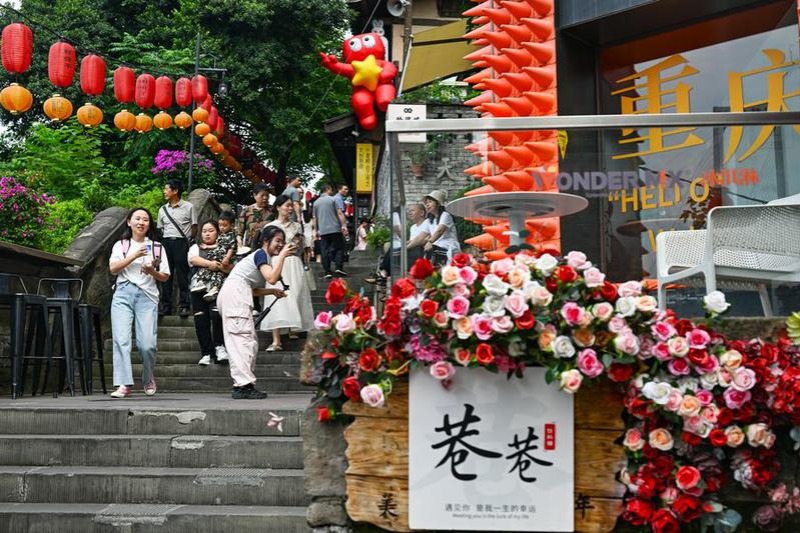
The problem is that more money spent does not necessarily mean your travel experience will be good because all the tourist attractions are over-crowded. My son, for instance, toured Chongqing for a week during the National Day holiday, spending about 6,000 yuan ($833.87) — enough to buy him an overseas trip. Before leaving Beijing, he got a phone call from his travel agent telling him that the promised cruise program may not materialize because there were too many bookings. Later, he had to cancel his cable car trip over the Yangtze River because he had to wait in line for four hours for his turn.
For years, some people have been suggesting that the government do away with the Golden Week holidays and allow people to take their annual leave — about 11 days a year, not including their paid annual leave that ranges from five to 15 working days. I think the suggestion needs serious consideration, because it would keep industrial production and social operations largely uninterrupted, thus making it friendlier to most businesses.
It would also be a big blessing to millions of potential holiday planners. Being able to decide the dates and number of days of leave to use each time, people can work out their ideal holiday plan and travel more comfortably while spending relatively less.
The author is former deputy editor-in-chief of China Daily.