Coordination key to regional development









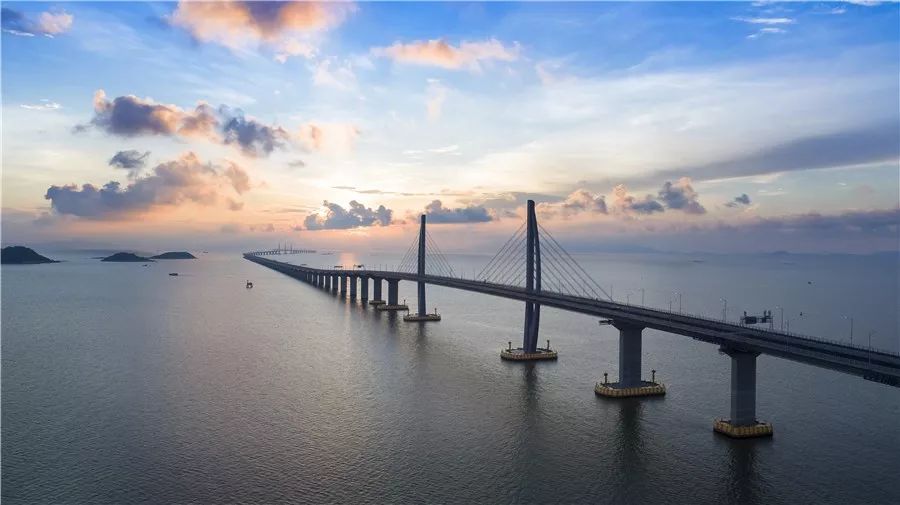
The central government has been encouraging provinces and cities to coordinate their economic and social development with neighboring provinces and cities, in order to better utilize their respective resources and make their development sustainable.
Programs such as the regional integration and sustainable development in the Yangtze River Delta (in the lower reaches of the river), the collaborative development in the Guangdong-Hong Kong-Macao Greater Bay Area and the Beijing-Tianjin-Hebei coordinated development can help promote sustainable development.
Since China launched reform and opening-up 45 years ago, one of China's important reforms is to empower provinces, autonomous regions and municipalities to make decisions on their own as far as economic development is concerned. That policy played a role in making China the world's second-largest economy.
Problems emerged when different provinces and cities started competing against each other for human and natural resources, and when pollution caused by local industries invaded the neighboring provinces and cities.
It was then that some local officials realized the need to coordinate the economic development measures of neighboring provinces or cities. In fact, 20 years ago, a regional coordination arrangement — the Pan-Pearl River Delta Development Cooperation — was initiated by Guangdong province with 11 members, including nine provinces/autonomous regions and the Hong Kong and Macao special administrative regions.
While encouraging such cooperation, the central government sees to it that there is no necessary central administrative interference in the voluntary cooperation arrangement. This idea has its roots in the 1950s and 1960s, when an administrative bureau was established to function between the central and provincial governments. Each bureau was responsible for the governance of four to five provinces. The arrangement was later abandoned because it was weakening the central leadership and compromising the decisionmaking powers of the supervised provinces.
The current coordination move has been mostly initiated by neighboring provinces and cities, which can get State support once their plans are approved by the central government which would also ensure the development plans materialize.
Successful coordination on development programs can yield a "one plus one is greater than two" result. The regional coordination programs along the Yangtze River, the Greater Bay Area and the Beijing-Tianjin-Hebei region have shown successful coordination can bring huge benefits to the relevant regions as well as the country as a whole.
Cooperation varies in scale and depth according to the demands of the provinces and municipalities involved. The one along the Yangtze River aims to integrate the provincial and municipal economies to make the country's most developed area more productive.
The Greater Bay Area cooperation is aimed at building a huge industrial park to draw investments as well as to initiate scientific application projects from Hong Kong and Macao and create jobs for youths from involved provinces and cities or encourage them to start their own business.
The plan for the Beijing-Tianjin-Hebei region is mostly aimed at relieving Beijing of non-capital functions by shifting the headquarters of some big State-owned enterprises, universities and research institutions to neighboring cities, including the under-construction city of Xiong'an in Hebei province. About 100 kilometers from Beijing, Xiong'an, once it starts functioning, can accommodate up to 3 million people, most of whom would have otherwise lived and worked in Beijing.
Over the past month or so, Beijing, Tianjin and Hebei have made several announcements, including one on their decision to mutually recognize each other's criteria and standards on medical examination. This suggests the three jurisdictions are moving closer to regional integration.
Regional coordination now mostly happens in the better-developed eastern coastal region. However, observers warn that the benefits it brings could widen the rich-poor gap between the developed eastern and the less-developed western region.
The central government has been working to avoid such a scenario by, for example, elevating the status of western cities like Wuhan, Chongqing, Chengdu, Zhengzhou and Xi'an. With policy support from the central government, such cities will hopefully grow bigger and stronger and thus help boost the development of neighboring areas.
The author is former deputy editor-in-chief of China Daily. kangbing@chinadaily.com.cn
If you have a specific expertise, or would like to share your thought about our stories, then send us your writings at opinion@chinadaily.com.cn or comment@chinadaily.com.cn.