Archipelago balances conservation with growth









Over the past two months, Yuan Jiangpo has been overseeing a project to construct seagrass beds off Daheishan Island in the Changdao archipelago, which is administered by Yantai city, Shandong province.
The project team has successfully seeded seagrass over an area of 1.6 hectares, said Yuan.
Seagrass beds, also known as seagrass meadows, are one of the three major nearshore marine ecosystems, along with mangroves and coral reefs. They serve as important breeding grounds for marine life and act as vital carbon sinks.
Earlier this year, Daheishan received official certification from the China Quality Certification Center, making it the first carbon-negative region in Yantai.
This achievement paves the way for developing the entire Changdao archipelago into an international zero-carbon ecological island cluster.
The archipelago, located between the Bohai Sea and the Yellow Sea, consists of 151 islands, with 10 towns on 10 of the inhabited islands that are home to 43,000 people.
To promote green, low-carbon and high-quality development of the islands, Changdao was designated as Changdao Marine Ecological Civilization Comprehensive Experimental Zone by the Shandong provincial government in 2018.
"Seaweed cultivation in Changdao is in good condition, which is the most promising pathway for enhancing the carbon sink," Han Guangxuan, deputy director of the Yantai Coastal Zone Research Institute of the Chinese Academy of Sciences said at a meeting in August. The event was held to discuss the conversion of Changdao into an international zero-carbon zone.
In Sunjia village, Nanchangshan Island, locals who used to commercially breed sea cucumbers and scallops — an endeavor that damaged and polluted the coastline — now have a clean and beautiful coastline thanks to their cultivation of seaweed.
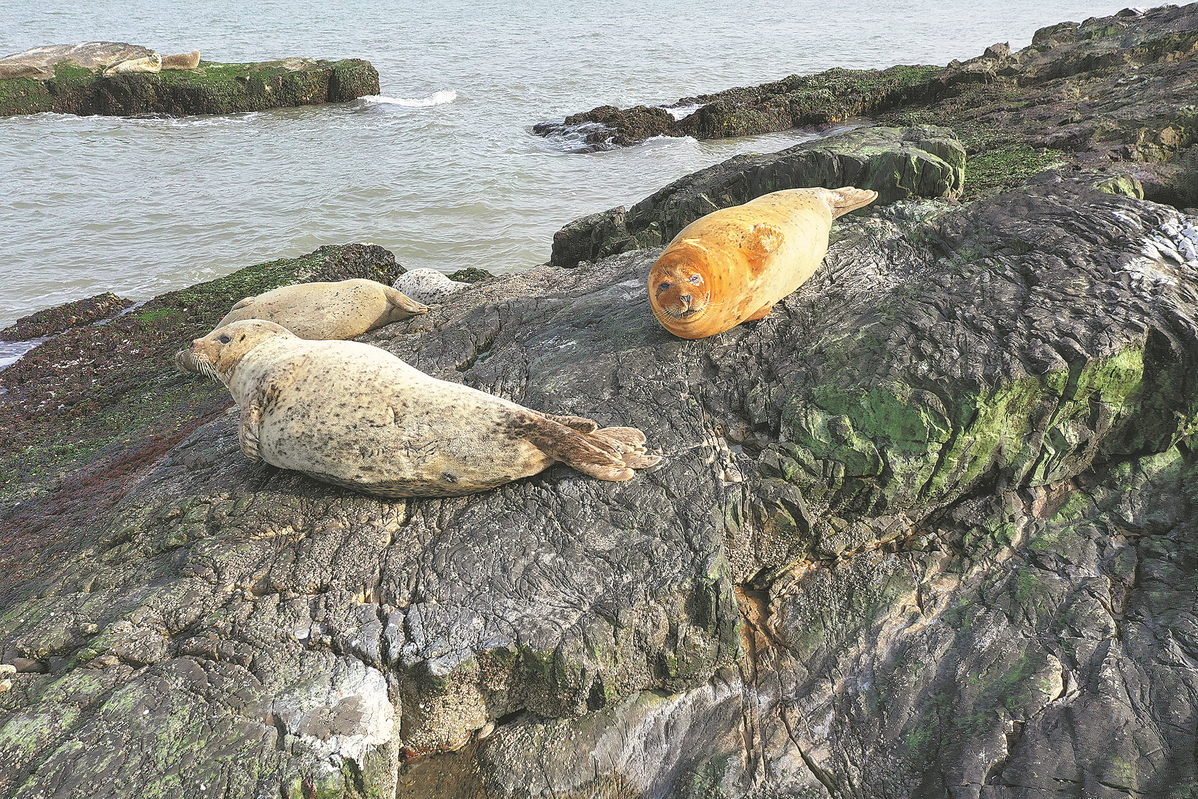
"By planting seaweed, the nearby coastal areas have gradually recovered their resources, leading to the return of sea animals such as crabs and octopuses," said villager Xiao Shuquan. "Years ago, the coastline was marred with sea cucumber breeding facilities, which not only damaged the coastline but also discharged aquaculture wastewater directly into the sea."


- Guangxi villagers perform Spring Ox Dance to welcome spring
- China reports decline in serious crimes, strengthens measures against judicial corruption
- Egrets forage at sunset on Qingdao's Zhangcun River
- Chongqing hosts western China's largest water lantern festival
- Guizhou University, Sri Lankan counterpart explore joint research center for medicinal plants
- Tianjin Port's autonomous tugboat completes live berthing test