The future of global trade
Some advanced countries whose economies are losing competitiveness are erecting trade barriers, but such restrictions have virtually no significant impact









Some advanced countries whose economies are losing competitiveness are erecting trade barriers, but such restrictions have virtually no significant impact
Trade has been recognized since ancient times as a critical factor in promoting competitiveness, reducing prices, encouraging innovation and enhancing market specialization, thereby leading to higher economic wellbeing for societies. The importance of trade has increased in the current era due to its crucial impact on global progress during this inflexion point of globalization.
According to estimates from the World Bank, thanks to trade liberalization, globalization and technological advancements, annual global economic growth in the past 30 years has risen by an average of 1 to 1.5 percentage points. From 1990 to 2022, increasing trade has led to a 24 percent average income growth globally and up to 50 percent growth for the poorest 40 percent of the population on Earth.
Economic growth driven by increased international trade has lifted more than 1 billion people out of poverty.
Since China joined the World Trade Organization, international trade has increased substantially, from $15.6 trillion in 2001 to $40.7 trillion in 2008. Unfortunately, the global financial crisis erupted, and the protectionist policies adopted by the United States following the crisis — such as taxes on foreign goods and import quotas — halted this impressive growth trend. The protectionist trade measures have increased by 663 percent since then. After peaking in 2008, global trade relative to GDP stagnated.
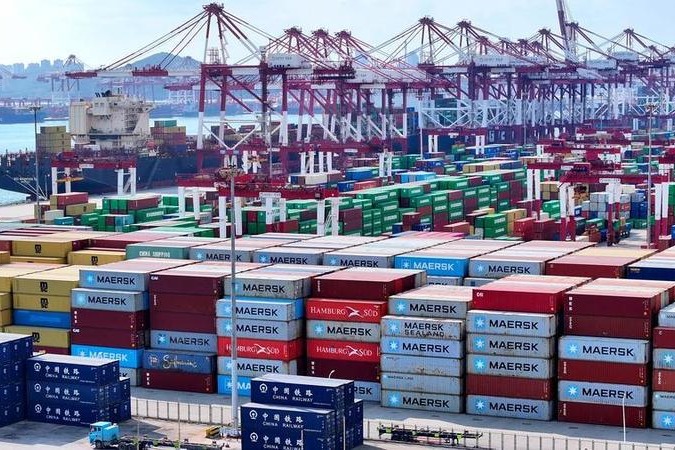
Regarding global exports, Asia holds the majority with over 36 percent of total exports, followed by Europe with 34 percent. The 11 largest exporters in the world exported $12.8 trillion worth of goods in 2022, more than the rest of the world combined ($12.1 trillion). China has been the largest exporter in the world since 2009 and is still at the top of the list, with $3.6 trillion in exports, accounting for 14 percent of the total. The main products by value include phones, computers, optical readers, integrated circuits, solar diodes and semiconductors. Along with the European Union and the US, China's increasingly important trading partners are the major regional players — the Association of Southeast Asian Nations, Japan and the Republic of Korea.
Regional "fragmentation" is also observed on the other side of the ocean. Earlier this year, Mexico surpassed China as the largest exporter to the US as part of a broader US effort to limit export dependence on its global geopolitical rival. The US remains the world's second-largest exporter of goods, with an annual turnover of over $2 trillion.
According to experts from the International Monetary Fund, the escalating trade tensions between China and the US are the main concern for the global economy. The ongoing trade war is causing a "fragmentation of the world" into trading blocs, leading to the transfer of production to other jurisdictions. It could result in a major deterioration in the global economy, amounting to up to 1 percent of global GDP in five years and an additional 2 percent in the long term.
The IMF recently released a paper by its managing director Kristalina Georgieva, which provides even more extreme estimates of the potential global economic downturn caused by that "fragmentation". Georgieva suggests that this downturn could range from 0.2 percent to 7 percent of global GDP, which is roughly equivalent to the annual economic output of Germany or Japan.
Naturally, the outlook for global trade has been a hotly debated topic for many years. The IMF analysts recently concluded that nowadays geopolitics has a "contradictory" and "statistically insignificant" impact on international trade dynamics. The effectiveness of trade is primarily determined by partner countries' economic sizes, geographical location and membership in trade organizations. It was shown that no country or region can achieve sustainable economic development alone, and thus, global integration cannot be stopped.
The study also revealed that the elasticity of trade flows to real GDP per capita should be 0.088 and 0.065 in the country of origin and destination, respectively. It means that an increase in GDP by 10 percent, with other things being equal, leads to an average growth of 8.8 percent and 6.5 percent in bilateral trade turnover in the country of origin and destination, respectively. The size of an economy and its population have a positive impact on its trade dynamics. Specifically, if the population of the country where the product is being sold increases by 10 percent, the bilateral trade turnover increases by 11.2 percent.
A similar forecast is contained in another study, which states that although many countries are reducing their interdependence and integration, global exports are expected to grow by 70 percent between 2020 and 2030, reaching $29.7 trillion by 2030. The presented figures show that it will take over 25 years for humanity to overcome the global trade problems caused by the 2008 financial crisis and new protectionist trade barriers.
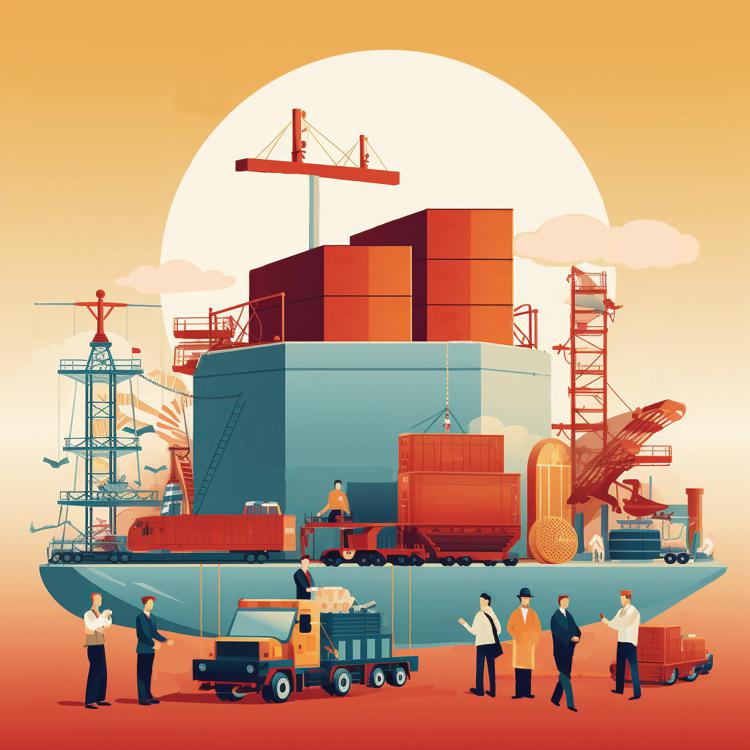
There are currently two opposing trends in international trade. The first is the erection of trade barriers by some advanced countries whose economies are losing competitiveness. The second one is that trade restrictions worldwide have virtually no significant impact on global trade, and the tendency for trade integration cannot be stopped. The increasing ambition and competitiveness of emerging countries and their ability to compete in international markets will result in a more profound division of specialization and the optimization of logistics supply chains. Those countries that do not participate in trade globalization and specialization will experience a slowdown in their development.
The author is former prime minister of the Kyrgyz Republic and a distinguished professor at the Belt and Road School at Beijing Normal University. The author contributed this article to China Watch, a think tank powered by China Daily. The views do not necessarily reflect those of China Daily.
Contact the editor at editor@chinawatch.cn.