Liangzhu: Water system helped city prosper
New archaeological discoveries have enriched the understanding of the water management system of Liangzhu, an ancient city in present-day Hangzhou, Zhejiang province, and further highlighted its importance in the origins of Chinese civilization, said the National Cultural Heritage Administration on Wednesday.
Water played a vital role in agricultural settlements in the middle and lower reaches of the Yangtze River, and the Liangzhu people's control over water about 5,000 years ago continues to amaze archaeologists even today.
About 50 experts from various institutes attended the latest archaeological discoveries in China at a conference organized by the administration, with the Liangzhu ruins, a UNESCO World Heritage Site dating back to 5,300 to 4,300 years ago, being among the key topics of discussion.
Studies between 2019 and 2023 identified as many as 350 sites of archaeological interest in Liangzhu, which were 215 more than what were known before. The sites included tombs, settlements and the ruins of water management projects.
The ancient city is famous for the earliest-known Chinese water management project, which was believed to have 11 dams. Archaeologists have recently found the ruins of nearly 20 more dams in Liangzhu, of which seven are about 5,000 years old.
Wang Ningyuan, a researcher at the Zhejiang Provincial Institute of Cultural Relics and Archaeology, said that for years, the structure and function of the Tangshan causeway in front of the Dazhe Mountains in the north of the city ruins confused experts.
Latest remote sensing data shows that the causeway is separated by multiple long ridges extending southward from the mountains, forming an extremely complex water management network. "As a result, we believe Tangshan may have been a facility to regulate water in these areas," he said.
Higher, middle and lower dams were also found in Tangshan, which formed a network of artificial reservoirs to adjust water levels. "The water management projects were distributed in almost all mountain gullies in the whole area of Liangzhu ruins, which occupy 100 square kilometers. It was a colossal system," Wang said.
The magnitude of the projects must have required many workers, and someone must have mobilized that many numbers of people, which implies the birth of power, an important symbol of early civilization, he added.
Liu Jianguo, a researcher at the Chinese Academy of Social Sciences' Institute of Archaeology, said it is a popular belief that areas in the middle and lower reaches of the Yangtze River had abundant water resources.
"However, when we analyzed the situation, we found it rained frequently in June and July, after which it was the dry season. Since summer and fall were the main seasons for growing rice, people had to build dams to store water and prevent flooding in June-July, and after July to irrigate crops and prevent drought," Liu said.
Since Liangzhu is not far from the sea, catastrophic typhoons were common. As a result, people had to build a strict water management system to prevent flooding, which included clusters of dams, he said.
"Water management was a key reason for Liangzhu's prosperity. As the city's people managed water well, they could harvest, which promoted the social division of labor. Social class differences gradually appeared, leading to the birth of civilization," he added.
Archaeologists have also unveiled revolutionary changes in Liangzhu society. In the early stage of Liangzhu Culture, scattered settlements were built conforming to the natural landform in front of the mountains.
In the middle stage, Liangzhu people built the colossal Mojiaoshan palatial complex, a ritual center in the middle of the ruins, and a large-scale water management system. In the later period, people built city walls, completing the construction of Liangzhu as a capital.
Dai Xiangming, an archaeology professor at Capital Normal University in Beijing, said: "Although built during different periods of time, it is highly possible that the city walls and earlier major projects were designed together. They were built in turn because they all required a large labor force."
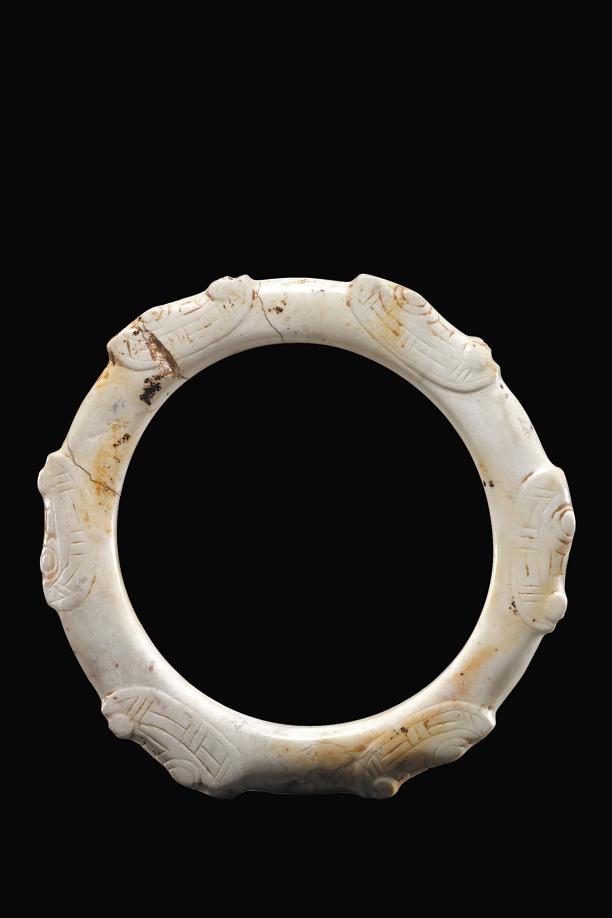
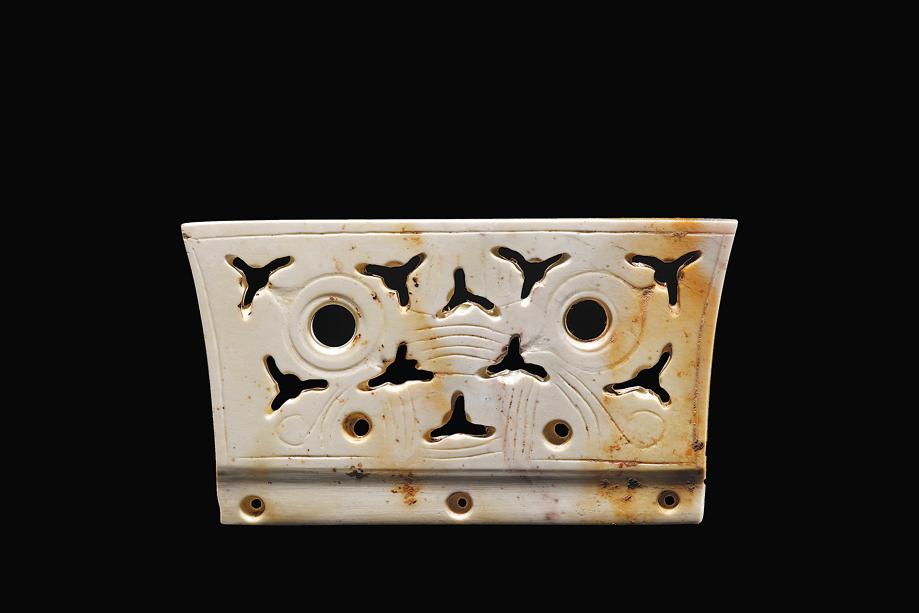
No matter the number of discoveries during archaeological missions in recent years, jade remains a typical symbol of Liangzhu Culture, the experts said.
Excavations were carried out at the Beicun site of the ruins in recent years. From a woman's tomb in Beicun, 72 artifacts were unearthed, among which 66 are made from jade including a crest, a bracelet, a huang (Chinese arc-shaped relic used as a pendant) and a cicada.
In the south of Beicun, a steep slope was found to separate a lower bench terrace from a higher one. Wang, from the Zhejiang Provincial Institute of Cultural Relics and Archaeology, said the higher one belonged to people of high social status, who lived there and were buried there. Ordinary people lived and were buried in the lower terrace, an obvious sign of social division, he added.
Archaeological sites linked to Liangzhu Culture extend beyond Zhejiang. The Sidun site in Changzhou, Jiangsu province, is about 220 kilometers from the Liangzhu ruins. Sidun is a site roughly 4,500 to 5,500 years old, and bears testimony to both Liangzhu and earlier Songze cultures.
Yu Chenglong, an associate researcher at the Nanjing Museum, said that recent archaeological work reveals changes in the cultural features and settlement layouts from the Songze period to the Liangzhu period.