Beijing-Brussels relations can anchor global stability










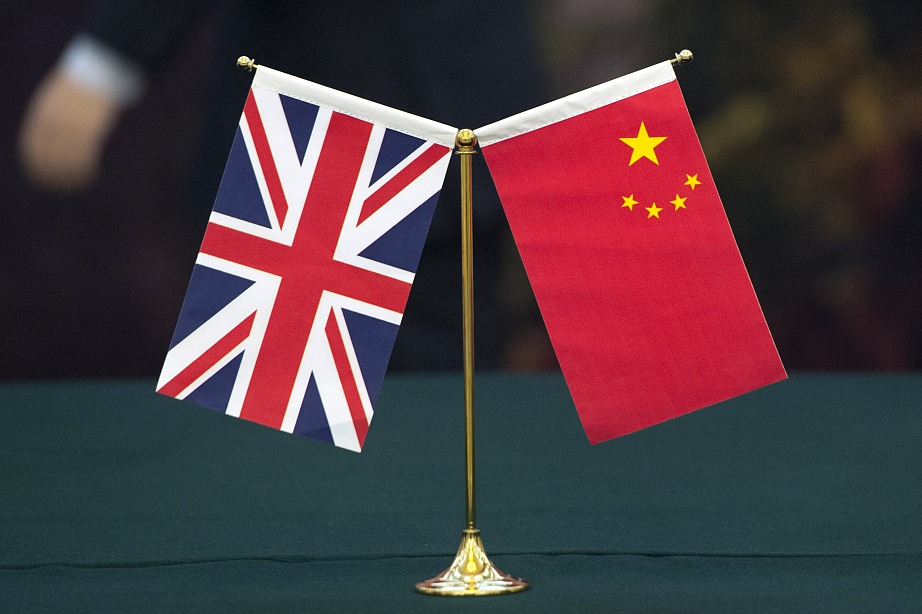
A milestone in bilateral relations between the European Union and China was marked in 2003, when the EU and China established a comprehensive strategic partnership and the EU designated China as a major strategic partner in the first European Security Strategy.
In October 2003, China issued a strategy paper on the EU that bolstered the EU's attempts to build a partnership with China, by reconfirming the Chinese belief in the strength of European integration, the EU's increasingly important role in regional and international affairs, and the significance of EU-China ties.
In April 2008, China and the EU launched their High-Level Economic and Trade Dialogue in Beijing.
Over the past 20 years, China-EU relations have been developing in the context of the transformation of the global order. The post-Cold War order, marked by the absolute hegemony of the United States, started to fade away as the world witnessed the economic power shift from the West to the East and power diffusion.
Different types of nonstate actors — multinational companies, armed groups and transnational networks — started to influence global politics. The transformation of the world order triggered global and regional instability, and "great power competition" again returned to the vocabulary of politicians and experts.
As the world reaches another turning point, the great powers should assume more responsibility for securing global peace and prosperity and closing the gap between developed and developing countries.
In this regard, China has already made significant contributions through the Belt and Road Initiative, which contributes to modernizing physical and digital infrastructure to support the developing world. It has also put forward the concept of a community with a shared future for mankind, which proposes that "a new type of international relations should be built on the principles of mutual respect, equity and justice, and mutually beneficial cooperation". It has also put forward the Global Development Initiative, the Global Security Initiative and the Global Civilization Initiative to facilitate dialogue and joint efforts to address the world's development, security, peace and trust deficits.
The EU is, first of all, a value-based organization. All EU member leaders repeat this notion. Fundamental values, such as democracy, freedom, peace and the rule of law, are part of the EU's internal and external policy. It also needs to be recognized that the EU and the United States have strong historical, economic and military ties, as many EU member states are also members of NATO, and transatlantic unity is one of the cornerstones of EU foreign policy.
However, having a strategic partnership with the US does not mean following the US on everything and taking actions at the behest of the US that damage the EU's interests. For example, the US, as a geopolitical actor, views almost everything through the geopolitical lens of great power competition, or as a part of what it presents as a "democracy versus authoritarianism" struggle. This view only serves US national interests, as shown by US policies toward China.
While the US is taking steps to slow China's economic development, especially in digital technologies, by putting sanctions on China, it is trying to force other countries to follow that policy, to their own detriment. The EU has no interest in worsening relations with China. China is a major trade partner of the EU, and given the EU's economic problems due to the conflict in Ukraine and European sanctions imposed on Russia, deterioration of relations with China would only worsen the EU's situation.
One of the essential steps taken to strengthen China-EU relations was the conclusion, in principle, of the bilateral negotiations for a Comprehensive Agreement on Investment in December 2020. The EU's unfreezing of the ratification of the agreement would pave the way for more robust China-EU economic ties and benefit both sides. Actually, there are no fundamental conflicts of interest between the EU and China. Both sides have benefited from each other's development and adherence to strategic autonomy and multilateralism, and they have reached a broad consensus on climate change and other global issues.
The 24th EU-China Summit in Beijing on Thursday was the first in-person summit between the two sides since 2019. The meeting was an excellent opportunity to review the current stage of bilateral relations and envisage the necessary steps to deepen the bilateral partnership for the better future of China, the EU and the world.
The author is chairman of the Center for Political and Economic Strategic Studies in Yerevan, Armenia. The views do not necessarily reflect those of China Daily.