Planners should be cautious in opening new schools










The Beijing municipal government's announcement in November that it would create 20,000 more seats in primary and middle schools next year initially came to me as a surprise. The country's population suffered negative growth last year and Beijing's population has been decreasing by about 40,000 a year over the past few years, so what is the need for creating more seats in schools?
But on further probe, I was convinced that despite the decrease in population, Beijing now has to deal with an increasing number of school-age kids — a result of the central government's decision in 2016 to ease the family planning policy and allow all couples to have two children.
The decision did help increase population growth. In Beijing, for example, about 202,000 and 197,000 babies were born in 2016 and 2017 respectively as compared with 172,000 in 2015. But the baby boom was short-lived. After 2017, the number of newborns has been declining, with only 124,000 babies being born in 2022.
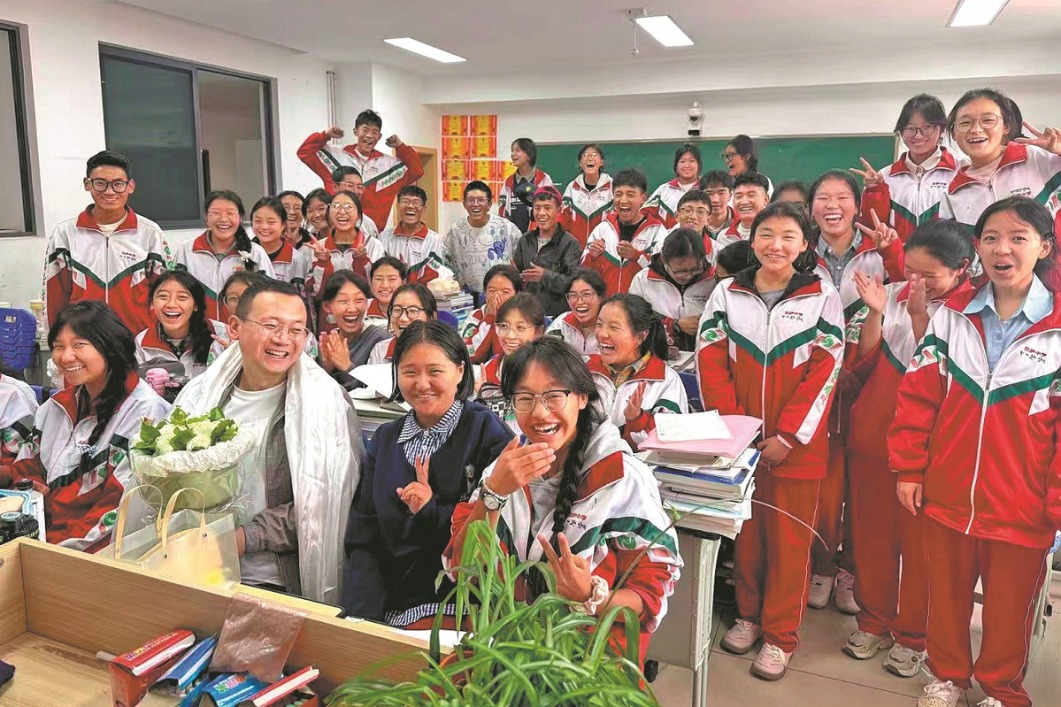
With the babies born in 2016 and 2017 entering kindergarten age and then school age, Beijing found itself running short of seats in schools — the same is true for many other cities. So for the past several years, the Beijing government has been opening new schools and adding new classes to existing schools to increase the number of school seats.
While doing their best to ensure every child gets admission to a school, the education authorities should be fully aware that the present shortage of school seats is but temporary. Hence, they should be cautious about opening new schools, because within a few years they might be required to shut the schools down for want of new students.
Despite the government further easing the family planning policy to allow all couples to have three children and grant longer maternity leave, as well as giving cash subsidies to couples for having a second or a third child, experts have warned that China's negative population growth will continue, similar to what has happened in many developed countries.
Already, in metropolises such as Beijing and Shanghai, many women at childbearing age are reluctant to have a second child. Rocketing housing prices, and high living and education costs in big cities compel young couples to think twice before deciding to have one child, let alone a second or a third child.
In fact, an increasing number of young people working in Beijing, Shanghai and Shenzhen are moving to smaller cities which have been luring talents with a series of preferential policies including housing subsidies and favorable urban hukou (household registration) rules.
Beijing and Shanghai, both with populations of more than 20 million, are the only two cities in China that still have strict hukou control policies, which prevents some talents from seeking jobs in these cities and pushes away those who feel like outsiders despite being successful business people or employed as professionals in these cities.
The capital, in fact, has plans to decrease its population by moving some non-government functions to Xiong'an, a new city being built some 100 kilometers south of Beijing. The headquarters of many big State-owned enterprises, and universities and research institutions will be shifted from Beijing to Xiong'an, which initially will have a population of 1 million that will increase to 5 million in the long run.
The low child birth rate, high cost of living, strict hukou control and other policies indicate that Beijing's population will decrease in the foreseeable future. The declining population is something Beijing's education authorities have to keep in mind while trying to tide over the peak period of school-age children. In fact, they should make efforts to increase seats in the existing schools to accommodate the increasing number of school-age kids and thus help save unnecessary investment while ensuring high-quality education.
Unless absolutely necessary — such as building a school to accommodate kids in a newly built residential area — the authorities should be cautious about building new schools. And they should thoroughly review all such projects to prevent the potential waste of precious educational resources.
The author is former deputy editor-in-chief of China Daily.
kangbing@chinadaily.com.cn