The West should stop weaponizing human rights, and targeting China









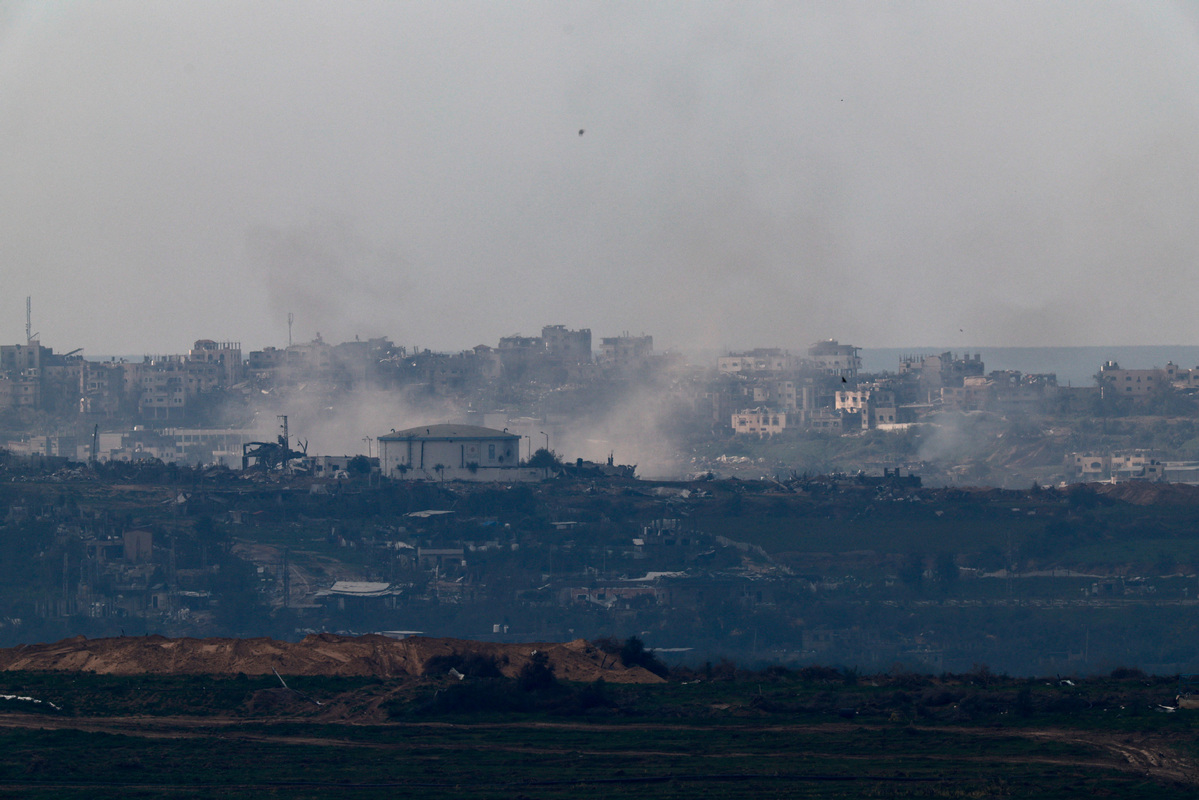
If there is anything that the Russia-Ukraine and Israel-Palestine conflicts have revealed, it is that the world is increasingly divided between a few dozen Western countries and the rest, that is, more than 100 countries, especially the developing nations.
The same thing was evident at the fourth Universal Periodic Review of China's human rights record at the United Nations Human Rights Council in Geneva which began on Jan 23. A review report was adopted on Jan 26.
Representatives from more than 120 countries spoke positively about China's progress in human rights, from the eradication of absolute poverty to the improvement in education and public health, and its role in global governance. They also gave good suggestions such as the need to increase women's participation in senior government positions and narrowing the income gap.
These are fair, objective and genuine assessments and suggestions.
But some Western countries are not interested in constructive dialogue or collaboration, which is the guideline for the Universal Periodic Review. Instead, they indulged in naming and shaming, with the representatives from the United States and the United Kingdom resorting to what can be described as yelling on Jan 23, as if high decibel would add truth to their argument.
The fact that some Western powers are unwilling to acknowledge the progress that China has made in a wide range of areas relating to human rights raises questions about the sincerity of their arguments and recommendations.
For example, talking about the situation in China's Xinjiang Uygur autonomous region by deliberately overlooking the challenges posed by terrorism and extremism in the region is dishonesty. However, this was exactly what some Western countries did on Jan 23.
There was a lot of distortion and exaggeration. For instance, some of the Western countries continued to criticize China's strict family planning policy, which has been greatly eased in the past years. The government policy now is to encourage couples to have more children, up to three, to counterbalance China's rapidly aging population.
Their arguments were paradoxical, too, such as the Israeli ambassador to the UN Office at Geneva Meirav Eilon Shahar's questioning of the human rights situation in Xinjiang at a time when the worst human rights violation of the 21st century is being committed by Israel in the Palestinian enclave of Gaza Strip. On Jan 26, the International Court of Justice ruled in a case brought by South Africa that Israel must take all measures to prevent genocidal acts in Gaza. The death toll in Gaza has crossed 26,000, 70 percent of them being women and children.
The few dozen Western nations which failed to assess China's human rights situation comprehensively and objectively are almost the same that have either enabled or turned a blind eye to the atrocities in Gaza.
Unlike some countries, China does not make wild claims about human rights. On the contrary, Chen Xu, China's permanent representative to the UN Office at Geneva, said that China is a developing country with more than 1.4 billion people, and its uneven and unbalanced development remains an outstanding issue to be resolved and it still faces challenges when it comes to comprehensively safeguarding human rights.
That's why, he said, China plans to take 30 new measures to promote and protect human rights. The measures range from strengthening legislation to adopting policies to help improve people's quality of life, better protect the rights of vulnerable groups, and fight climate change.
The situation in China is complex given its huge population. There is no doubt that China still has a lot to do to better promote and protect human rights. And constructive dialogue and engagement is far more conducive for countries to help each other in improving human rights.
China and the European Union, for example, held their 38th human rights dialogue in February 2023 since its establishment in 1995. These dialogues may not solve the problems immediately. But they are a far better way of addressing human rights issues than weaponizing human rights, as some Western governments do. Those Western governments' actions will only undermine the global human rights cause.
The author is chief of China Daily EU Bureau based in Brussels.