



Doctoral studies must be improved to meet social needs









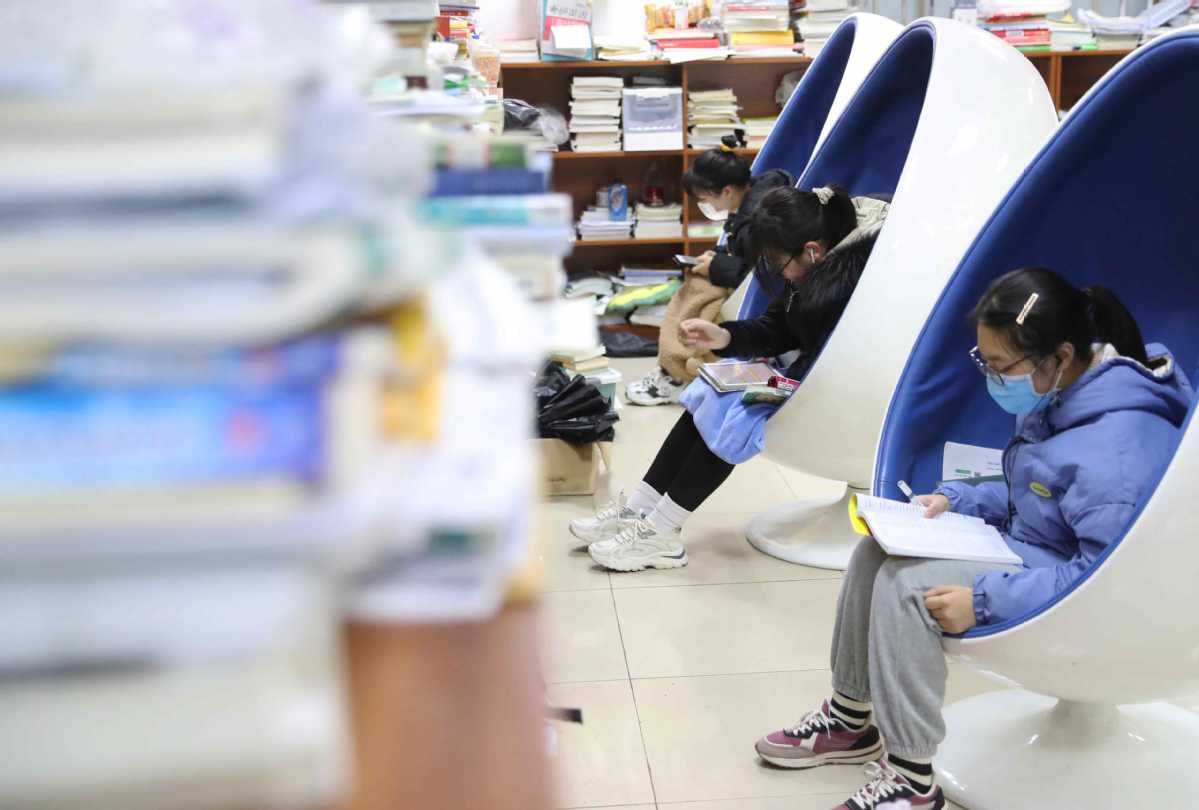
In its annual education conference in January, the Ministry of Education highlighted the significant measures it has taken in the past year to integrate education, technologies and talents. Intensifying efforts to expeditiously synergize educational advancement with economic and social development, the ministry has initiated comprehensive reform of higher education in order to ensure education serves social needs.
That 612,000 doctoral candidates are currently registered with Chinese universities shows the universities have become a dynamic force in the field of research and development.
While the registration of doctoral candidates is expected to be made reasonable and forward-looking, the process for enrolling for master's degrees will likely become easier.
In recent years, China has seen rapid growth in the number of doctoral candidates and those opting for post-doctoral research. In 2019, a record 105,200 people registered for doctoral research. In 2022, the number increased to 139,000, a 32 percent hike. But as the number of doctoral candidates increases, it is important to maintain the quality of research and prevent the devaluation of doctoral degrees.
According to Ministry of Education data, 75,200 students earned a doctoral degree last year. By the end of August 2023, less than 40 percent had found employment in higher education and research institutions, while more than 20 percent joined different industries.
To address these challenges, China needs to adopt a nuanced approach. For example, it is essential to categorize doctoral programs into academic and professional streams. This entails a social shift in the perception toward doctorates and a concerted effort by universities to improve faculty quality and develop curriculums to serve the specific needs of each doctoral candidate.
In China, there's a widespread misconception that all doctorates are destined to take up academic careers, and any attempt to seek employment in the corporate world is deemed a waste of talent. This misperception stems from an oversimplified understanding of doctoral degrees.
Academic master's and doctoral programs fall under general education, while professional master's and doctoral programs are essentially vocational education programs and are aimed at cultivating highly skilled professionals. Unfortunately, due to social biases against vocational education, some professional programs lack clarity, with some even mirroring the structure of academic programs, leading to a mismatch between undergraduate education and social needs.
In December 2023, the Ministry of Education issued guidelines emphasizing a significant increase in the number of professional doctoral candidates, acknowledging the need for a more diverse approach to doctoral programs.
The key challenge lies in aligning the mentorship, training models, and evaluation systems with professional doctoral education. Currently, mentors often oversee both academic and professional doctoral candidates, making it necessary to work out distinct training programs based on different educational goals. Many universities have similar criteria for awarding doctoral degrees, emphasizing that theses be published, putting the focus on quantity rather than the practical application of knowledge.
To address this problem, professional doctoral candidates should shift the emphasis away from paper publications, and instead focus on solving real-world technological problems. The prevalent "thesiscentric" approach, typical in academic programs, undermines the development of applied doctoral candidates and blurs the line between academic and professional doctoral training.
With the annual registration of doctoral candidates exceeding 100,000 and total enrollment surpassing 600,000, it is necessary to make clear the objectives of training for different types of doctoral candidates.
Dispelling the myth that "higher qualification equals academic talent", we must strengthen the professional and practical aspects of professional doctoral degrees. To do so, we must build mentors' teams comprising both theoretical and practical experts, promote industry-academia integration, and align the training of high-level professionals with the actual needs of enterprises.
The author is director of the 21st Century Education Research Institute.
The views don't necessarily reflect those of China Daily.
If you have a specific expertise, or would like to share your thought about our stories, then send us your writings at opinion@chinadaily.com.cn, and comment@chinadaily.com.cn.





