



Retail MNC riding consumption frenzy in nation
Foreign fashion brands continue to hike investment in Chinese market









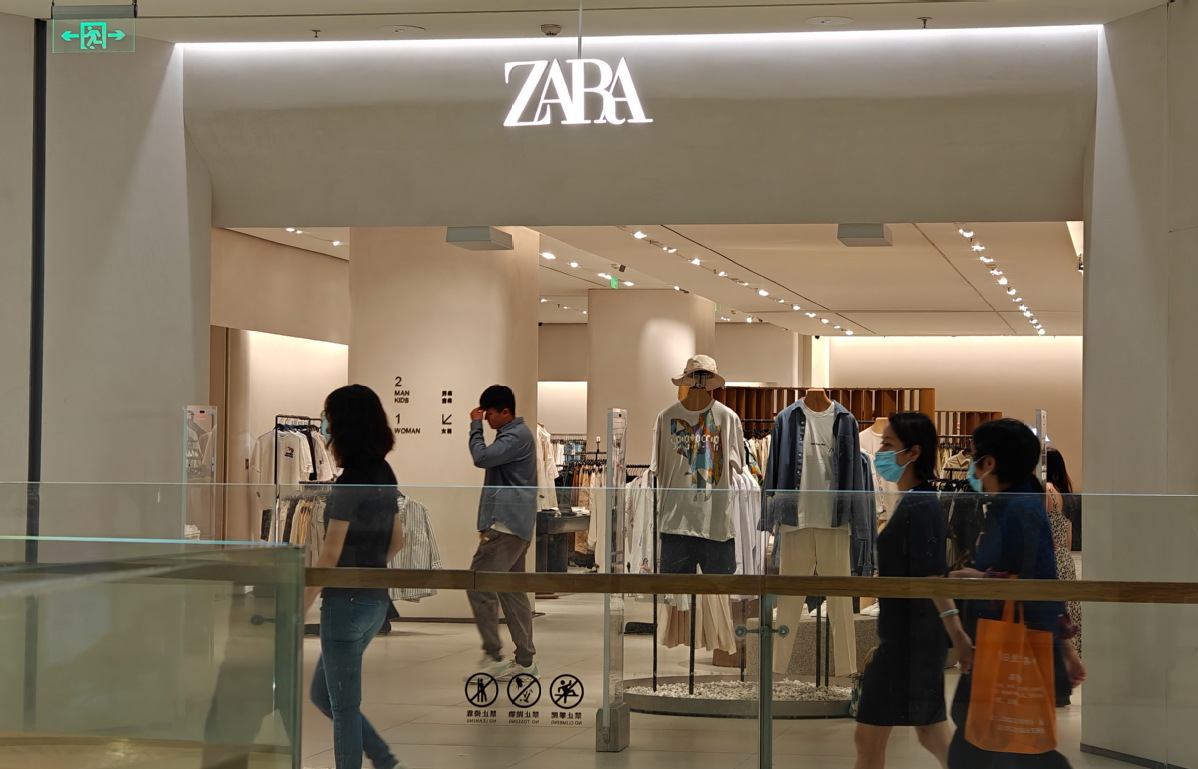
When Eugenio Bregolat Lukashov, a 39-year-old Spaniard who has been living in China for 26 years, was asked about China's economic development over the past two decades, he used the word "astonishing".
Bregolat, now president of Inditex Greater China, first came to the country when he was two years old. In fact, he's lived in China longer than any other place.
As a witness to China's economic development, he said, "It is astonishing that China has been able to develop so rapidly over the past few decades."

Bregolat said that when his family first arrived in China, there was even a special currency for foreigners, as they couldn't pay in local currency.
"At that time, I remember in Beijing there was only one foreign supermarket. There were very few restaurants where foreigners could eat in those days. And I believe we were the only 40 Spanish people in the whole country, not just in Beijing."
Also, as a resident of Shanghai for 13 years, he recalled the first time that he came to the city from Beijing. The train took him many hours. Today, it takes only four and a half hours to travel from Beijing to Shanghai by high-speed train.
"I remember when I first saw Pudong, there was only the Oriental Pearl Tower and the Jinmao Tower. It's only been 20 years ago," he said.
Bregolat's confidence in China's economy and the Chinese market was reflected by Inditex's business strategies in the country over the past years.
The owner of brands such as Zara, Massimo Dutti and Zara Home said it will further adapt its business strategies to consumer needs and adjust store opening plans in China, renovate existing ones, exploit the power of digital platforms and remain upbeat about the local market where consumption upgrade and consumption recovery now form the impetus.
The company has sought to dispel rumors that Zara is gradually moving out of China, clarifying that it is only adjusting its store-opening strategies and increasing emphasis on opening more high-quality stores, following its global approach.
On Aug 17, Zara renovated and upgraded its outlet in Joy City shopping mall in Shenyang, Liaoning province, giving it a more digital edge. Its mobile app can detect the number of available clothing items, reserve an on-site fitting room, and pre-order and pick up goods. It also opened a new image store in Shanghai Sun Plaza and renovated its Han Street store in Wuhan, Hubei province.
"China is important for us and is a strategic market for Inditex. We will keep investing in new digital functionalities and high-quality stores in the Chinese market, and continue to open more stores in top commercial areas or renovate existing ones, so they reflect Zara's latest brand image and meet the needs of local consumers," Bregolat said.
He acknowledged the potential of China's consumption, as well as the inspiration the company gets from Chinese consumers.
"We all know that there are a lot of trends that first begin in China and then are exported to the world, especially with China's increasing digitalization. So we are constantly learning and taking inspiration from China and its consumers. I can feel the energy in the country, which makes me feel alive," he added.
Fast fashion, the category that Zara falls into, refers to a clothing production mode that quickly responds to shifting consumption demand from customers and fashion trends. It aims at taking advantage of the supply chain and cutting the cycle period from production to sales so as to offer fashionable clothing to consumers at relatively low prices.
Fast fashion has become a high-value race of sorts in the clothing sector. Before 1980, the clothing industry was dominated by a model of separated production and sales, and sales channels were mainly department stores. Due to long links, high markup rates and low flexibility in discounts, consumers could not enjoy either good quality or cost-effectiveness at the same time.
- Multinational firms swear by Shanghai on support plan for foreign R&D centers
- Opportunity for economic growth in China lies in entrepreneurship, structural reform and new technologies
- MNC chemical firms eye more investments
- Hexagon to incubate more Chinese tech firms
- Unilever eyes sweeter gains in China market



















