Specific law needed to regulate museum operation









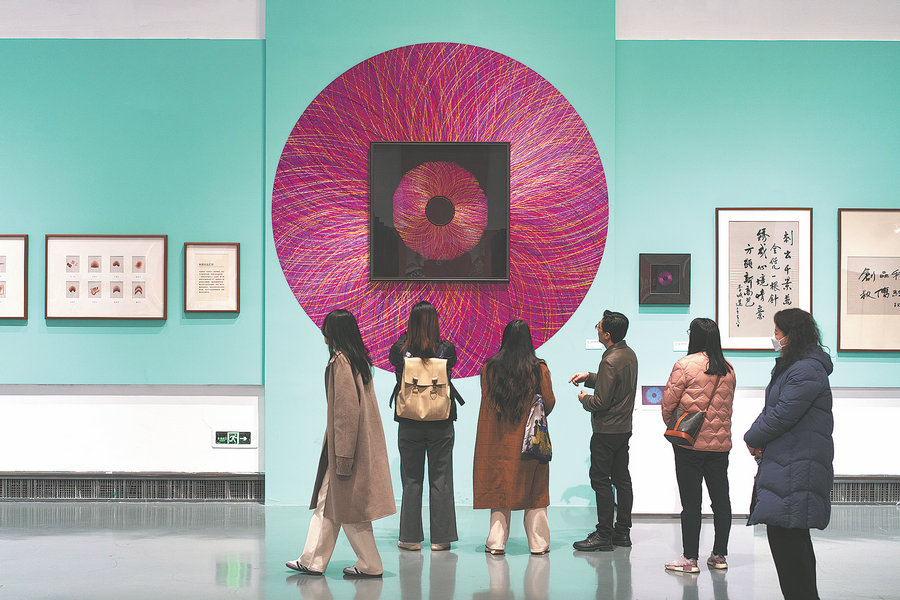
Visiting one or two museums has become an integral part of my trips to cities. While scenic spots and historical sites usually provide us with impressions of a place, museums offer us an in-depth understanding of the local history, culture and lifestyle.
To enhance people's confidence in the Chinese culture, governments at different levels have been spending huge amounts of money to build museums which, in many cases, are becoming their name card due to their huge size and/or beautiful design. The museum fever is likely to continue, because the country's top leader, while talking with the delegations to the two sessions in March, called for building better museums so they could play their educational role to the full.
During my youth days in the 1970s, museums were a luxury for the Chinese people. Each provincial capital had one or at most two museums while Beijing, the country's cultural center, had about 10. Now, China has 6,565 registered museums — and the number is increasing by about 200 a year.
The museums vary in ownership — State-owned, company-owned and privately-owned — with most of the State-owned museums allowing free entry to visitors thanks to government subsidies and grants. The ones that charge an entrance fee claim to use the money, or part of the money, to protect the relics by limiting the number of visitors. But despite that, some museums are crowded round the year, with the tourist favorite being the Palace Museum (Forbidden City) in Beijing that receives nearly 20 million tours a year.
While most of the museums are located in big cities, some are in remote areas. I was highly impressed by the rich collection of dinosaur fossils and stone-dog sculptures at a museum in Dongxiang county in Gansu province and one in Xuwen of Guangdong province.
While we are happy to have more museums and admire more fancy buildings, we may not have realized that the problems haunting the sector are getting bigger. Wang Chunfa, curator of the National Museum of China, recently said that not a single piece from archaeological excavations has found its way into the collection of NMC which received about 8 million visitors a year for 30 years.
This has happened while many important excavations have been conducted and thousands of precious relics unearthed during the period. Even though Wang did not explain the reason, it is not difficult to understand that "local protectionism" and the absence of strict laws and regulations have prevented the precious relics from being included in the collection of high-profile museums like the National Museum of China.
I have visited the National Museum of China several times and marveled at the national treasures exhibited there but did not realize most of them were transferred from other museums 30 year ago. It used to be easier for the National Museum of China and other high-profile museums to include some of the new-found relics in their collection because important archaeological excavations were part of a national project with archaeologists from the whole country joining in the effort.
Now that many such excavations are conducted by local experts with investment from local governments — and perhaps some subsidies or grants from the central authorities — the local authorities assume the new finds are local treasures and are reluctant to hand them over to museums at the provincial or national level for better study and display.
In China, museums are classified into three categories according to their size, collections and the research capability. Realizing such a situation will frustrate the healthy development of the museum sector, Wang Chunfa, a deputy to the National People's Congress, called for working out a specific museum law to further regulate the operation of museums, management of collections and increasing the channels of investment. The existing Regulation on Museums, passed by the State Council, China's Cabinet, nearly 10 years ago, no longer suits the new development.
The "battle" between different levels of museums and between the central and local administrators has highlighted the need to make our museums better and protect the interests of different parties. Perhaps a specific museum law, as Wang has suggested, should allow us to visit more museums with rich displays of historical and archaeological relics.
The author is former deputy editor-in-chief of China Daily.
kangbing@chinadaily.com.cn