



AI phones get set for smart revolution
Models that run on-device LLMs generate interest among consumers, phone makers









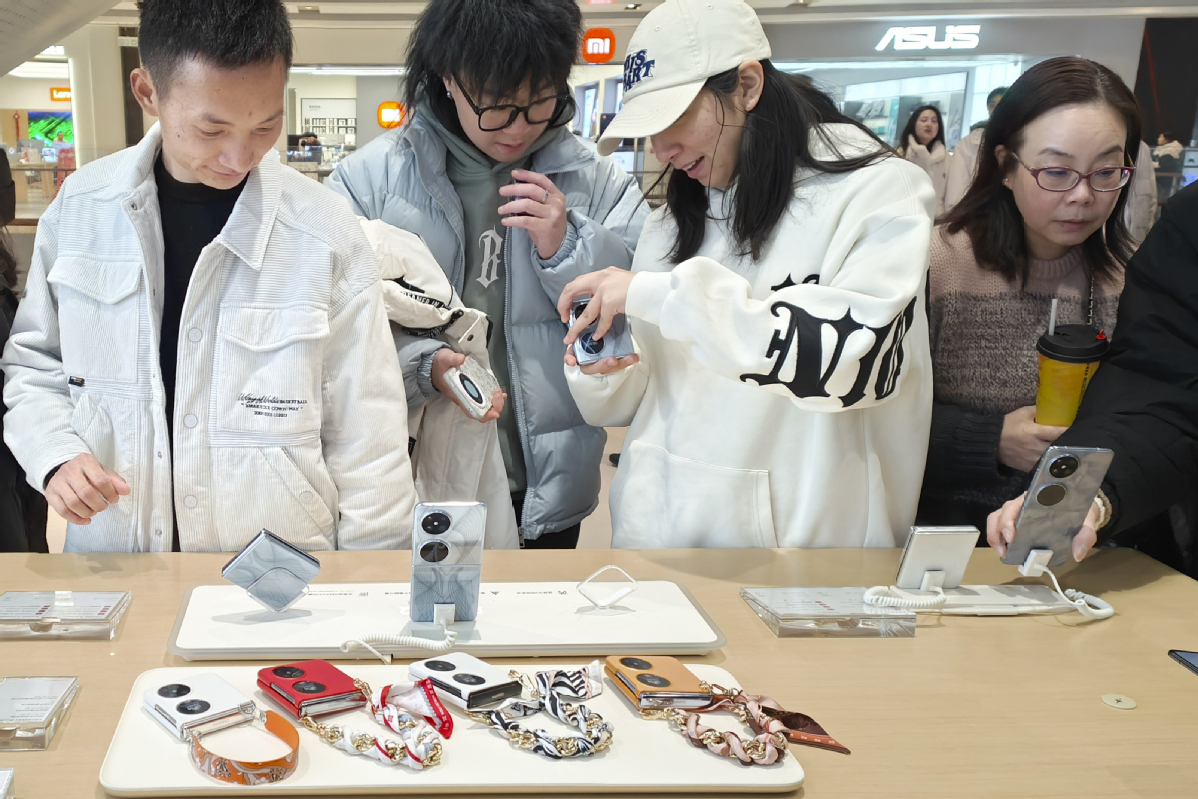
Zhang Wentao, a Beijing-based bank employee, is happy with an upgraded artificial intelligence (AI) assistant in his Huawei smartphone, as it can easily translate a 3,000-word English news report into Chinese, write a summary and provide relevant data to help him understand the article quickly.
Celia, the voice-activated assistant from Huawei, has become smarter thanks to the smartphone maker's self-developed large language model, a key technology that enables computers to perform multiple tasks such as writing essays, sketching out business plans and creating videos.
"Celia can not only understand my instructions but assist me in copywriting, and in providing personalized suggestions and recommendations," said Zhang, who has participated in public tests on the upgraded Celia version.
Zhang is among a growing number of Chinese consumers who want to try next-generation AI smartphones, or those that run ondevice generative AI LLMs.
These new devices are generating quite a bit of interest among consumers and smartphone companies, making AI the focal marketing message at recent flagship launches, with more to follow this year, according to experts and company executives.
As AI impacts all corners of the devices market, smartphones are expected to drive the AI revolution into every home, according to a report by global market consultancy International Data Corp.
IDC's preliminary forecast suggests 170 million next-generation AI smartphones will be shipped in 2024, representing almost 15 percent of total smartphone shipments and a sizable jump from the roughly 51 million shipped in 2023.
This share is expected to climb rapidly beyond 2024 as industry players push aggressively toward new chips, and as use cases evolve further, IDC said.
"Nobody wants to be seen as being behind the curve, and AI is just the talk of the town. It is the buzzword this year that all the vendors are going to be jumping on," said Bryan Ma, vice-president of client devices research at IDC.
Hello, AI
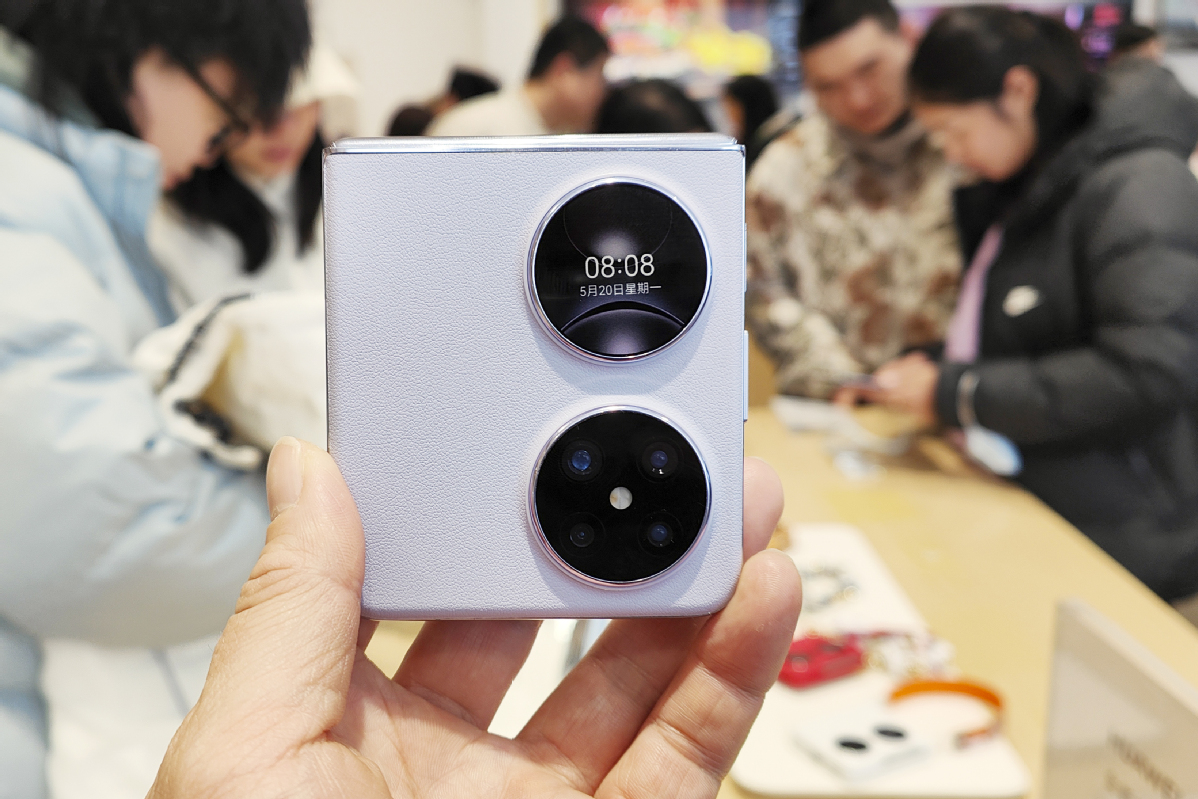
Chinese smartphone vendors, who are well aware of the opportunities ahead, are scrambling to announce that they are "all in on AI".
Oppo said in February it has established an AI center, which will through dedicated research and development into AI and its applications aim to further strengthen the smartphone maker's AI capabilities.
The center will also explore a broader range of user-centric AI products and features that will enable the company to bring users the latest experiences at the forefront of AI.
"Following feature phones and smartphones, next-gen AI smartphones will represent the third major transformative stage in the mobile phone industry. In the era of AI smartphones, both the mobile phone industry and user experience will witness revolutionary changes," said Pete Lau, chief product officer of Oppo.
The company said that within the second quarter of 2024, the Oppo Reno 11 Series will be equipped with advanced generative AI capabilities, including the innovative AI Eraser function which can help consumers automatically erase unwanted objects on their photos.
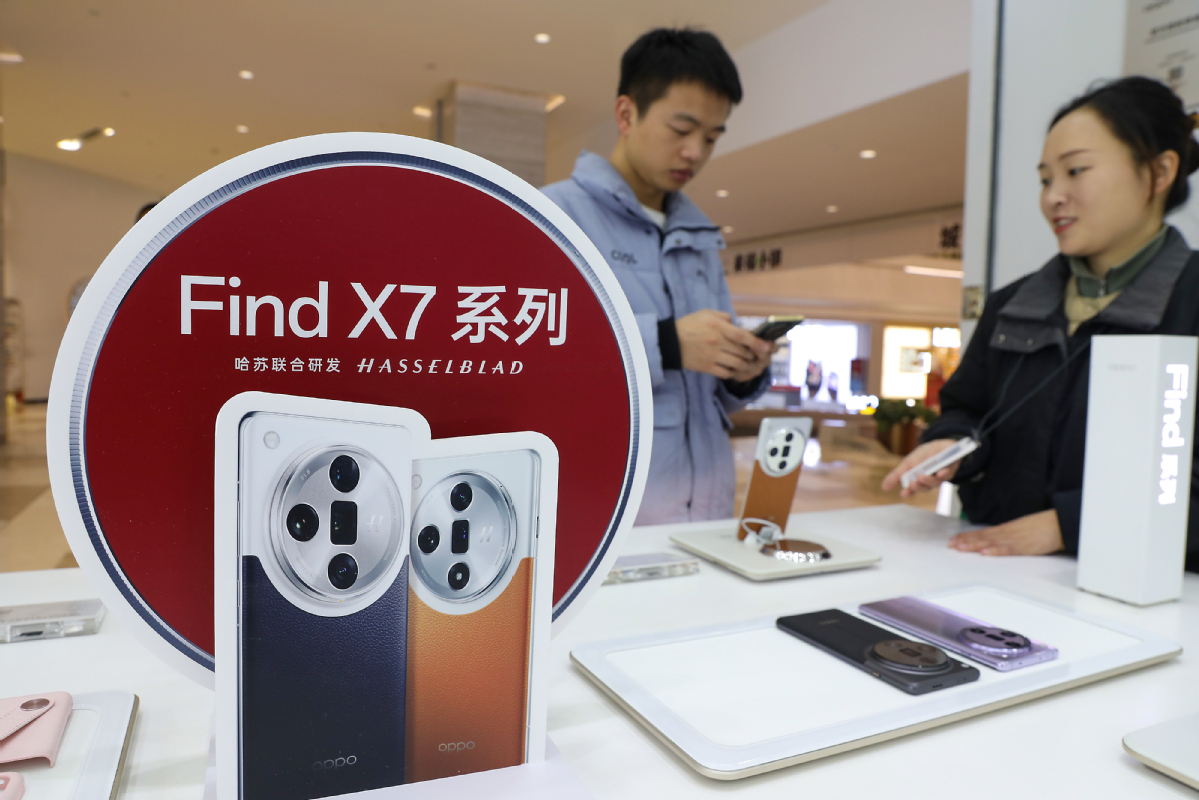
Oppo has released its own LLM AndesGPT, which has three major technical characteristics — dialogue enhancement, personalization, and cloud-device collaboration. Following the introduction of its Find X7 series, Oppo's existing generative AI features include intelligent object removal in photos and phone conversation summaries, the company said.
Chinese technology company Xiaomi Corp is also strengthening R&D efforts to crack the high-end, AI-backed smartphone market where competitors are all pushing to expand their presence, despite what experts call "limited progress" so far.
Lei Jun, CEO of Xiaomi, has said that this is "the only way for Xiaomi to grow" and has described it "as a battle of life and death".
"Xiaomi fully embraces the research on AI LLMs," Lei said, adding that the company's voice-activated AI assistant has been upgraded to support an LLM.
He said Xiaomi has engaged in AI research since July 2016 and that the company had established a team in April last year for the R&D of an LLM. It has, at present, over 3,000 employees working on AI-related research.
Chinese smartphone brand Realme has also enhanced its AI push to gain an advantage amid fierce competition, as the technology is expected to give a strong boost to the smartphone sector.
Xu Qi, vice-president of Realme, said the company is strategically positioning itself to capitalize on this opportunity by extensively integrating AI into its smartphones.
Realme has been laying the groundwork for AI for several years, boasting a dedicated AI team actively advancing related initiatives, Xu said.
In the broader context of the smartphone industry, major players like Huawei, Honor and Oppo have already embraced AI, incorporating large models, AI systems and functionalities.
Realme aims to differentiate itself by focusing on AI assistants, AI entertainment, AI imaging and AI efficiency around the overall use scenario of young users.
Xiaodu Technology, the smart speaker unit of Chinese tech heavyweight Baidu Inc, has also officially released its education-oriented smartphone equipped with an AI-powered LLM that is targeted at students, in a bid to carve out a niche in the world's largest smartphone market.
The company said the smartphone, called Xiaodu Qinghe, provides AI-enabled tutoring, English-speaking training and interactive learning guidance for primary and middle school students, as the company aims to extend its footprint in the education hardware segment.
The phone comes installed with numerous free learning resources and offers parental controls that can limit the time spent on specific apps, according to Xiaodu.
Chinese smartphone company Honor is also eager to integrate AI into its devices.
Zhao Ming, CEO of Honor, said: "We believe AI will reconstruct operating systems and rebuild our future smartphone experience. Honor will advance our AI strategy by integrating it across our operating system and all devices, ensuring a human-centric experience that delights our users with every interaction."
Zhao said the company has invested more than 10 billion yuan ($1.39 billion) into specialized AI R&D.
Facing challenges
Despite smartphone companies' overwhelming enthusiasm for AI, challenges still abound.
Ranjit Atwal, senior director analyst at market research company Gartner, said the AI enhancements to smartphones evolve from current experiences with cameras and voice integration, but these capabilities do not demonstrate a new groundbreaking functionality for users.
"They are unlikely to pay a premium for generative AI smartphones without the availability of any groundbreaking applications," Atwal said.
The catalyst for transformative shifts in user experience lies in the advancement of smaller versions of LLMs specifically tailored for smartphones, Atwal said.
This evolution will transform smartphones into even more intuitive companions capable of comprehending and responding to human language and visual cues, which will elevate the overall user experience to new heights.
Chinese smartphone companies are viewing the development of on-device LLMs as an important aspect of building a high-end image, said Lu Yanxia, research director at IDC China.
However, two aspects — computing power and costs — pose the biggest challenge in integrating LLMs into smartphones, and companies are aware of these, Lu said.
He said the success of LLMs depends highly on the support of computing power. LLMs typically require training with trillions of words, which is still a huge challenge for smartphones.
But with domestic mobile phone manufacturers, including Huawei, investing in the field, their application in smartphones may create new opportunities, Lu added.



















