


AI takes center stage at Beijing Film Fest
Beijing International Film Festival introduces AI-generated short films, exploring innovation in storytelling and collaboration between AI and human creativity.









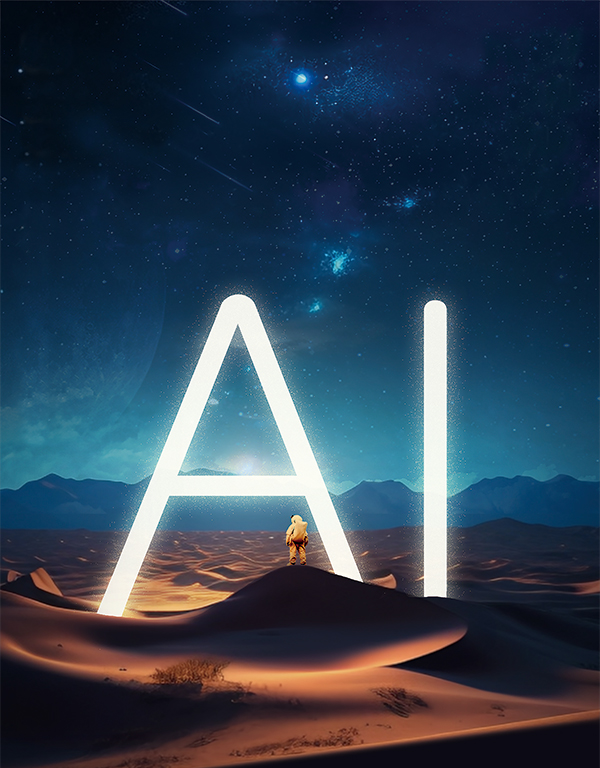
For the first time in history, the Beijing International Film Festival has introduced an AIGC (artificial intelligence-generated content) Short Film Unit, showcasing the application and innovation of AI technology within the film industry while also exploring how AI challenges and reshapes traditional cinematic storytelling.
Co-organized by the School of Animation and Digital Arts of the Communication University of China, the core activities of this unit include a forum for creators within the AIGC environment, a screening of outstanding entries from the inaugural BJIFF AIGC Short Film Competition, along with an awards ceremony.
Tang Junshu, the principal of this unit and a teacher at CUC, noted that participants from various backgrounds have taken part in this section. There are full-time AIGC artists, educators and students from academia, directors and screenwriters from the film industry, and even technical professionals from technology companies.
According to her, the younger generation has been at the forefront of AIGC creation. About half of the participants in this competition are in their 20s, with the youngest member at 11 years old and the oldest at 60.
The competition is the highlight of the event. The organizing committee received 430 submissions from across the globe, including entries from the United States, the United Kingdom, Austria, Japan, Malaysia, and other countries and regions. These submissions varied in duration, spanning from one to 18 minutes. Among them, 23 entries made it to the final round of judging.
Tang explained that the judging criteria for the AIGC section are more complex than those for typical short film competitions. The judges not only consider traditional elements like thematic expression, artistic impact, and the use of audiovisual language, but also the proportion of AI application, AI technical difficulty, workflow, and more.
"The main challenges for AIGC works currently lie in the smoothness of the shots, consistency in character portrayal, and the establishment of a unique visual style," she said. "The works that have made it to the finals have achieved a considerable level in these areas."
One such work is To Dear Me by AIGC artist Chen Liufang. It tells the coming-of-age story of a girl burdened with the pain from her dysfunctional family and her personality flaws. She longs for and seeks love, and ultimately learns to love herself. Lasting five minutes and 30 seconds, this short film took Chen's team nearly three months to complete.
The film is based on CUC student Yan Xiaoxuan's original idea and video project. Team member and director Tong Hua began by shooting live-action scenes. AI was then used to transform the footage into animated videos.
Chen explained that they used real actors because it helps make the AI-generated content more consistent and stable. "Currently, AI creation is like a roll of the dice, with outcomes being random each time. Using live-action footage as a basis for AIGC offers much greater control compared to generating videos from images and texts."
Chen also mentioned that AI isn't yet very good at making characters act realistically, and filming real people allows for precise control over characters' facial expressions and movements. "Can AI learn to perform on its own in the future? I view it with optimism and anticipation, but it will require a lot of training," she said.
Visual aesthetics is another crucial element of an AI-generated short film, which cost a significant amount of time and effort for Chen and her team.
They dedicated over a month to training AI models specifically for this film, experimenting with different styles using Stable Diffusion's SDXL model. After much exploration, they decided on one style dominated by Spanish painter Pablo Picasso's blue hues, combined with oil painting techniques and pointillism effects.
This isn't Chen's first competition or AI-generated work. With each project, Chen delves deeper into exploring AI's applications, trying to achieve different goals.
In her first AIGC work, Love's Last Song, for example, she experimented with a full AI-driven production process, using various AI software for scripting, visuals, modeling, animation, music, and voice-over.
Her second project, The Songs of Distant Earth, based on the novel of the same name by British sci-fi writer Arthur Charles Clarke, explored the workflow process of creating a trailer with AI, resulting in a two-minute animation short film in just 20 hours.
This time, To Dear Me marks Chen's first attempt at a complete AIGC narrative, moving beyond a mere assembly of fragmented shots to telling a story with both artistic value and coherence.
"I believe the measure of excellence for judging an AIGC short film is whether you can appreciate and be moved by it, even without the elements of AI," Chen said.
Every step of Chen's progress keeps reminding her not to rely too much on established creative paths or fixed ways of thinking.
"This is what AI demands from today's creators," Chen said. "We need to soak up new information and skills like a sponge."
She pointed out that the good thing about AI is that the industry is open, and AIGC creators are willing to share their experiences with one another. There are also plenty of learning materials available online, which allowed Chen to acquire almost all of her AI skills through self-study. "AIGC creators believe in the power of sharing. We want to build a richer creative ecosystem," she said.
Tang is also amazed by the rapid pace of AI development. "You might wake up every day to find the world has changed, with new advancements in the industry. This poses new challenges for training talent in AI creation," she said. "While in the past, designers primarily focused on their technical skills, now anyone can bring their concepts to life with AI tools, making creativity humanity's most important asset."
Sha Dan, the deputy director of the BJIFF Screening Department and a renowned film curator, summarized the relationship between AI and humans today as "a love-hate dynamic".
"The rise of AI is like the boy who cried wolf. If we don't actively engage, there's a chance that AI could replace us in the future. But instead of fearing it, we should 'dance with the wolf', grow with it, and let AI assist us in our creative endeavors," he said.
"Film festivals are particularly interesting. Here, you can find old movies, modern works, and even VR (virtual reality) and AIGC animations that speculate about the future. It's like stepping into a time tunnel where yesterday, today, and tomorrow converge."