



One small step for humanoids, a giant step for industry









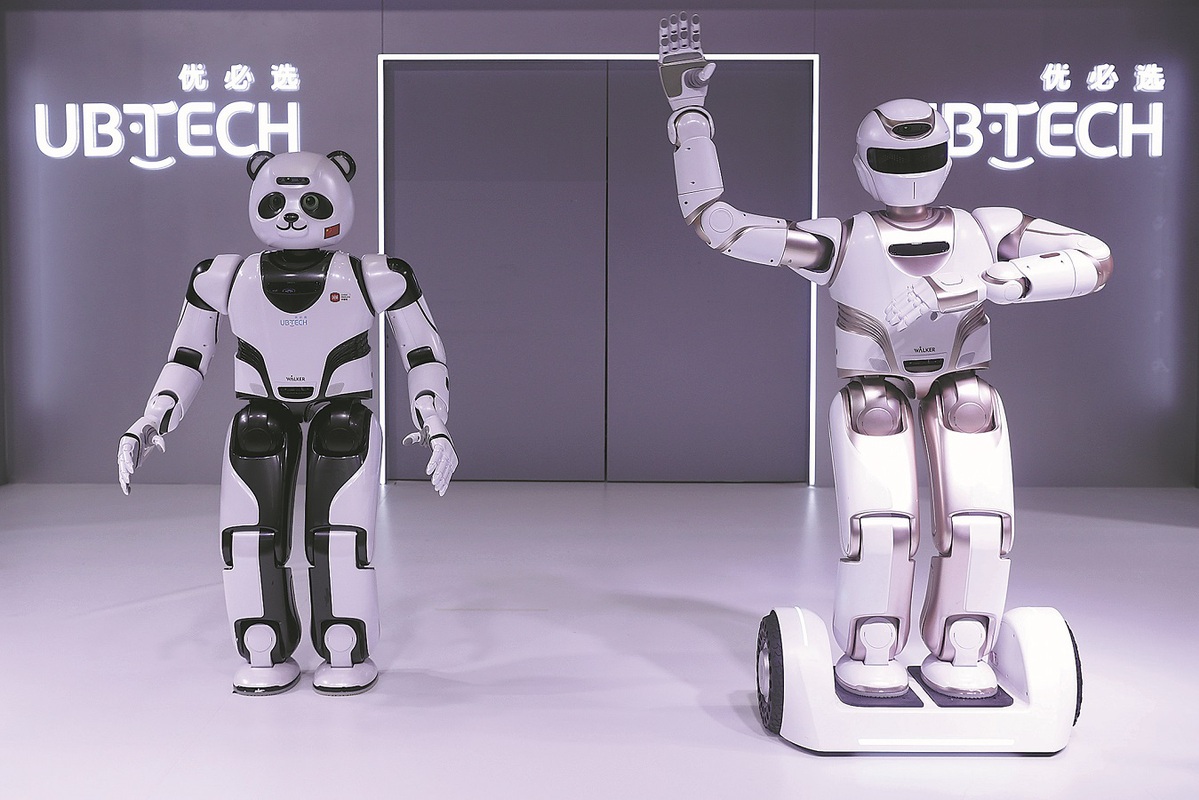
A recent video showcasing a humanoid robot working in a factory has set the internet abuzz with excitement. The robot effortlessly inspected car door locks, tested seat belts, examined headlamp covers, and even affixed car emblems, blurring the boundaries of what humans and machines can do.
The robot, Walker S produced by Chinese AI and humanoid robotics company UBTech Robotics, offers a glimpse into a future where humanoid robots could be seamlessly integrated into various industries.
The Chinese humanoid robot market is expected to reach 27.6 billion yuan ($3.81 billion) in 2024, and by 2029, it is projected to surge to 75 billion yuan, capturing an impressive 32.7 percent share of the global market, according to a report jointly released by leaderobot.com and UBTech Robotics in April.
Chinese-made humanoid robots have progressed from early exploratory stages, where they had simple locomotion in legs and arms, to advanced phases where they incorporate artificial intelligence, machine learning, and computer vision systems to develop rudimentary perception abilities, the report added.
A separate report by the Research Institute of the People's Daily Online showed that as of May last year, China had emerged as the global leader in both patent filings and valid patents for humanoid robot technology standing at 6,618 and 3,110, respectively, while global patent applications surpassed 15,000.
The development of AI, coupled with the power of large-scale models, has propelled humanoid robots toward greater intelligence, enabling them to tackle a wider range of real-world problems, said Xiong Youjun, chief technical officer of UBTech.
These advances have paved the way for more natural human-robot interactions, streamlined motion planning, and increased research and development efficiency in the field of humanoid robotics, Xiong said.
In the years ahead, humanoid robots will find major applications in industrial manufacturing, commercial services, and household companionship, Xiong said.
While China has made notable strides in the field of humanoid robotics, there are certain areas that need improvement.
Disparities still exist in critical components, operating systems, complete robot products, and the overall industry ecosystem. The need to catch up in software development has also been recognized, said Liu Yu, a researcher at the Chinese Academy of Sciences' Institute of Automation.
Developing humanoid robots that can adapt to human living environments poses significant challenges, with high demands for motion capability, environmental perception, decision-making, and more. These requirements contribute to increased hardware costs, said Zhang Jin, president of Siasun Robot& Automation Co.
The complexity of humanoid robot technology, coupled with the need to cater to multiple human needs, also further drives up development costs and extends the research and development cycle, Zhang said.
Unlike industrial robots that typically have six or seven joints, humanoid robots often require more than 40 joints to replicate human-like movements. This large number of joints adds to the mechanical complexity and hardware costs, Zhang said, calling for greater government support to enable the long-term growth of the industry.
After guidelines on innovative development of humanoid robotics were issued by the Ministry of Industry and Information Technology in October last year, several major cities in China, including Beijing and Shanghai, have rolled out supportive policies to foster the growth of the sector.
Beijing, as a front-runner in technological innovation, has established a 10 billion yuan fund dedicated to the development of the humanoid robotics industry. Meanwhile, Shanghai intends to construct a synergistic innovation platform that combines large-scale models with humanoid robots.
By 2025, China envisions the preliminary establishment of an innovative humanoid robotics system to facilitate mass production. China has set its sights on achieving comprehensive capabilities in humanoid robotics by 2027 that are on par with the world's most advanced nations, according to the guideline.



















