



Culture wellspring of Chinese youth's confidence









I had the privilege of studying in China in the 1980s. Since then I have engaged deeply with the Chinese language and culture.
Upon returning to Egypt, I dedicated myself to teaching the Chinese language and promoting Chinese culture in my country, establishing three Chinese departments and serving as the foreign director of the Confucius Institute at Suez Canal University in Egypt for nearly a decade. And by doing so, I have realized the importance of cultural inheritance in boosting cultural confidence.
First, the inheritance of Chinese culture is crucial for the enhancement of Chinese people's confidence. Similarly, people in every country should have confidence in their respective culture and traditions. As a 5,000-year-old civilization, China has a rich cultural heritage including Confucianism, Daoism, Buddhism, traditional Chinese medicine, calligraphy, painting and opera.
These cultural traditions reflect the wisdom and creativity of the Chinese people, and characterize their cultural identity. By promoting these valuable cultural assets, China can showcase its confidence, pride and charm on the world stage.
Second, the inheritance of Chinese culture plays a key role in enhancing the country's cultural soft power, and culture is a vital component of a country's soft power. As a major global power, China's cultural traditions have influenced people worldwide.
For example, traditional Chinese cultural heritages such as Peking Opera, Kunqu Opera, tea ceremonies and Tai Chi are practiced and celebrated worldwide. By promoting these cultural heritages, China can also enhance its discourse power and influence in the global arena, injecting new vitality into its cultural soft power.
And third, the inheritance of Chinese culture is a key necessarily for promoting national cohesion and enhancing people's sense of identity. In the context of social diversity and economic globalization, national identity is essential for maintaining stability and unity.
China is home to 56 ethnic groups, each with its distinct cultural traditions. Cultural inheritance serves as an important bond promoting harmonious coexistence among these diverse ethnic groups. By inheriting and promoting their excellent traditional cultures, the Chinese people can enhance their sense of identity and community, fostering national unity and harmonious development.
This underscores the importance of striking a delicate balance between traditional culture and modern civilization, and fostering a harmonious relationship between the preservation of cultural heritage and the pursuit of innovative development, addressing pressing issues at hand. China's successful promotion of its culture offers other developing countries some significant lessons.
Developing countries should protect their valuable cultural assets by building legal safeguards and educating their people about the importance of their cultural heritages.
I have seen the immense impact of cultural inheritance in both cities and rural areas in China. In Beijing, for instance, historical sites such as the Palace Museum and the Summer Palace are well-preserved, attracting millions of domestic and foreign tourists. This not only boosts Chinese people's cultural confidence but also helps spread Chinese culture globally. And in Jiangsu province, traditional handicrafts such as Suzhou embroidery and cloisonné remain vibrant in the market, enriching the lives of local residents and facilitating business.
Also, strengthening cultural education to instill among youths a sense of identity is crucial. By introducing traditional culture courses in curriculums, the authorities can help students gain a better understanding of their culture. Such an approach will not only boost national pride but also nurture talents with both modern perspectives and deep cultural understanding.
During my visits to various Chinese primary and secondary schools, I have observed that traditional culture courses are taught from the elementary to university level, which helps students gain a deep understanding of their cultural roots even if their major is science and technology.
Engaging in international cultural exchanges to showcase one's culture is essential. In this age of globalization, cultural exchanges and mutual learning have become increasingly important. And cultural exchanges not only promote different countries' cultures but also allow countries to learn from each other's experiences.
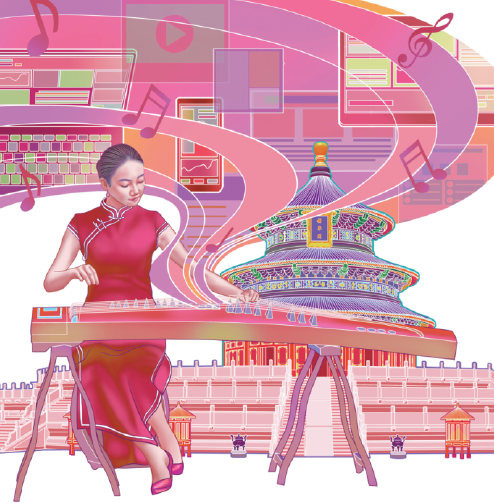
Using online platforms such as new media to disseminate cultural knowledge, too, is important for engaging with people, especially the youth, of other countries. In fact, China Central Television and China Global Television Network broadcast high-quality cultural documentaries, and high-tech companies develop culture-themed apps, breathing new life into traditional culture.
China's experience shows that only by respecting and protecting traditional culture can a country boost its cultural confidence, which other developing countries can emulate to promote their cultures worldwide. By strengthening their cultural education, engaging in global cultural exchanges, and promoting their cultures using modern technologies, developing countries can chart a path of cultural development that is both unique and suited to their real situation.
The author is director of the Confucius Institute at the Suez Canal University in Egypt.
The views don't necessarily reflect those of China Daily.
If you have a specific expertise, or would like to share your thought about our stories, then send us your writings at opinion@chinadaily.com.cn, and comment@chinadaily.com.cn.





