



Japan discharges toxic water despite protests
TEPCO disregards opposition at home and abroad with sixth round of release completed









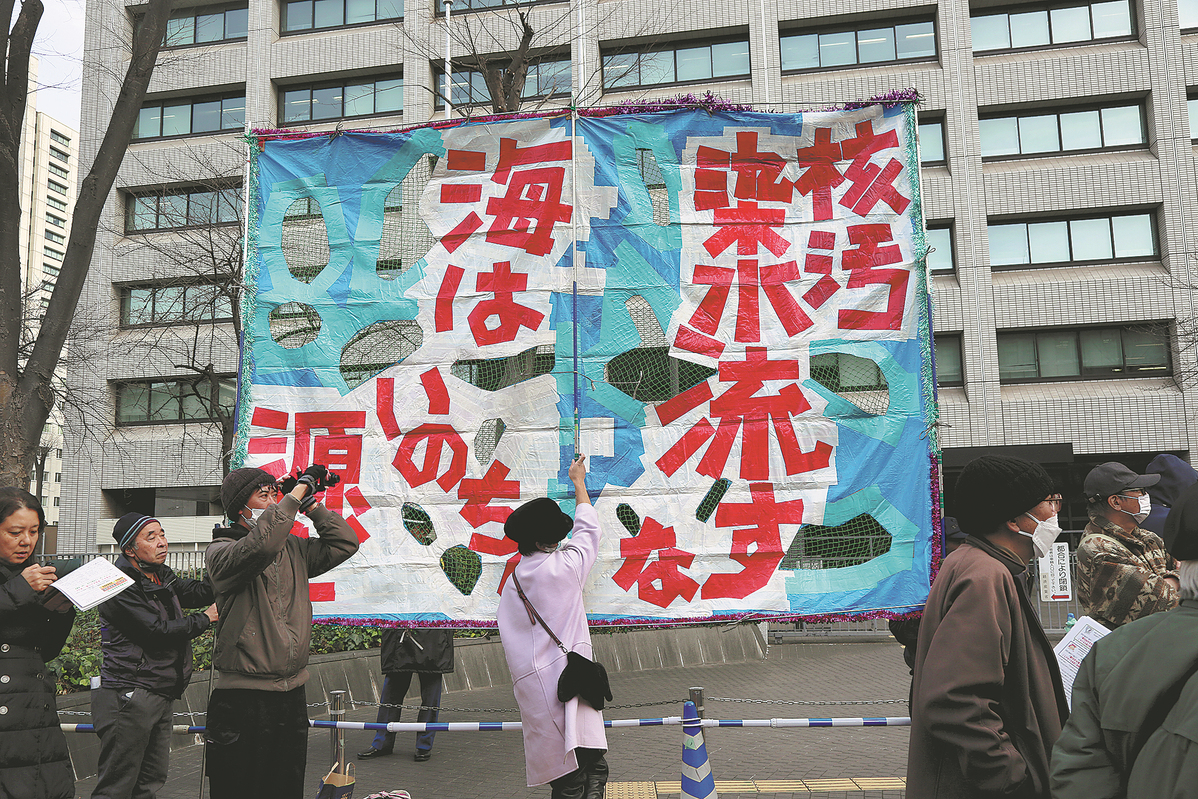
The operator of the crippled Fukushima Daiichi nuclear power plant in Japan completed the sixth round of discharge of nuclear-contaminated water from the facility into the Pacific Ocean on Tuesday, persisting with the controversial dumping despite opposition from local residents, fishermen and the international community.
Approximately 7,800 metric tons of "treated" radioactive water was dumped in this round. Disregarding complaints, Tokyo Electric Power Company, or TEPCO, plans to discharge about 54,600 tons of nuclear-contaminated water in seven rounds during the fiscal year ending March 2025.
The Japanese government said the process of full discharge is estimated to take about 30 years, aiming for the decommissioning of the wrecked Fukushima Daiichi plant by 2051. However, in a report compiled in July 2020, the Atomic Energy Society of Japan projected that the time frame for the decommissioning ranges from several decades to several hundred years.
The prolonged release of nuclear-contaminated water and its environmental impact have not been fully considered by the Japanese government, said Toshihiro Inoue, a special committee member of the Japan Congress against Atomic and Hydrogen Bombs, also known as Gensuikin.
Unlike regular nuclear plants, Fukushima water is contaminated with more than 60 different radioactive substances, not just tritium. The long-term effects on the surrounding environment could be significant. Over decades, even trace amounts of radioactive substances could accumulate and cause environmental harm. This poses a risk not only to the ecosystem, but also potentially leads to misinformation spreading about the area, Inoue said.
Although the Japanese government claims it is explaining the situation regarding the so-called treated water, Inoue noted that Tokyo is not adequately informing either the domestic or international community.
"The government seems to be pushing the narrative that it is safe to release Fukushima water into the sea because the authorities said so, which is problematic as the International Atomic Energy Agency is an agency promoting the peaceful use of nuclear energy. We need to include more independent evaluations, not only from the IAEA, but also from third-party organizations," Inoue said.
Transparency sought
Transparency in the operations conducted by TEPCO and the Japanese government is essential for neighboring countries. If TEPCO and the government claim that the water is safe, they should accept stakeholders' requests for permission to send personnel to Fukushima to conduct independent monitoring of the discharge of nuclear-contaminated water, he said.
Masaaki Ogawa, a 73-year-old Tokyo resident, said it is ridiculous for TEPCO and the Japanese government to even consider releasing nuclear-contaminated water into the sea. On the contrary, they need to figure out how to contain the radiation in the contaminated water.
"I believe the reason why the Japanese government does not listen to the people opposing the ocean discharge of nuclear-contaminated water is because the groups benefiting from nuclear power, those with interests in TEPCO or various nuclear power entities, have considerable influence on the government," said Ogawa, who is the administrative representative of the Association to Prevent the Eviction of Nuclear Disaster Evacuees from Their Homes.
It is not just a problem for Japan, he said, adding that he doubts whether the Japanese government can provide satisfactory explanations to all the countries in the Pacific region.
"Stakeholders like China and South Korea should be allowed to participate in a long-term international mechanism for the monitoring of the release of nuclear-contaminated water into the sea," Ogawa said.
The dumping of the Fukushima nuclear-contaminated water bears on the health of humanity, the global marine environment, and international public interests. China is a major stakeholder, and the Chinese government and people are highly concerned about this issue, Chinese Premier Li Qiang said during a meeting with Japanese Prime Minister Fumio Kishida on May 26 in Seoul, on the sidelines of the 9th Trilateral Summit Meeting among China, Japan and South Korea.
jiangxueqing@chinadaily.com.cn










