US targets Chinese tech to lay its ghosts to rest









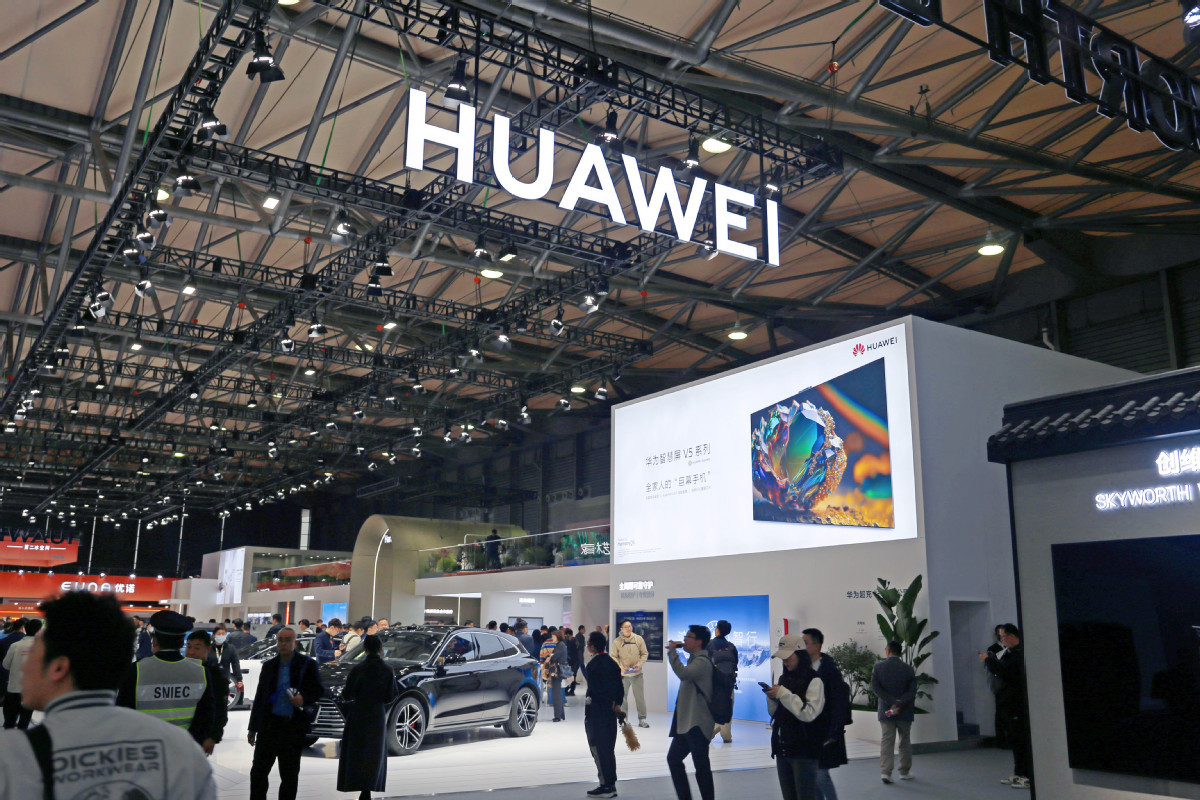
For years Huawei has been facing accusations from the West that its products have"backdoors" that allow the company to obtain data that flow on the networks they build and maintain, and give China access to telecom networks globally.
Among others, British intelligence officials have tried to find Huawei's backdoors. But since the backdoors are a figment of the West's imagination, they came up empty handed. Despite their failure, however, they have continued to allege Huawei's backdoors harm the United States, the United Kingdom and other countries.
None of them could do better, however, than making baseless accusations that theoretically there"could" or "might" be such backdoors. Such paranoid accusations have cost the countries that have opted to replace perfectly functioning Huawei components with often inferior Western products at least$1 billion each.
Incidentally, the Western products have their own backdoors open to Western intelligence. Huawei itself had to quickly replace up to 4,000 components at the cost of $2 billion to comply with Western sanctions.
What an efficient twofer. They inflicted huge damage on Huawei, a global leader in digital communications technology, almost killing it, while getting Huawei's components replaced with inferior Western ones.
A recent article in The Intercept, a left-leaning reader-supported news website, said that no Western intelligence has proved that such backdoors exist in Huawei devices or have been used by the company.
Now, TikTok, the target du jour, is about to be banned in the US because of its foreign ownership. TikTok has about 150 million users in the US, some of whom depend on it for their livelihood. The threat to ban TikTok would enable the sale of this proven money-maker new media to US buyers. Not surprisingly, several associates of former US president Donald Trump, including former Treasury secretary Steve Mnuchin, like vultures around a carcass, are moving in for the rich kill.
On Thursday, however, a dozen social and racial justice groups expressed concerns that the federal initiative to mandate a sale or ban of TikTok could stifle speech within minority communities. They argued that such actions would disrupt a vital platform that many rely on to forge online connections and champion various causes.
US-style democracy is truly amazing — it's a case of "from each according to his need, to each according to his greed".
The purported threat of TikTok to US national security has turned into an anti-China campaign, but the official record tells a different story. US intelligence has produced no evidence that the popular short-form video hosting platform has ever coordinated with Chinese authorities. But this fact hasn't stopped many in the US Congress and even President Joe Biden from touting legislation that would force the sale of TikTok.
In interviews and testimonies to Congress about TikTok, top officials of the FBI, CIA and other US intelligence agencies have qualified the national security threat posed by TikTok as purely hypothetical, because with access to much of the government's most sensitive intelligence, they are well placed to know.
The basic charge is that TikTok's parent company, ByteDance, a Chinese company, could be compelled by the Chinese government to use the platform in targeted operations to manipulate public opinion, collect data on US citizens, and even spy on individual users.
TikTok has categorically denied ever having shared US users' data with the Chinese government, and emphasized that it would not do so even if asked.
Although top US security officials seem happy to echo the allegations of the Chinese government's control of TikTok, they stop short of saying that the company has actually coordinated with the Chinese government.
Recently, Reuters reported that as president, Donald Trump signed a covert action order authorizing the CIA to use social media to influence and manipulate domestic Chinese public opinion and views on China. Other covert US cyber influence programs are known to exist with regard to Russia, Iran, other foreign actors, and terrorist groups.
In other words, the US is the one to watch out for.
The author is a senior fellow at the Center for China and Globalization. The views don't reflect those of China Daily.
If you have a specific expertise, or would like to share your thought about our stories, then send us your writings at opinion@chinadaily.com.cn, and comment@chinadaily.com.cn.