For just and equitable global governance
BRICS should fully leverage the resources and markets of its member countries, laying a new foundation for stable and long-term development of greater cooperation










The world is seeing a worsening global governance deficit as some developed countries prioritize their own interests and run away from their due international responsibilities. In contrast, emerging markets and developing countries have shown increasing willingness and capabilities to shoulder international obligations, more actively making their voices heard on major international and regional issues.
Riding on this trend, the BRICS group initiated a new round of expansion to enhance the global influence of these countries. Starting Jan 1, Egypt, Ethiopia, Iran, Saudi Arabia and the United Arab Emirates were admitted as official members of the BRICS grouping, marking the beginning of a new era of greater BRICS cooperation.
Built on the economic foundation of emerging markets and developing countries, the BRICS mechanism has a mission to raise their voice on the world stage.
The BRICS mechanism will be committed to deepening South-South cooperation and advancing global governance. Serving as the hub for South-South cooperation, the expanded mechanism will aim for high-quality development of the Global South, broader cooperation and improved governance.
BRICS members come from different continents including Asia, Europe, the Americas and Africa. Naturally, they vary in resource endowments, political systems, economic and social development levels and models, religions, cultures, as well as historical traditions.
Currently, each member has set its own unique growth strategies and policy priorities based on their national conditions. When it comes to major economic and strategic issues, some members hold different views and lack political trust in each other. After the expansion of BRICS, these differences and divergences will continue to exist, if not widen, leading some to believe that there is no effective adhesive to bring the group together and that cooperation among members will face greater challenges.
All of the BRICS members are emerging markets and developing countries with ambitious goals to enhance regional and international influence through economic growth and social progress. In certain fields, competition may arise as they vie for resources and markets that are crucial for economic growth. As economic strength and interactions grow, the BRICS countries may see sharper differences and potentially more intense competition.
Some argue that the BRICS mechanism is a platform for emerging powers to compete for global influence, with inevitable economic and political competition among its members. The expanded BRICS will also need to consider how new and old members should take up their share in the group's voice.
Some developed countries such as the United States have adopted policies to divide the BRICS. For instance, some countries support India, Brazil and South Africa in leading Global South affairs while attempting to exclude China and Russia from the community. They label the other BRICS members as subordinate, so as to create divisions and opposition within the group.
Moreover, as more and more countries seek to join the BRICS group, establishing admission criteria should be urgently addressed.
The expansion of BRICS from five to 10 members is a significant milestone in the group's history. To ensure stable and long-term development, it is important to step up the efforts to explore the potential of greater cooperation, shape the driving force for BRICS countries, and highlight the positive role the expanded BRICS cooperation plays in advancing and leading global development and South-South cooperation.
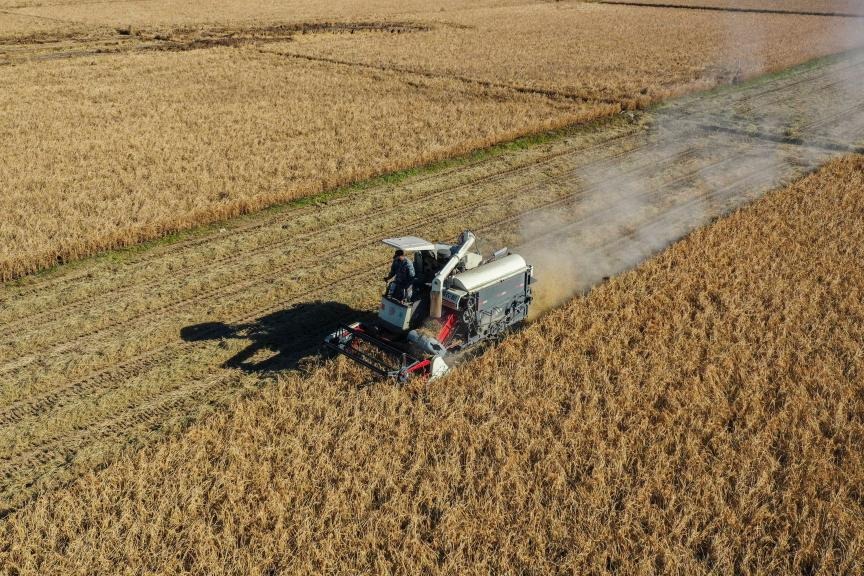
Greater BRICS cooperation should build on past experiences to enhance collaboration in key and emerging fields. Cooperation in eight focus areas — trade and investment, manufacturing and mineral processing, energy, agricultural cooperation, science and innovation, finance, connectivity, and information and communication technology — lays a solid foundation for collaboration among BRICS members.
In addition, the BRICS countries share similar positions in areas such as implementing the United Nations 2030 Agenda for Sustainable Development, addressing climate change, promoting green development, and developing the digital economy, which promise vast potential for policy dialogue and pragmatic cooperation. Greater BRICS cooperation should focus on both existing key sectors and promising emerging areas to achieve tangible results.
Furthermore, greater BRICS cooperation should stay open to enhance the group's transparency and admit new members when appropriate. The "BRICS+" model should be further developed and consolidated, attracting economically vibrant and promising countries to join the mechanism, generating synergy on a broader scale, and injecting new vitality into the group.
In the long run, only by scaling up can the BRICS countries make their voice better heard in the international community and provide more options for cooperation.
In October, the 16th BRICS Summit will be held in Kazan, Russia. Themed "Strengthening Multilateralism for Just Global Development and Security", this will be the first summit after the mechanism's expansion.
As the rotating chair, Russia will work with other members to build BRICS into a new type of multilateral cooperation mechanism that is made up by emerging markets and developing countries, open to the world, and inclusive of all — something which will play a key role in advancing more just and equitable global governance.
BRICS should fully leverage the resources and markets of its member countries to deepen pragmatic cooperation in finance and trade, energy and food, science and technology innovation. It is also imperative to further strengthen dialogue and mutual learning, expand cultural exchanges, and lay a new foundation for stable and long-term development of the group's cooperation.

The author is a senior research fellow of the Institute of World Economics and Politics at the Chinese Academy of Social Sciences and the National Institute for Global Strategy at the CASS.The author contributed this article to China Watch, a think tank powered by China Daily.
Contact the editor at editor@chinawatch.cn.