Given rapid rise of AI, will robots replace humans?









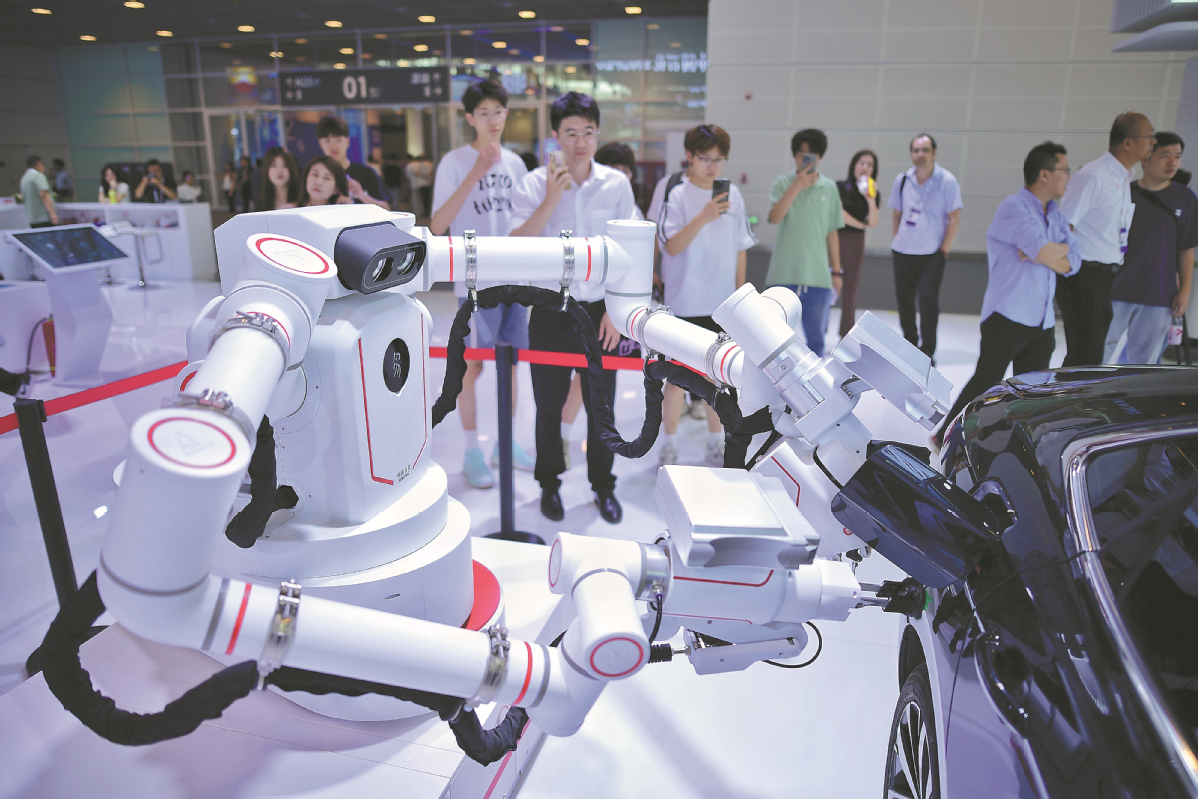
With the rapid rise of artificial intelligence, many people worry that their jobs — or even their very roles in society — could be replaced by AI and robots. But can AI or robots truly replace humans?
The idea of machines replacing humans has deep roots in history. Humans build machines to extend and enhance their own capabilities — from tools that can act as substitutes to human hands, to vehicles that do the job of feet, and much faster, to computers that augment human minds.
Yet machines possess many "superpowers" that humans lack. They're tireless, capable of working 24/7 while we sleep; they can process data at lightning speed, handle complex calculations effortlessly, don't have personal agendas; and work without getting sidetracked or taking breaks.
Every major technological advancement brings with itself a fresh wave of "machine replacement" anxiety, raising the fear that machines will outdo us at every turn. From the textile mills of the Industrial Revolution to today's intelligent systems, every era has raised the same fear.
So, will machines actually replace humans?
First, it's true that machines have a replacement effect. Machines have surpassed human capability in many fields. In the production sector, the replacement of humans by machines hinges on a machine's ability to effectively perform a task.
Automated equipment freed up hands, industrial robots became "super employees" on assembly lines, and smart algorithms now make faster, more efficient decisions. Tasks once exclusive to humans are now partly or fully done by machines. This shift is happening across sectors. The jobs of factory workers, dispatchers, drivers, customer service providers are being taken over by automation because machines often match or exceed human efficiency.
On the consumer side, cashier-free stores and self-checkout services are replacing entry-level service jobs, ushering in a world of unmanned and smart services. But beyond replacement, machines are creating new job opportunities for humans. Rather than viewing machines only as competitors, we should recognize the new demands they create. In fact, each new machine requires skilled operators and maintenance workers, creating at least one job, even though part-time.
During the industrial automation wave, new technical roles emerged, focusing on human-machine collaboration. When large AI models were introduced, some predicted that creative people risk losing their jobs, assuming that AI would replace human creativity. Yet creative people who embraced AI tools have become more innovative, demonstrating the creative potential that machines can unleash in humans.
To analyze whether machines can replace humans in many, if not all, jobs, it is necessary to make clear that machines replace skills, not people. For instance, during the early assembly line era, companies only needed workers to tighten screws on some products. When machines "mastered" the "screw-tightening" skill, the need for workers in that role declined. As machines evolve, they improve their precision in specific tasks. So once human skill levels stagnate, machines with higher accuracy can become the preferred choice.
While automation may replace humans in jobs like "screw-tightening", it creates more jobs in the machine maintenance and operation sectors. Companies now require individuals with managerial and analytical skills to optimize production and workflow. Thus, machine replacement and creation effects are two sides of the same coin.
A common joke goes something like this: "Don't worry about being replaced by a machine — you're cheaper." It highlights the economic rationale behind automation. Replacement only makes sense when machines can reduce costs without compromising output. Machines don't need breaks or paychecks, which makes them attractive for labor-intensive industries. In such cases, for jobs that don't demand complex human capabilities, machines serve as low-cost alternatives to boost profits.
But this replacement effect has limits. Human labor retains unique, hard-to-replace qualities like creativity, emotional connection and complex judgment. These traits are essential in jobs requiring innovation, flexibility, management, or decision-making. The logic of "machines replacing humans" is not only about technical advancement but also about economic optimization, driven by cost-benefit analysis. It reshapes job markets, shifting human labor from easily replaceable roles to more valuable, innovative positions.
Fortunately, humans are more than just a collection of skills. Every individual has multifaceted qualities — hands that can work, minds that think — and can use experience productively and feel emotions. Embracing creativity, empathy, and intellectual curiosity is key to avoiding replacement. As long as we continue to develop our unique traits, machines will remain tools at our disposal, not our replacements. The real question is not whether machines will replace us, but rather, what can we uniquely achieve.
The author is a professor at the School of Economics and Management, Beijing University of Posts and Telecommunications. The views don't necessarily reflect those of China Daily.
If you have a specific expertise, or would like to share your thought about our stories, then send us your writings at opinion@chinadaily.com.cn, and comment@chinadaily.com.cn.