Letting go of formalism a year-end necessity









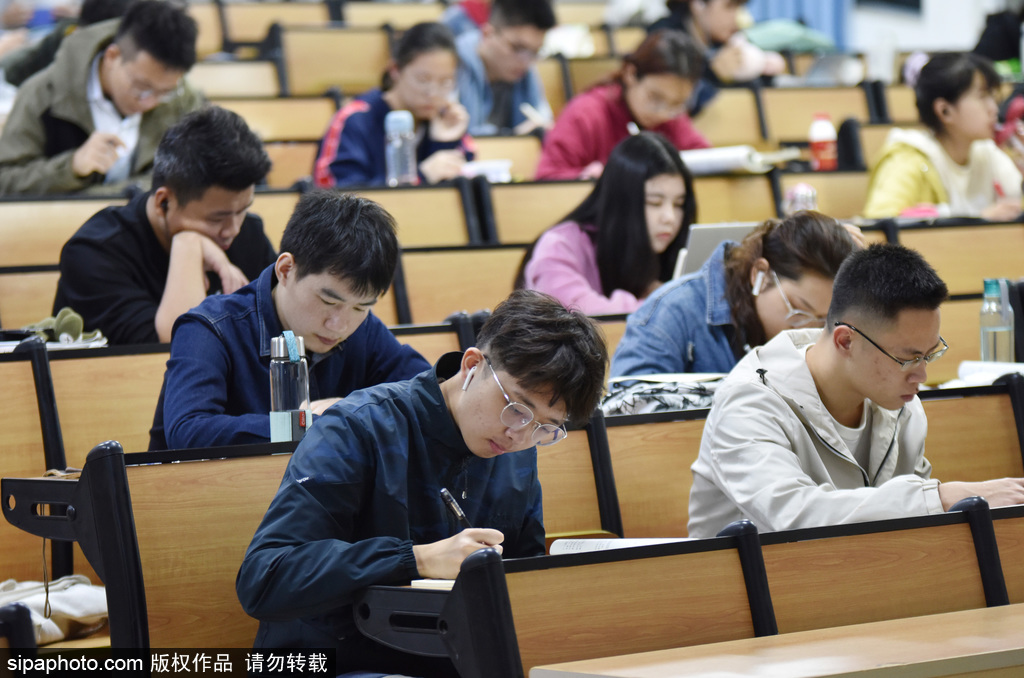
As another year comes to a close, students are preparing for their semester exams, while employees are required to sum up their performance during the year and working units are busy writing work reports that could be as thick as a book.
Such self-checking and summarizing are good for the further development of relevant individuals and the working units if lessons can be drawn from the previous year. But unfortunately, on many occasions, annual self-checking has become a formality and the work reports are like sandwich without nutrition.
While going through such work reports, one might get the impression that they all look alike, with parts showing off achievements and parts talking about ambitious plans for the next year. Failures and lessons to be drawn are mostly neglected and, where mentioned, if at all, they are followed by a list of explanations to indicate it was not the fault of the person writing the work report.
Individuals are lucky because they usually have to write only one or two such annual reports. To make sure that the employees take this task seriously, some official or non-official organizations demand that a report should be a few thousand words long. These reports are then handed in to the supervisors to become one of the criteria for assessing the employees' annual performance.
But I doubt the supervisors read the reports at all. In any case it would be dangerous to assess an employee on the basis of his or her report.
Complaints come mostly from grassroots organizations such as township-level governments. Such an organ usually employs only a dozen or so officials but has to report to a few dozen county departments. When all the superior departments asked for reports from towns in December, it was a disaster. For some towns with no good writers, it was a mission impossible.
However, if there is demand, there is supply. Online, there are ads selling summarized reports. You tell them what your requirement is and they write your reports for you, the way you want them. Payment ranges from a few hundred to a few thousand yuan, depending on the degree of difficulty. If you are reluctant to pay, there are hundreds of ready copies available online that you could download. With a little editing any report could become your report, but make sure you sign your name on it before handing in.
The central authorities are aware of the overflow of formality and have taken measures to curb it, by even decreasing the number of meetings, documents and reports. But inertia remains strong.
For some bureaucratic departments, the best way to show their authority is to order their subordinate units to report to them. With the information from the reports, they can compose their working reports which they hand in to their supervisors. As for giving timely feedback to those who, painstakingly or otherwise, wrote the reports, to help them improve their work, no, that's none of their business.
For many years now, by year-end, higher departments have been asking lower-level organizations to hand in their reports. However, now that the central authorities are restricting the number of documents in order to clamp down on formalism, they pick up their phones to ask their subordinates to do the same. While central authorities restrict year-end inspections of grassroot units to lighten the burden on those low-level units, they go there anyway. However, it is not called inspection anymore; they have given it a different name.
Formalism is sometimes necessary for image building. But it often leads to waste of resources, to bureaucratese, to corruption and may lead to the eventual downfall of a government, as has been proved by Chinese and world history.
Yao Mianzi (being keen on face-saving) is part of Chinese culture that makes it even more difficult to contain formalism in this country. While accepting we may have to survive with formalism, we have to keep fighting against it to prevent it from going too far.

The author is former deputy editor-in-chief of China Daily.
kangbing@chinadaily.com.cn