



Smart cars, roads and online cloud integration urged to improve safety









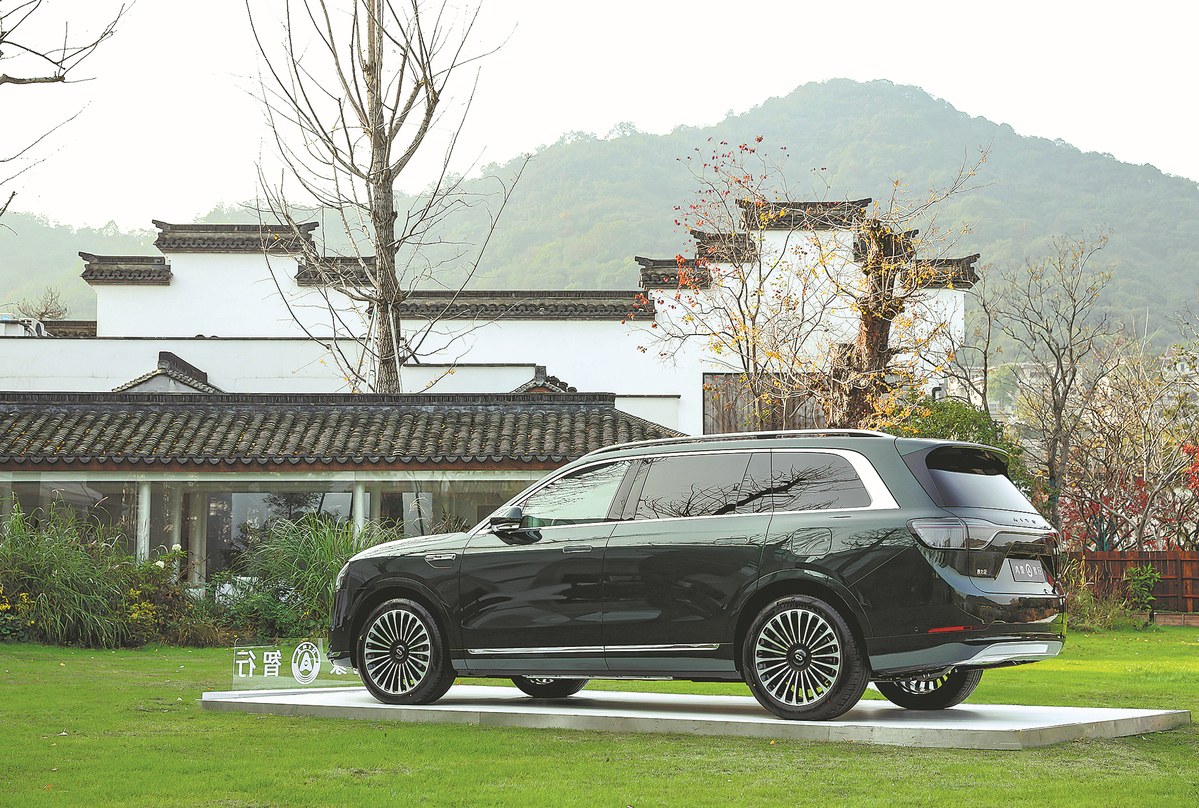
Smart vehicles are making driving a less demanding job. But when married with smart roads and online clouds, they will make overall traffic much safer and more efficient, said a senior communication expert.
"The proportion of new vehicles equipped with intelligent driving systems is steadily rising in China," said Chen Shanzhi, chief technology officer of China Information and Communication Technology Group.
"With enhanced safety and convenience, I'm confident adoption will accelerate further," said Chen, also a fellow of the Institute of Electrical and Electronics Engineers.
But he was quick to add that realizing the full potential of these systems requires cohesive interaction between vehicles, roads, and cloud systems; a framework he describes as "smart cars, intelligent roads, and collaborative clouds".
Chen shared his vision in an interview on the sidelines of a smart vehicle technology forum held in Wuhan, capital of Hubei province, by China EV 100, a think tank, earlier this month.
He pointed to scenarios such as highway collisions and urban pedestrian accidents. "A leading car in a chain collision on expressways can instantly alert following vehicles via V2V communication, mitigating subsequent crashes," Chen explained.
In cities, roadside systems can detect pedestrians and relay warnings to vehicles.
These integrations, Chen said, could enable vehicles to surpass human driving capabilities, enhancing safety and efficiency.
V2X communication is not intended to downplay the role of standalone intelligence.
Instead, Chen said standalone intelligence is the basis of such an interconnected system, and the system helps address limitations inherent to standalone intelligence, such as its sensors' detection range and growing demand for computing power.
"If vehicles lack intelligence, there's no need for interaction. But when a vehicle's capabilities grow, it becomes crucial to integrate with its surroundings through vehicle-to-vehicle and vehicle-to-everything communication," said Chen.
Chen drew historical parallels to emphasize the importance of collaboration.
"Neanderthals were strong but lacked language and tools for effective collaboration. Similarly, today's transportation systems need better communication and coordination to achieve true intelligence," he said.
The transport vision is growing into a reality. China released a list of 20 cities, including Wuhan, in July to conduct pilot vehicle-road-cloud programs.
"By 2026, we expect the pilot program in Wuhan to yield improved traffic efficiency and safer roads," he said.
However, Chen tempered his optimism with realism, emphasizing phased implementation.
Wuhan, for example, is piloting a "thin network" of connected infrastructure at key intersections and highways.
Cost remains a challenge. Chen acknowledged the economic hurdles faced by automakers and governments.
Adding V2X modules increases production costs for carmakers, at around hundreds of yuan per vehicle, and necessary infrastructure at one crossroads entails around 200 million yuan ($27.4 million), he said.
"Without regulatory support or subsidies, adoption will remain slow. Early government incentives could mirror the successful rollout of NEVs," said Chen.
But he added that a number of carmakers have shown interest, rolling out more than 20 models installed with such V2X modules. "Collective action from governments, automakers, and technology providers can create scalable models," he said.
Chen's vision extends beyond vehicles to encompass vulnerable road users, such as cyclists and pedestrians.
"Imagine a cyclist equipped with a device that alerts nearby vehicles to their presence," he said. "Such innovations could significantly reduce accidents."
Like telecommunication networks, Chen said unified standards should be put in place for intelligent transportation systems.
"Imagine driving from Wuhan to Beijing with consistent V2X services," he proposed. Such interoperability, he argued, is essential for scaling technologies and unlocking their potential.
"The road to intelligent transportation is long, but the benefits — safer roads, efficient travel, and a greener environment — make it a journey worth taking. Thoughtful planning and collaboration can turn this vision into reality," said Chen.




















