European EV policy against Beijing may backfire









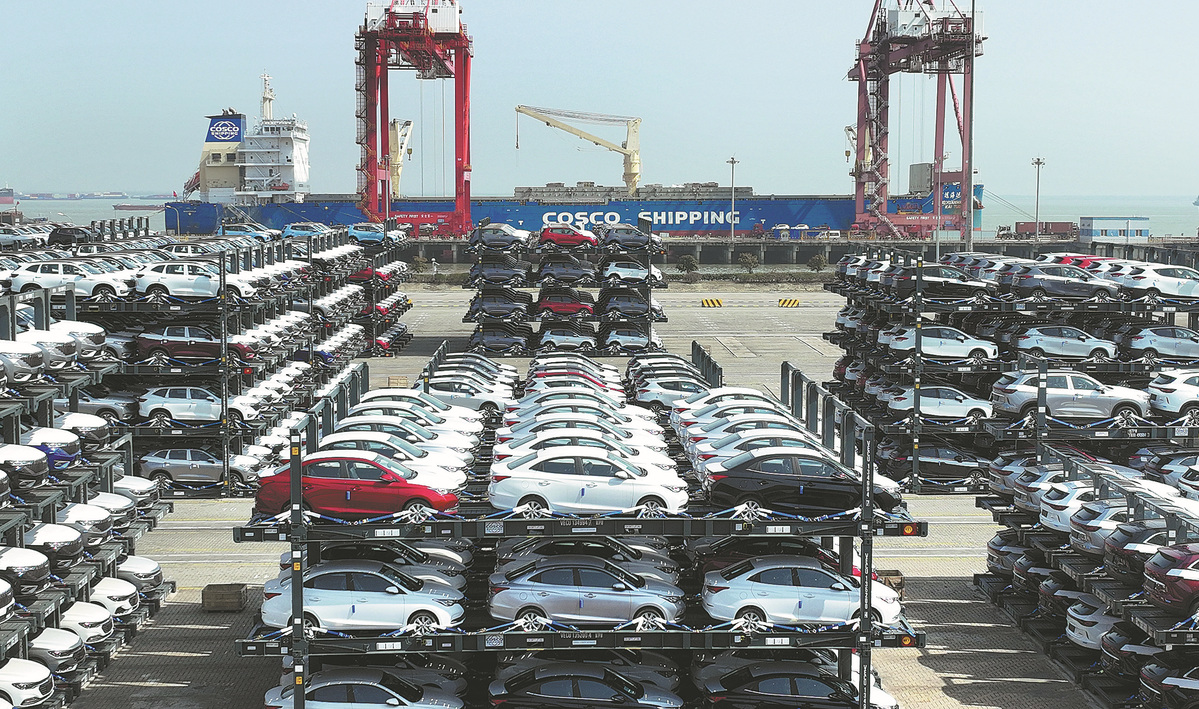
Some European Union countries last year voted to impose tariffs on electric vehicles imported from China. The vote can't be described as a consensus because less than half of the member states voted to do so, with the rest either opposing or abstaining. The levy does not just cover EVs made by Chinese firms, but also those made in China by European firms and imported back, notably, Germany's Volkswagen. China immediately reacted by launching a dumping probe into European brandy exports, and will presumably counteract a number of other exports too.
The tariffs on Chinese-made EVs originated from the European Commission, headed by Ursula von der Leyen, who has adopted an increasingly aggressive Atlanticist foreign policy since 2022. Her decision to blindly follow the United States has harmed the strategic autonomy of the EU considerably and overwhelmingly diminished the competitiveness of European industry. Now, the decision to initiate a trade conflict with China will be another hammer blow to the EU's growth, pursuing unrealistic protectionist goals that the European industrial base is simply not capable of attaining. All signs point to this being a strategic disaster for the bloc.
The eurozone economy, defined as the states in Europe that are economically integrated under the euro currency, grew by only 0.7 percent in 2023. Its growth forecast for 2024 is between 0.5 and 1.2 percent.
For Germany, its largest economy and most significant industrial state, the scenario is even worse, with an expected GDP contraction of 0.2 percent. The stagnation of the eurozone is largely attributed to the surge in energy costs derived from the implications of decoupling Russian energy as a broader consequence of the conflict in Ukraine. This has caused production costs of European industry to surge, which has undermined its competitiveness and led to the phenomenon known as "deindustrialization".
The EU has long complained about the "lack of market access "in China. Initially, the solution to this was to negotiate a mutually reciprocal solution that was known as the EU-China Comprehensive Agreement on Investment, which would offer greater European market access within China in exchange for the EU's upholding the status quo. This agreement was negotiated at the end of 2020, but following a comprehensive propaganda campaign by the US, aligned with the United Kingdom, the deal was scuppered as they successfully drove a wedge in EU-China relations and created opposition to it.
Since that time, von der Leyen has scuppered the deal altogether while simultaneously complaining about the "lack of market access", instead trying to use tariffs and coercion to force unilateral concessions. When viewed in this light, China has been reasonable, but the EU has not. However, it must be stated that this decision will be hugely damaging to the respective EU economies. First of all, owing to the energy crisis and the smaller scale of Europe's industrial base visa-vis China, it simply is not possible for European companies to manufacture electric vehicles at the scale and affordability of which they are available from China.
This is not in fact a product of the so-called subsidies but simply economic reality. The surge in electric vehicle imports from China is happening because there is, owing to the EU's emission and renewable goals, large-scale demand for EVs, and domestic markets are not capable of meeting that demand. China is the only country in the world that is capable of serving the broader demand for such cars, yet out of political motivations it is depicted as "market distortion "and "unfair competition". As a result, the imposition of tariffs will not benefit domestic manufacturing, but will simply make the entire market more expensive for European consumers, contributing to the inflation crisis that has gripped the continent over the past few years.
Likewise, China's tariff measures will hurt European companies that rely on China as their largest export market. It should be made clear that the design of the European Commission to take this path is a "lose-lose" for itself. Europe should stop provoking geopolitical conflict and negotiate a mutually favorable solution because for the past few years, the policies emanating from Brussels have been nothing short of self-destructive, undermining the global competitiveness and affordability of European countries.
The author is a British political and international relations analyst.