



How to make travel more convenient for the elderly and the disabled









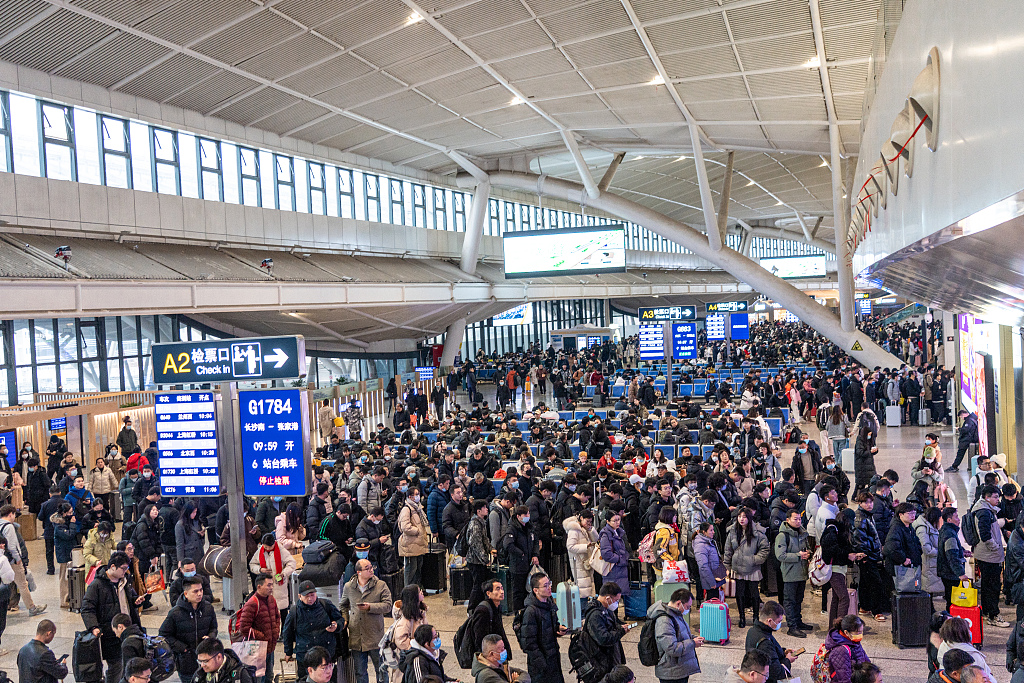
The Spring Festival travel season started on Jan 14 and will last till Feb 22, during which cross-regional travel in China is projected to reach a record-breaking 9 billion trips, up 7 percent year-on-year. Railways and airlines are expected to handle more than 510 million and 90 million passengers, respectively, beating previous records.
Amid the massive movement of people, it is of utmost importance to protect the rights and ensure the well-being of vulnerable groups, such as the elderly, the disabled and pregnant women, and make sure they travel safely and comfortably. For that, the authorities need to adopt a multifaceted approach to passenger management.
Digital ticketing may have become the norm, but many elderly people are unfamiliar with online platforms or self-service machines. Hence, the authorities need to keep the traditional ticket counters open, with staff on hand to assist the needy. The authorities also should use smart ticketing systems with facial and voice recognition technology to streamline the ticketing process.
While dedicated interface systems on the 12306 platform and app, featuring larger text and voice prompts, could make the ticketing process smoother for senior citizens, designated pre-booking services for the elderly and the disabled would allow them to secure tickets in advance.
Special waiting areas with comfortable seating, drinking water and first-aid facilities should be especially demarcated at major transportation hubs for the elderly and the disabled. And to prevent overcrowding and ensure safety of the vulnerable groups, the authorities must carefully manage the passenger flow.
Prioritizing the comfort and safety of the vulnerable groups will make it easier for the personnel on duty to manage the waiting passengers, while priority boarding lanes for the elderly, the disabled, and other vulnerable groups at railway stations and airports will minimize the waiting time for them. Also, dedicated personnel should be on hand to help passengers find their seats and, if need be, carry their luggage. Such help will greatly enhance the vulnerable groups' travel experience and smooth the passenger flow.
While a 24-hour hotline should be set up to answer travel inquiries and offer other types of assistance to the vulnerable groups, travel updates including those on train schedules and boarding times should be shared with passengers through public address systems, display screens and apps.
There is also a need to ensure all transportation vehicles are properly cleaned before allowing passengers to board them, and to equip them with essential medicines and medical kits to deal with any emergencies that may arise.
The authorities should also consider launching education campaigns, using pamphlets and videos, to raise safety awareness among the elderly and the disabled, and trained staff should be posted to provide professional assistance for passengers to create a more inclusive and supportive environment at railway stations and airports.
Expanding passenger services in rural areas will ensure vulnerable groups can reach transportation hubs safely and on time, and setting up legal aid centers will help protect the rights of the elderly and the disabled, while offering advice and assistance to those who need them.
Moreover, real-time health monitoring kiosks staffed by health workers should be set up to provide medical advice for the elderly and disabled travelers, and instant messaging apps and multilingual translation apps should be used to provide proper information for those who cannot read or understand Chinese.
And while video surveillance and emergency response systems should be established to provide safety for vulnerable passengers, personalized travel services driven by user data and machine learning can cater to the diverse needs of different groups.
Ensuring the rights and well-being of the vulnerable groups during the Spring Festival travel season is a shared social responsibility. By optimizing ticketing services, better managing passengers, offering personalized assistance, improving communication, according priority to the health and safety of passengers, addressing rural people's travel needs, and using advanced technologies, we can significantly improve people's travel experience.
Let us work together to create a warm and harmonious travel environment to ensure everyone enjoys the journey despite the mad travel rush of Spring Festival.
The author is a senior researcher at the Aging Society Research Center, Pangoal Institution.
The views don't necessarily reflect those of China Daily.
If you have a specific expertise, or would like to share your thought about our stories, then send us your writings at opinion@chinadaily.com.cn, and comment@chinadaily.com.cn.





