Global South and negative impact of unipolarity









After World War II, the establishment of the Bretton Woods Institutions and the United Nations heralded the first-ever global security and economic order, and the emergence of the former Soviet Union as an ideological rival prevented the United States from exercising uncontested hegemony. This changed when the Soviet Union ceased to exist in December 1991. All international institutions fell under the political and ideological sway of the US and its allies. For the next quarter of a century, the West purveyed its values, political institutions, economic models, security organizations and cultural norms as the inexorable destiny of all mankind. No society could find stability, develop its economy or make social progress except within the framework of the so-called liberal democracy, market economy, and Western notions of freedom and human rights.
Russia, other republics of the former Soviet Union, and Eastern European nations were the first to experience the transformation of their societies in the "new world order". These countries were cajoled and coerced by Washington into accepting the "shock therapy" of disarmament, denuclearization, democratization, privatization, and wholesale deregulation and liberalization. The results were less than salubrious. Russia underwent an economic contraction worse than the one faced by the US during the Great Depression. It experienced a decade of political chaos, hyperinflation, unemployment and breakdown of internal security.
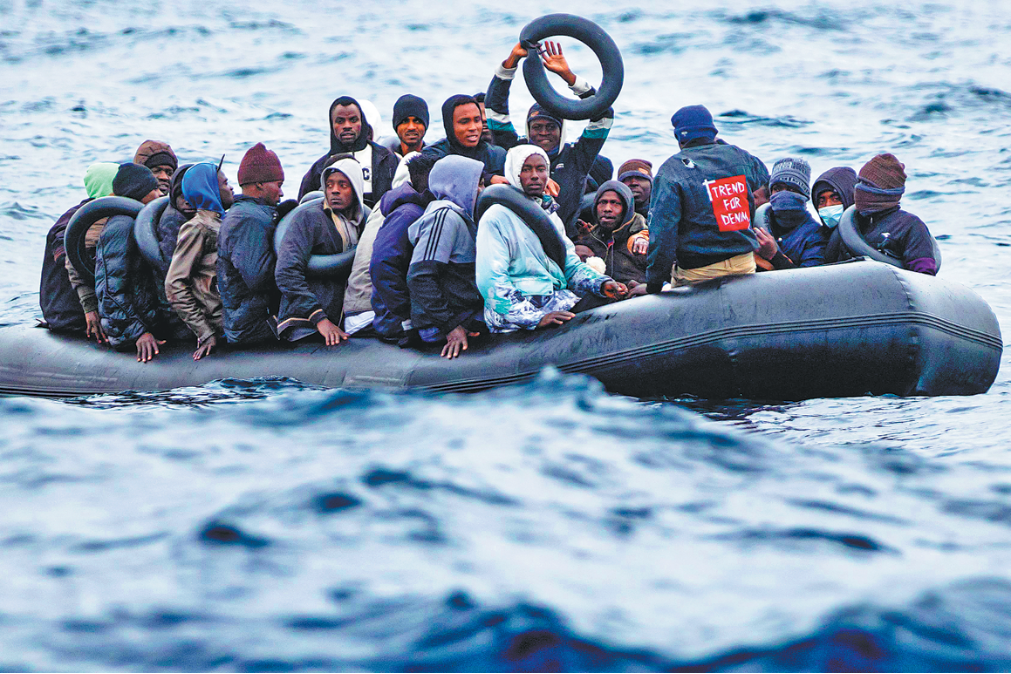
Countries in Africa, Latin America and Asia were made to follow the same set of policies through soft and hard power tactics. After nearly three decades, the results are even less encouraging. Economically, Latin American countries have either regressed or remained stagnant. Politically, multiparty democracy has failed to flourish in the region. During the same period, Africa's share of the poor population of the world has risen from 56 percent to over 67 percent despite more than $2 trillion in development assistance, according to some estimates. Sub-Saharan Africa is home to more failed states than any other part of the world. Only in East Asia and Southeast Asia have countries succeeded in achieving regional peace, domestic stability and economic progress. This has been made possible not by copying the Western template but by deviating from it in terms of ideology, institutional arrangements and policy framework.
China is the most notable example of this Asian exceptionalism. Since the introduction of reform and opening-up in 1978, China has modernized and engaged with the outside world without succumbing to the Western model of development and global integration. China reestablished relations with the World Bank and the International Monetary Fund in 1980 but has avoided falling into a debt trap.
In the late 1980s, despite extreme national and international pressure, China wisely resisted the calls for Western-style democracy. Ignoring the policy advice of multilateral institutions for mass privatization, China successfully incentivized and made its State-owned enterprises profitable. Similarly, China protected its industrial base while successfully integrating into the global economy following accession to the World Trade Organization in 2001.
Most significantly, China rejected the West's trickle-down economic theories and employed State machinery to divert resources toward less-developed regions, sectors and population groups. As a result, while other countries faltered, China succeeded in lifting nearly 800 million of its people out of poverty.
The economic success of China has shattered the spell of Western ideological hegemony and opened new possibilities for developing countries to pursue policies that suit their social, political and historical realities. These nations, majority of which are falling short in their goal to end extreme poverty by 2030, can draw encouragement from the example of China, which has met the poverty reduction target of the UN's 2030 Agenda for Sustainable Development ahead of schedule.
The continuing modernization drive in China has defied the West's "end of history" thesis and proved wrong its predictions that economic growth would either turn China into a mirror image of Western society or the country would face social unrest and implode economically. The Western argument that multiparty adult franchise democracy and laissez-faire economic policies provide the sole pathway to prosperity no longer appears persuasive.
The rise of China is not just characterized by strategic autonomy but also by humility, the principle of noninterference and strategic restraint.
During a historic conclave of political leaders and representatives of think tanks from over 100 countries, the Global South Think Tanks Alliance was officially launched in Nanjing, Jiangsu province, on Nov 14. As part of the initiative, pooled resources from over 200 universities and institutions worldwide will investigate, among other topics, reasons behind the failure of Western theories of development and globalization. They will carry out research to highlight that each developing country can forge its own unique path to modernization, as demonstrated by the success of China.
While it has displayed leadership by initiating the Global South Think Tanks Dialogue and forming the Global South Think Tanks Alliance, China has no desire to export its political institutions and economic models. China only functions as a mirror. It is for the public intellectuals of the Global South to ponder why their societies are falling behind despite being the poster child of Western globalization, while China has succeeded in rejuvenating its civilization by following a path forged by its people and history. The message of President Xi Jinping to the Global South, delivered at Session I of the G20 Summit in Rio de Janeiro, Brazil, on Nov 18, can serve as a source of inspiration — "if China can make it, other developing countries can make it, too".
The author is the Chairperson of the Crescent Foundation, an independent research organization dedicated to the ideal of a progressive Pakistan with Islamic characteristics.
The views do not necessarily reflect those of China Daily.