



Squandered opportunity









Editor's note: The world has undergone many changes and shocks in recent years. Enhanced dialogue between scholars from China and overseas is needed to build mutual understanding on many problems the world faces. For this purpose, the China Watch Institute of China Daily and the National Institute for Global Strategy, Chinese Academy of Social Sciences, jointly present this special column: The Global Strategic Dialogue, in which experts from China and abroad will offer insightful views, analysis and fresh perspectives on long-term strategic issues of global importance.
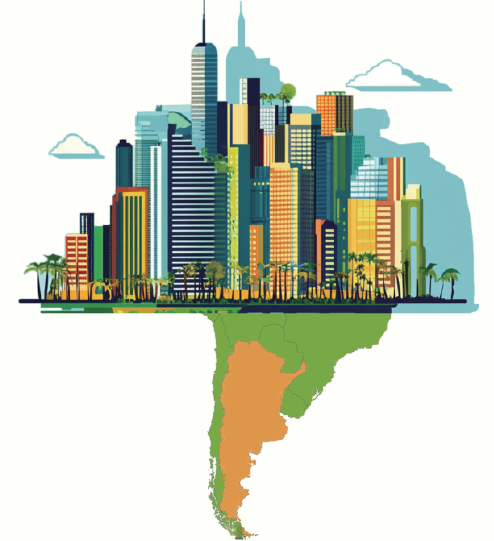
Argentina falls behind as BRICS boosts influence of the Global South
In January, the BRICS group expanded its global influence by welcoming Indonesia as a full member and introducing Belarus, Bolivia, Kazakhstan, Cuba, Malaysia, Thailand, Uganda, Nigeria and Uzbekistan as partner countries.
BRICS now represents about 51 percent of the world's population and around 40 percent of global GDP. This expansion highlights BRICS growing influence as a platform for the Global South. With China serving as a central figure guiding these efforts, the bloc emphasizes shared priorities such as sustainable growth, poverty reduction and the promotion of a balanced global economic order.
Brazil, which assumed the rotating presidency of the bloc on Jan 1, has outlined its key priorities, including global governance reform, sustainable development with social inclusion, and the establishment of local currency payment systems as an alternative to the US dollar.
Latin America's presence further reflects China's commitment to the Global South. While Brazil is a founding member of BRICS and Cuba and Bolivia recently became partner states, the China-CELAC Forum provides a framework for advancing regional cooperation.
BRICS embodies the principles of South-South cooperation, rooted in the Bandung Conference in 1955, as a platform for collaboration among Global South nations. It unites emerging economies with shared goals of sustainable development, poverty reduction and global stability. Despite their different economic models, the BRICS members are committed to inclusive growth, peace and stability on a global scale.
The expansion of BRICS, with China playing a pivotal role, reflects a vision for a more inclusive and balanced global order. China has emphasized that its approach is not intended to antagonize Western economies but to promote a collaborative international system focused on shared progress and cooperation.
BRICS has grown into an influential bloc, reshaping the global economic and political landscape. With its own bank and summits, BRICS functions as a cohesive organization fostering sustainable development and partnerships among its members.
Latin American countries, with their growing economic strength, are increasingly engaging with Global South initiatives to access funding, advance technology, and diversify their economies. This enhances their geopolitical influence.
Argentina's decision not to join the bloc in January 2024 limited its access to funding and collaboration opportunities, distancing it from frameworks promoting inclusive growth and balanced power. It reflects a missed opportunity for development and global positioning.
Argentina has a strong tradition of innovation-driven industrial development, rooted in models such as the "innovation triangle" introduced by Jorge Sabato and Natalio Botana in the 1960s. This framework emphasized the collaboration of scientific institutions, government and private industries to drive progress. Nevertheless, recent policy decisions have undermined this legacy.
Argentine President Javier Milei's alignment with the Global North and rejection of BRICS membership further isolates Argentina from cooperative frameworks driving innovation and inclusion in the Global South. Domestically, steep fiscal adjustments have cut subsidies and deregulated basic services, leading to sharp price increases for transport, energy and essential goods. Critics warn these measures, combined with missed opportunities such as BRICS, deepen inequality and jeopardize long-term stability.
Under the BRICS framework, institutions, such as the New Development Bank and BRICS Partnership on New Industrial Revolution, drive innovation, industrial modernization and financial collaboration. By opting out of BRICS, Argentina forfeits access to these mechanisms, limiting its opportunities for development, technological advancement and geostrategic influence within the Global South.
Domestically, President Milei's policies echo the 1990s, focusing on privatization, debt reliance and fiscal cuts that have deepened the country's economic challenges. By early 2024, production fell about 30 percent, consumption declined, and poverty rose to 52.9 percent. These measures fail to provide sustainable solutions, leaving the country in a precarious state.
Aligning with the Global North while distancing itself from BRICS has narrowed Argentina's path to growth. Rebuilding requires bold policies that reduce inequality, prioritize innovation, and strengthen state-driven progress. Reengaging with the Global South and BRICS frameworks as well as furthering its economic ties with China could offer the resources and partnerships needed for a stable, inclusive future.
This year marks the 10th anniversary of the China-CELAC Forum, underscoring China's commitment to strengthening its partnership with Latin American nations. Over the past decade, China has become an increasingly important trading partner and investor in Latin America, and it presents opportunities for economic growth in Latin American countries.
The focus on cooperation with the Global South was reiterated in President Xi Jinping's New Year address, in which he stressed that "China will work with all countries to promote friendship and cooperation, enhance mutual learning among different cultures, and build a community with a shared future for mankind". And China's commitment to further cooperation among the Global South will bridge global divisions, benefit both the Global South and the international community as a whole.
Mercedes Victoria Andrés is a postdoctoral researcher at the University of Buenos Aires and a visiting scholar at Tsinghua University. Xiang Menghuai is a PhD candidate at Tsinghua University and a researcher at the BRICS Economic Research Center at Xiamen University of Technology. The authors contributed this article to China Watch, a think tank powered by China Daily.
The views do not necessarily reflect those of China Daily.
Contact the editor at editor@chinawatch.cn.





