Tariffs not 'panacea' for US ills









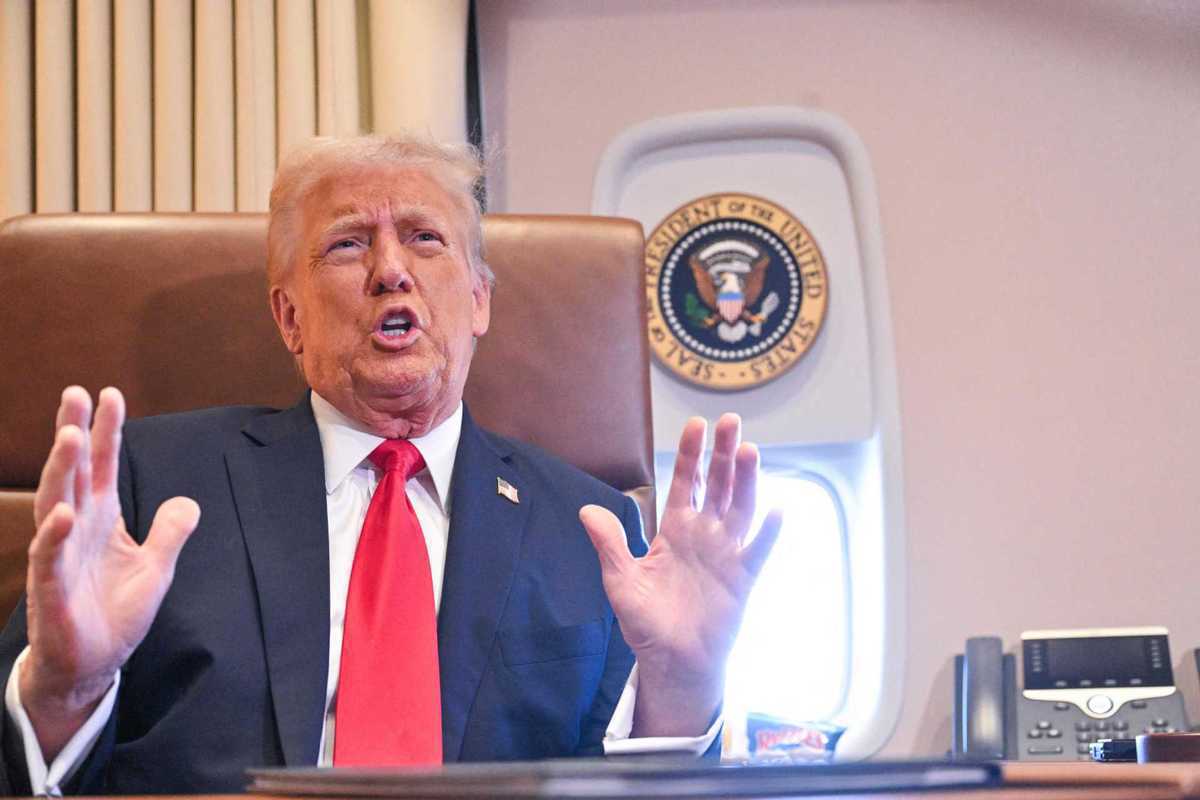
On Feb 1, the White House released a fact sheet claiming that illegal immigration and drugs, especially fentanyl, posed an "unusual threat" to the United States, constituting a national emergency under the International Emergency Economic Powers Act (IEEPA), and announced a 25 percent tariff on products from Canada and Mexico and a 10 percent tariff on products from China.
The fentanyl issue is just an excuse for the Trump administration to impose tariffs. Under the IEEPA, the US president has the authority to impose economic restrictions during a national emergency without the approval of the US Congress. At the same time, the US president can declare a state of emergency and take related restrictions without specific investigation and determination procedures. Trump has long advocated for tariffs and earlier classified the fentanyl issue as an "unusual threat", paving the way for his administration to declare a national emergency and wield the "tariff hammer" arbitrarily.
Fentanyl and other issues are long-standing internal social problems in the United States. The root cause of this problem lies in the deep-seated issues in the US social system and the government's inadequate governance capacity. However, in the view of the Trump administration, all these social problems are caused by foreign countries, and tariffs are the "panacea" for treating the social ills of the United States. Therefore, under the guise of national security, the US uses the claim of a national emergency to use tariffs as leverage to coerce relevant countries to accept the sky-high demands of the US without worrying about being held accountable at the WTO. At the same time, imposing tariffs can also increase government revenue, promote the return of manufacturing to the United States, and fulfill Trump's campaign slogan of "Make America Great Again".
Mexico, Canada, and China are major trading partners of the United States. The Trump administration announced tariffs on these countries, hoping to use tariffs as a bargaining chip to force relevant countries to accept US demands in addressing the fentanyl issue and managing illegal immigration. Currently, the US has obtained some concessions from Mexico and Canada on these issues by temporarily suspending tariffs.
However, what results can the Trump administration's tariff hammer really achieve? It is highly likely to backfire and go against its intentions. The long-standing trade deficit issue in the United States cannot be resolved in just one or two years. Trade imbalances are mainly influenced by broader economic factors such as national savings rates, government spending, and consumption patterns, rather than the direct impact of tariffs on imports. Trump's first term showed that his massive imposition of Section 301 tariffs on China did not significantly reverse the overall US trade deficit, and now imposing tariffs on major trading partners is unlikely to substantially reduce the overall trade deficit. Additionally, wielding the tariff hammer high against foreign countries cannot serve as a security wall to block illegal immigration and fentanyl abuse. Furthermore, according to WTO rules, China and other members have the right to challenge the Trump administration's tariff measures through the WTO dispute settlement mechanism. Under the dispute resolution process, expert panels are likely to make rulings unfavorable to the US.
On Feb 4, China announced a 10 to 15 percent tariff on some imported goods originating from the US. On the same day, a spokesperson for the Ministry of Commerce emphasized that to defend its legitimate rights and interests, China has brought US tariff measures to the WTO dispute settlement mechanism.
The Trump administration's fantasy of using tariffs as a "panacea" to cure America's social ills will ultimately fail. If the US tariffs and the retaliatory measures taken by China and Mexico further exacerbate domestic inflation in the United States, tariffs will not only be a remedy for the disease but also a poison to quench thirst.
The author is deputy dean of the Institute of Foreign Law and Governance, University of International Business and Economics.
The views don't necessarily reflect those of China Daily.
If you have a specific expertise, or would like to share your thought about our stories, then send us your writings at opinion@chinadaily.com.cn, and comment@chinadaily.com.cn.