Wrong policies, not free trade, will fail Washington









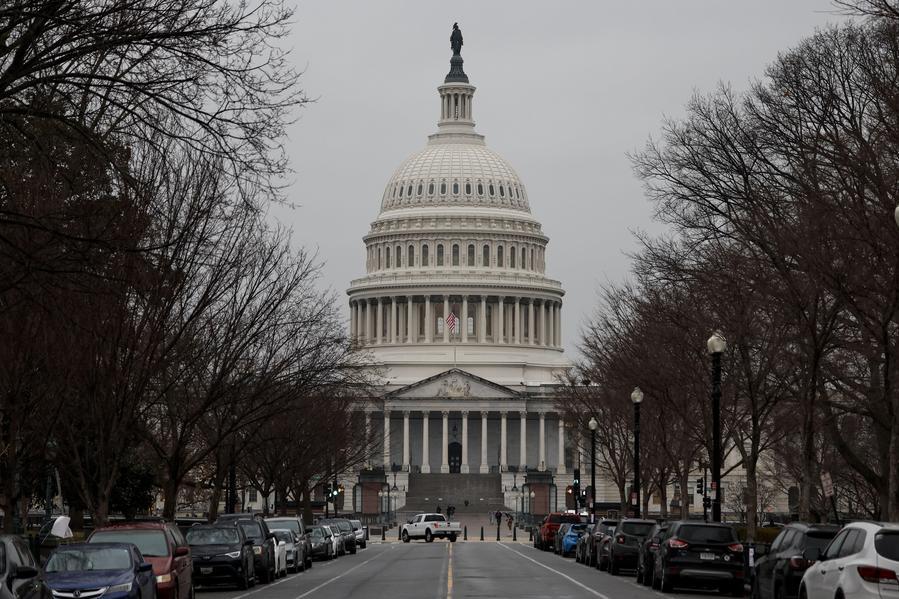
Former US Trade Representative Robert Lighthizer recently wrote an article, titled "Want Free Trade? May I Introduce You to the Tariff", in The New York Times (that it sounds like a dinner invitation is another matter). Lighthizer argues that the global trade system has failed the United States and many other countries, defending the new US administration's all-out tariff war.
But the truth is, global trade has been beneficial to most people worldwide, especially the US people. It's not the disaster Lighthizer is trying to make it out to be.
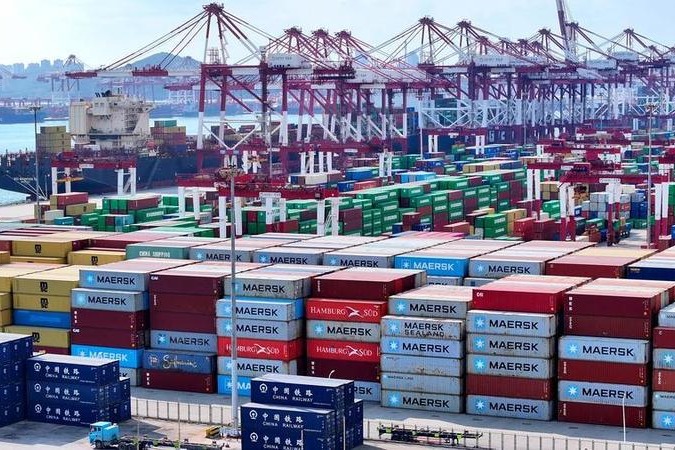
Since the General Agreement on Tariffs and Trade gave way to the World Trade Organization in 1995, global trade has surged from about $6.2 trillion to about $30.4 trillion in 2023.Global trade has been growing at an annual rate of 5.8 percent, consistently outpacing global GDP growth by 20 percent to 30 percent. Trade's share of global GDP, too, has surged from 43.1 percent to 58.5 percent. It's like the global economy has been playing catch-up with global trade.
A 2024 WTO report makes it crystal clear that global trade has benefited most countries, even the low-income countries. Between 1995 and 2023, adjusted for inflation, global GDP per capita grew by 65 percent, with low-income countries seeing a whopping 191 percent increase. As WTO Director-General Ngozi Okonjo-Iweala has pointed out, the WTO and global trade have played a key role in improving the lives of people in middle- and low-income countries.
So, what's the takeaway here? The "Make America Great Again" crowd may think the global trading system has let the US down, but the vast majority of WTO member countries would disagree. For them, the multilateral trading system has been a win-win for all countries, businesses and consumers. Has the US lost out? Absolutely not. The US has been the biggest beneficiary of global trade, especially in the services, high-tech, agriculture, and oil and gas sectors.
The US consumers, too, have benefited from global trade. The US Census Bureau recently said the median household income jumped to $80,610 (a 4 percent increase) in 2023. The poverty rate also dropped to 11.1 percent, down 0.4 percentage points. Affordable goods made available through global trade have helped keep inflation low and made everyday life more comfortable for American families.
If anyone has been messing with the international trade system, it's the US government. Since 2018, the US government has been slapping tariffs, left, right and center, on imports, violating WTO rules. Not to mention the US' blocking of the appointment of new members to the WTO's appellate body since 2016, effectively shutting down the WTO's dispute settlement system. These US moves have dealt a massive blow to the rules-based multilateral trading system. The US is one of the architects of this system and a major force behind the establishment of the WTO. But now, it's the one shaking the foundation.
As WTO chief economist Ralph Ossa points out, reducing trade doesn't create a more inclusive world, and just opening up their economies won't help low-income countries reduce their reliance on primary products. Developing countries need good industrial policies to help them upgrade their industries — just like the US did when it was competing with European industries.
Whether certain industrial policies are "good" or "bad" for a country depends on people's perspective. From an international trade law perspective, it's about whether policies follow WTO rules. From a national perspective, it's about whether they support long-term development. Even if the WTO's industrial policies need to be reformed, we should ask: Will those changes improve the lives of more people? And the "Make America Great Again" crowd is certainly not interested in improving the lives of more people.
Lighthizer has also floated the idea of creating a new trade system where "democratic countries" and those with "free-market economies" would form a bloc, impose internal tariffs and raise external tariffs to balance trade.
This idea sounds like "decoupling" by another name, a strategy some in Washington are obsessed with. It's like going back to the days of the British Empire's preferential trade system or the post-World War I period when countries had separate currency zones (pound, franc, mark) and fragmented global trade. But did that create a fair trade balance? No, it led to economic downturns and the Great Depression, followed by World War II.
As former US secretary of state Cordell Hull, who helped establish the WTO's predecessor (GATT), wrote in his memoirs, "When war came in 1914, I was very soon impressed with two points … I saw that you couldn't separate the idea of commerce from the idea of war and peace." Hull believed that free trade — fewer restrictions and barriers — would reduce deadly rivalries and improve people's living standards, leading to lasting peace.
This year marks the 80th anniversary of the establishment of the United Nations. It's the perfect time to reflect on Hull's insights into World War I and how it prompted him to push for a multilateral trade system.
This year also marks the 30th anniversary of the establishment of the WTO. Since its establishment, the WTO has not only helped boost global trade by reducing tariffs and barriers, but also facilitated the growth of global trade at an average annual rate much higher than that of global GDP. More and more countries are seeing the benefits of the WTO's trade rules, and that's something worth protecting, not tearing down.
Global trade does face challenges such as rising protectionism and unilateralism, but throwing the baby out with the bathwater is not the answer. Balancing trade depends on natural resources, and the strategies of multinational corporations. Countries have to adjust their policies to realize more equitable growth.
Forming a new trade bloc will not fix the trade imbalances. The WTO does need reform, but the reform should be aimed at developing a more inclusive global trade system that benefits every country, not just a few. Countries around the world should work on that as we celebrate the 80th anniversary of the founding of the UN and the 30th anniversary of the establishment of the WTO.
The author is a professor at the Law School, Peking University. The views don't necessarily reflect those of China Daily.
If you have a specific expertise, or would like to share your thought about our stories, then send us your writings at opinion@chinadaily.com.cn, and comment@chinadaily.com.cn.