Can tariffs make the US great again?









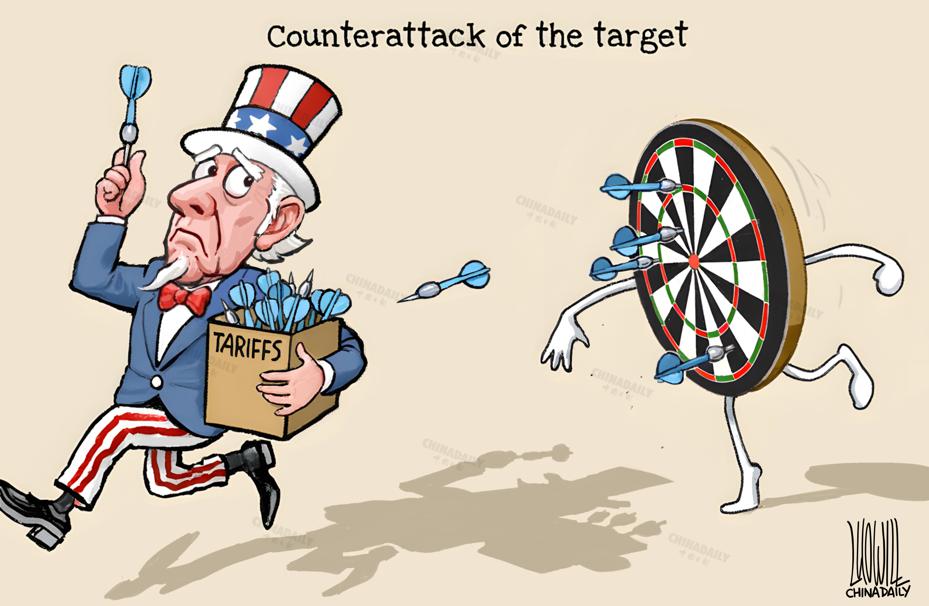
On February 10, the US administration announced a 25 percent tariff on all steel and aluminum imports into the United States "without exceptions and exemptions". It also plans to impose a reciprocal tariff policy that aims to impose tariffs on multiple countries or regions at the same rate as US exports. Just a week ago, the government announced a 25 percent tariff on goods from Canada and Mexico and a 10 percent tariff on Chinese products.
Obviously, the US has not learned from the past. In 2018, the US imposed comprehensive tariffs on Chinese solar panels, washing machines, steel, and aluminum products, while also launching an investigation into tariffs on $5 billion to $60 billion worth of Chinese goods. The result? Higher costs for US imports, a widening trade deficit with China, and disruptions to global supply chains. Moreover, the trade protectionism damaged US international credibility, making trading partners hesitant to cooperate.
Now, the US is one again doubling down on tariffs. Will this new round tariffs achieve its intended effect? The answer is likely "No". According to a University of Chicago survey, 98 percent of economists agree that the high tariffs are mainly borne by American consumers. A Morgan Stanley report pointed out that Trump's tariff hike could reduce the US economic growth by 0.7 to 1.1 percentage points in the coming year. Further analysis from US think tanks suggests that a general 10 percent tariff could lead to retaliatory tariffs from other countries, causing a 0.5 percent drop in US GDP in the short term and a 1-1.5 percent decline over the next three years.
A Brookings Institution study found that tariffs intended to protect the US steel industry would, paradoxically, increase costs for enterprise reliant on American steel, thereby reducing demand and potentially leading to job losses in the sector.
The US administration should have foreseen these consequences, so why do they persist?
The new tariff policy may not be purely about trade. Instead, it could be understood as a contraction of America's global strategy and a desperate attempt to extend US hegemony.
On the one hand, the rise of China-evidenced by its advancements in the sixth-generation aircraft, various types of naval vessels, popular apps such as TikTok and Little Red Note, and breakthroughs in AI represented by DeepSeek-has exacerbated American anxieties. Faced with this reality, the US seeks to secure North America as a strategic stronghold, buying time to counter China's rise. The ambition to annex Canada, buy Greenland, reclaim the Panama Canal, rename the Gulf of Mexico the Gulf of America, and impose extremely high tariffs on Canada and Mexico aligns with this vision. By pressuring its neighbors through tariffs, the US aims to extract concessions, access strategic resources, dominate routes like the Arctic Ocean and maintain its long-term economic and national security interests.
On the other hand, the new round tariffs also serve to control Europe. While the policy does not explicitly mention Europe, its true target is clear. The US aims to ensure that Europe continues to "feed" its own economy, mitigate inflationary pressures, and prevent the EU from becoming an independent geopolitical force that could challenge American dominance. Moving forward, the US administration is likely to force the EU to make concessions in agricultural subsidies, government procurement, and technical standards; exploit divisions among EU member states to weaken the bloc's common trade policy; use tariffs to limit Europe's reliance on China for technology and supply chains; raise taxes on European new energy products to protect American industries; leverage tariffs to compel Europe to buy American energy first, replacing Russian or Middle Eastern supplies. A weak and compliant Europe remains in the US interest.
However, the broader picture reveals a deteriorating US political climate. Institutional corruption is fueling inflation, liberal democracy is losing its global appeal, and the country's international standing is weakening.
Ultimately, the US tariff policy will not reverse its decline, instead, it is likely to exacerbate existing problems. To succeed in this high-stakes gamble, the Trump administration would need exceptional resilience, strategic foresight, and-most importantly- time. Yet, with only four years to execute these ambitions, the clock is ticking.
Guo Jiulin is a professor of America studies in Dalian Minzu University. The views don't necessarily represent those of China Daily.
If you have a specific expertise, or would like to share your thought about our stories, then send us your writings at opinion@chinadaily.com.cn, and comment@chinadaily.com.cn.