A village reborn through tourism









Azheke village, located in the Honghe Hani-Yi autonomous prefecture of Yunnan province, is known for its stunning rural scenery. Terraced fields cascade across the landscape, blending harmoniously with traditional Hani "mushroom cottages". In 2024, the United Nations World Tourism Organization recognized Azheke as one of the Best Tourism Villages.
However, before receiving this recognition, Azheke had long struggled with poverty.
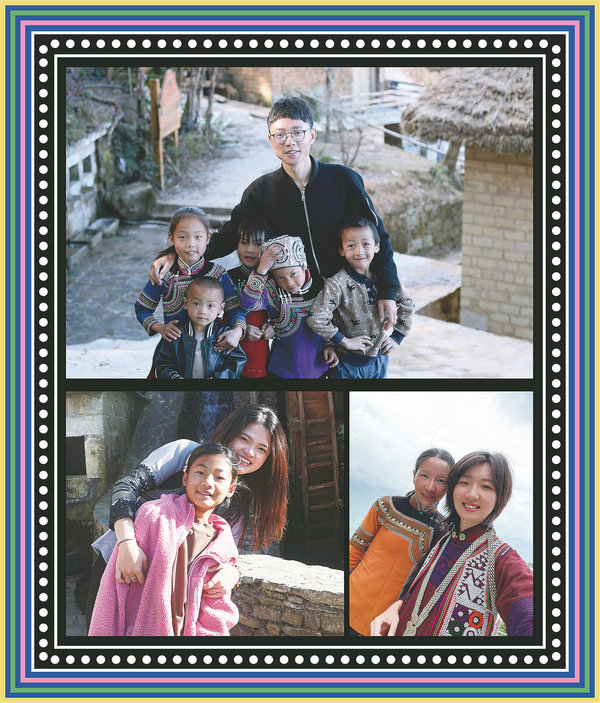
In January 2018, Yang Bing, a student from the School of Tourism Management at Sun Yat-sen University (SYSU) in Guangzhou, Guangdong province, visited Azheke and found it in disrepair — houses were crumbling, ditches were filled with trash, and a local restaurant saw hardly any visitors.
Yang was part of a research trip led by his mentor, Professor Bao Jigang. Their field study revealed that Azheke's annual per capita income at the time was only 2,785 yuan ($382.12), classifying it as a poverty-stricken village.
With traditional farming becoming less profitable, many villagers had left to find work elsewhere, putting the terraced fields, traditional homes, and Hani culture at risk of disappearing.
In response, Bao's team launched the Azheke Plan. "Our goal was to apply academic expertise to support the village's tourism development, improving residents' livelihoods while preserving their cultural heritage," he said.
Unlike commercial tourism companies that keep most of the profits, this plan introduced a village collective tourism cooperative, where villagers own 70 percent of the company's shares, while the government holds 30 percent to cover development costs.
Revenue is distributed according to a "4-3-2-1"model: 40 percent goes to villagers preserving traditional homes, 30 percent to those maintaining rice terraces, 20 percent to residents who continue living in the village, and 10 percent to those maintaining household registration.
This system not only provides financial benefits but also encourages residents to stay and actively contribute to preserving the village's natural and cultural heritage.