Medical use of AI models revolutionizes diagnoses









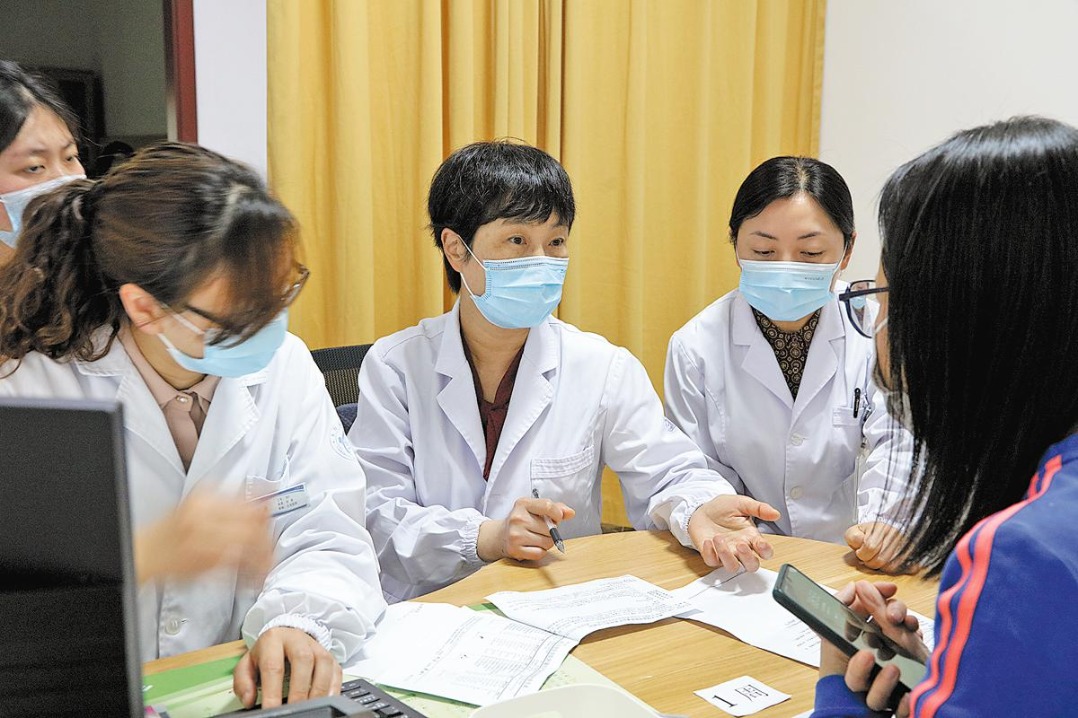
Artificial intelligence is playing an increasingly important role in assisting doctors with more accurate and efficient diagnoses, with new AI models tailored to pediatrics, rare diseases and other specialized fields emerging in recent years, medical experts said.
Meanwhile, they also cautioned that AI cannot replace doctors, and ethical challenges must be addressed as its use expands.
Wang Zhiqun, head of the radiology department at Aerospace Center Hospital in Beijing, said that AI was first used to assist in reading medical images at the hospital around 2018. Its accuracy and ability to speed up work have improved significantly over the years.
"With the help of AI, we radiologists can detect pulmonary nodules in less than 15 minutes on average," he said.
AI has also streamlined the interpretation of computed tomography angiograms for coronary arteries, as well as the head and neck — scans used to check for cardiovascular diseases — allowing the department to diagnose 40 to 50 patients per day, up from around 10 previously, Wang noted.
He said that while doctors used to frequently spot false diagnoses generated by AI, such cases have decreased as the system has processed more data.
"AI has played an instrumental role in helping doctors improve precision in reading images in order to estimate bone age in children — a task that used to be time-consuming and labor-intensive," Wang added.
Qiao Youlin, a researcher at the School of Population Medicine and Public Health at Peking Union Medical College, said that AI has great potential in expanding cervical cancer screening.
"We are developing AI-powered software that can help doctors pinpoint biopsy locations more accurately," he said.
AI models have also been developed for complex diseases with large unmet medical needs.
Peking Union Medical College announced this month that an AI-powered platform aggregating rare disease information and genetic data from the Chinese population has been put into clinical use. It was developed in collaboration with the Institute of Automation at the Chinese Academy of Sciences.
The model is aimed to assist doctors in diagnosing rare diseases more accurately and rapidly while narrowing disparities in rare disease diagnosis nationwide, the hospital said.
Beijing Children's Hospital also announced earlier this month that it has implemented an AI-driven tool consolidating the expertise of more than 300 pediatricians and decades of medical records.
During a recent multidisciplinary consultation session for an 8-year-old boy with a complex skull base tumor, the AI-driven tool reached a conclusion nearly identical to the joint diagnosis of 13 specialists at the hospital.
Ni Xin, the hospital's president, said that plans are underway to roll out AI-powered pediatric platforms for families and communities in order to improve pediatric care at the grassroots level.
Wang, from Aerospace Center Hospital, stressed that AI cannot function independently and that human doctors remain indispensable in the diagnostic process by integrating AI insights with clinical expertise and comprehensive patient care.
Underscoring that doctors "cannot fully rely on" AI-generated information, Wang said, "To this day, AI's interpretation of lung images sometimes identifies false positive lesions, and it is our responsibility as doctors to analyze these comprehensively and rule out incorrect findings."
Huo Honglei, head of the patient-doctor relationship coordination office at Beijing You'an Hospital, said the integration of AI into healthcare has sometimes led to patients using AI-generated results to challenge or blame doctors for discrepancies in diagnoses.
She emphasized the need to raise awareness about the irreplaceable role of doctors, ensure patients receive compassionate care during consultations, and strengthen regulations governing the use of AI in healthcare.

- Student shuttle service launched between Hengqin and Macao
- Unbreakable lifeline: Gansu's sheepskin rafts powering China's WWII resistance
- Full text of Xi Jinping's speech at 25th Meeting of Council of Heads of State of SCO
- Conservation efforts revive Chishui River section in Zunyi
- Northeast Anti-Japanese United Army exhibit opens in Beijing
- China launches first national science popularization month