



Manned lunar exploration mission steadily progressing
Design work, construction of primary components proceeding as scheduled









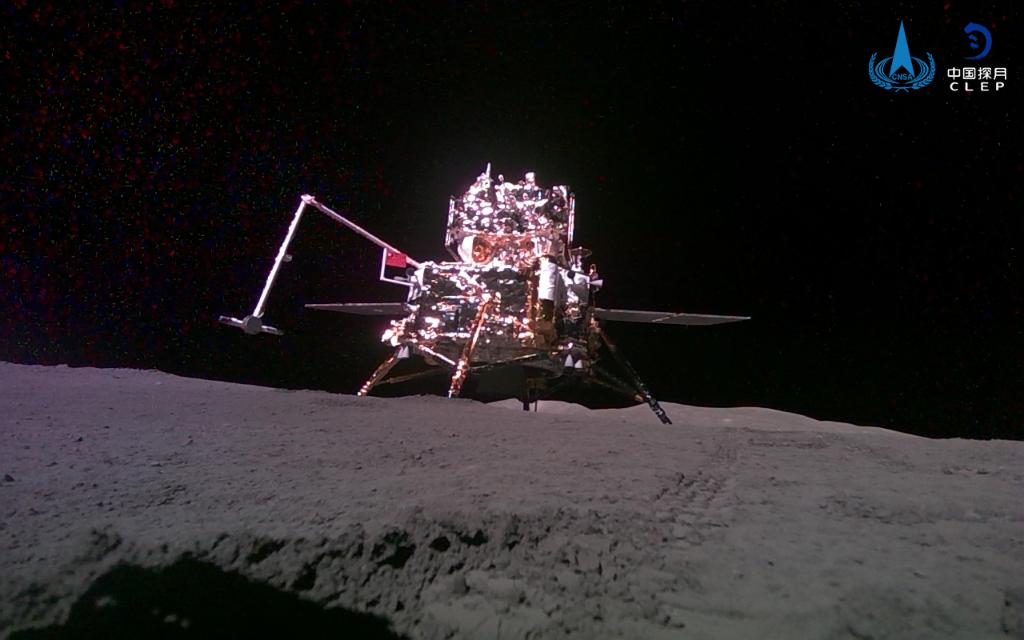
China is making steady progress in its manned lunar exploration program, with all research and construction work advancing as planned to achieve the goal of sending Chinese astronauts to the lunar surface by 2030, according to the China Manned Space Agency.
The agency said in a news release on Monday that key components of the ambitious project, including the Long March 10 heavy-lift carrier rocket, the Mengzhou manned spacecraft, the Lanyue lunar lander, the Wangyu lunar suit and the Tansuo crew rover, are currently in the preliminary prototype development phase, and the design work is proceeding on schedule.
Meanwhile, construction of new testing and launch facilities is underway at the Wenchang Space Launch Center in Hainan province. The overall design plans for the tracking, telemetry and command systems, as well as landing site infrastructure, have been finalized and construction work is set to begin imminently, according to the release.
Once realized, China's manned lunar program will make the country the second nation to land astronauts on the moon, significantly boosting its global space standing.
The United States successfully made six Apollo crewed missions in the 1960s and 1970s, bringing 12 Americans to the silver celestial body.
The country's roadmap for its first manned lunar expedition involves two Long March 10 launches from the Wenchang spaceport to transport a Lanyue lunar lander and a Mengzhou manned spacecraft to lunar orbit.
After reaching their preset orbital positions, the Lanyue lander and the Mengzhou vessel will rendezvous and dock. Two crew members will enter the lander, which will then undock and descend toward the lunar surface for an engine-assisted soft landing.
On the moon, the astronauts will drive a Tansuo rover to carry out scientific tasks and collect samples. Upon completion of their assignments, they will return to the Lanyue module, which will fly them back to their spaceship waiting in lunar orbit.
In the final stage, the astronauts will carry the samples into the Mengzhou spacecraft, which will then undock and carry the crew back to Earth.
To prepare for the challenging adventure, China has selected its fourth group of astronauts, who are currently training for lunar landing and surface operations.
In another development, the space agency said in the release that it will arrange two manned spaceflights — the Shenzhou XX and XXI — and the Tianzhou 9 cargo mission for travel to the Tiangong space station.
Crew members for the two upcoming flights have been selected and are undergoing training, it noted.
So far, Chinese astronauts from eight crews have carried out more than 180 scientific research and application projects aboard Tiangong, spanning fields such as life science, human physiology, microgravity physics and cutting-edge space technologies.
Experts have said that these in-orbit experiments aim to advance humanity's understanding of long-term space travel, novel material development under microgravity conditions and innovative engineering solutions for extraterrestrial environments.
The operations have led to multiple world-class achievements such as the first germplasm resources of rice and ratoon rice developed in space, and the first human embryonic stem cells differentiated into hematopoietic stem/precursor cells in space.
The accomplishments also include the world's first cold atom interference gyroscope in space microgravity, the first high-throughput in-orbit microbial control test platform, and the longest operation of a space-based water ecosystem.


- Pioneering AI system for rare disease diagnosis
- Two giant pandas debut at Urumqi Water Park Zoo
- Six firefighters dead after fall from cliff
- 6 firefighters killed as fire truck plunges off cliff in Central China
- Beijing Spring Festival temple fairs blend tradition with technology
- Central government to supervise investigation into deadly blast








