



Tariffs seen as threat to auto industry in North America









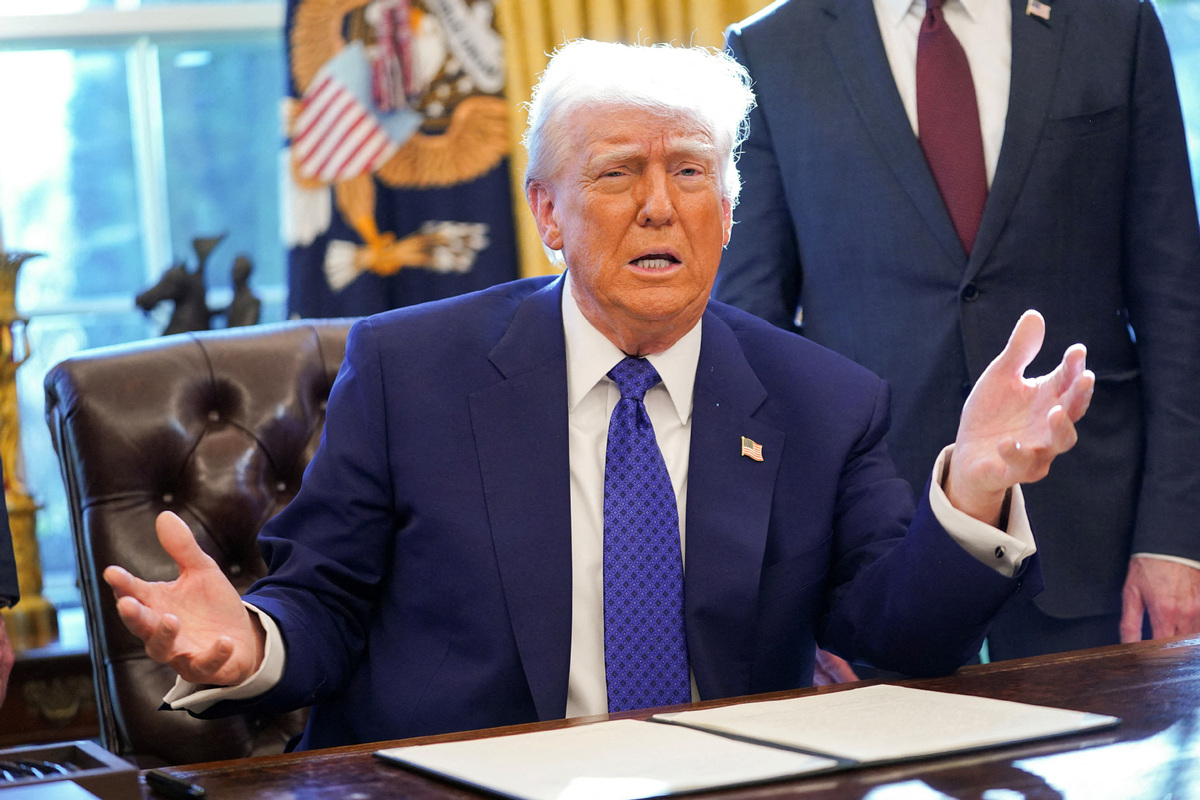
US President Donald Trump's imposition of new tariffs on automobiles could disrupt North American supply chains and cause the continent's auto industry to collapse, experts say.
Mahmood Nanji, a policy fellow at the Ivey Business School and a former associate deputy minister of finance for Ontario, said the tariffs also could cause economic disruption across the region.
"Regardless of whether it's 25 percent or 50 percent, it would have a huge impact on the Canadian auto sector," Nanji told China Daily. "But it would also have a huge impact on the American auto sector."
Nanji noted the deep integration of North America's auto supply chain. "Parts can cross the border seven or eight times before a vehicle is fully assembled," he said. "If you impose these tariffs, the first thing that happens is the price goes up, and the disruption will be felt on both sides of the border.
"It's projected that the cost of a car could increase by $4,000 to $5,000," Nanji continued. "When that happens, demand will shrink because the auto industry is incredibly competitive. Consumers might switch to vehicles from manufacturers not affected by the tariffs."
Nanji also rejected the narrative that Canada has "stolen" American manufacturing jobs — a claim Trump has regularly made.
"Since 1965, when the Auto Pact was established, this has been a competitive and cooperative relationship. Disrupting that integrated system would have devastating consequences for both countries," he said.
Nanji said that the proposed tariffs would also strain US automakers. "Auto companies would face tough decisions: Absorb the additional costs or pass them on to consumers," he said.
Trump has announced he would impose 25 percent tariffs on Canada and Mexico starting on March 4, and that there is "no room left" for the two nations to negotiate their way out of the levies.
"The tariffs, you know, they're all set," Trump said on Monday. "They go into effect tomorrow."
Nanji said that with 25 to 50 percent tariffs on automobiles, "the auto industry in North America could collapse within days, if not weeks".
Nanji said he believes that Trump is motivated by his "America First" agenda and that "his goal is to repatriate industries and create jobs in the US".
"But the assumption that you can shut down Canadian operations and move everything south overnight is unrealistic. Building new plants would cost billions and take years," he said.
Nanji predicted that American businesses and consumers would also feel the pressure. "If the cost of producing vehicles skyrockets, stock markets will react, and US consumers will face higher prices," he said. "The consequences of disrupting a supply chain this integrated would be profound and immediate."
Juan Carlos Baker Pineda, former Mexican vice-minister for foreign trade, also underscored the economic risks of such a measure.
"A 25 percent tariff on automobile imports would not only impact Mexico's economy, but it would also destabilize North America's entire auto industry," Baker told China Daily.
"The automotive sector accounts for nearly 4 percent of Mexico's GDP and generates thousands of jobs directly linked to exports to the US," he said.
Baker said that Mexico is not just an exporter — it plays a critical role in the North American supply chain.
"With over 80 percent of Mexican car exports destined for the US, a tariff would create bottlenecks and inefficiencies, forcing companies to either absorb higher costs or shift production strategies," he said.
"It is unlikely that a tariff would lead to a large-scale relocation of production away from Mexico and into the US instead; it would create friction within an ecosystem that has been optimized over decades," he said.
"The reality is that Mexico helps US manufacturers stay competitive by providing cost-effective, high-quality production that benefits American companies and workers," he noted.
"If tariffs are imposed, we would likely see job losses, delays in production and higher vehicle prices for American consumers — exactly the opposite of what protectionist policies claim to achieve," he said.
Baker said that the Mexican government needs to communicate the effect that the tariffs would have.
"First, it must engage diplomatically with the US administration and key stakeholders in the American auto sector to emphasize that this policy would be mutually damaging," Baker said.
"Mexico should explore legal mechanisms within USMCA (US-Mexico-Canada Agreement, which replaced NAFTA, the North American Free Trade Agreement), to challenge any measure that violates trade commitments," he said.
"Mexico must strengthen its investment climate to ensure that automakers and suppliers continue to see the country as a reliable and competitive production hub," Baker said.
"Finally, if none of these steps work, and tariffs are imposed, I believe that Mexico should retaliate, establishing tariffs of its own toward US exports to Mexico," he said.
Baker also stressed the importance of reducing Mexico's reliance on the American market.
"Perhaps this could be an opportunity to diversify trade relationships so that Mexico is not overly dependent on the US market," he said.
Baker pointed to the modernization of Mexico's trade deal with the European Union and growing partnerships with Asia, particularly Japan and South Korea — as key opportunities.
"While the US will always be Mexico's primary trading partner, a more balanced trade portfolio would strengthen Mexico's resilience and reduce its exposure to external political shifts," he said.
Baker noted that while the tariff threat is serious, it may also serve as leverage in trade negotiations. "This is both a serious threat and a negotiation strategy," he said.
"Trump has a long history of using tariffs as leverage, but I believe that a 25 percent auto tariff would hurt the US as much as Mexico."
"For me, the key is to remain firm, proactive and strategic, reinforcing that Mexico is an essential part of North America's competitiveness, not a target for protectionist measures," he said.
gaoyang@chinadailyusa.com










